

The aluminum-domed Crosby Observatory atop Orlando Science Center houses Florida's largest publicly accessible refractor telescope. This one-of-a-kind custom-built telescope, along with several smaller scopes, are available at selected times for solar and night sky viewing.

Peer through the powerful, 10-inch lens of the refractor telescope to view the planets, the four moons of Jupiter, the rings of Saturn and deep sky objects such as galaxies, nebulas and double stars.

All activities and events in the Crosby Observatory
are weather permitting only.


SkyWatch

June 14 – August 17, 2013
Fridays & Saturdays, 7:00 p.m.

Join our astronomers in the Crosby Observatory for a night full of wonder. Enjoy views of the celestial objects while you take in the glittering Orlando skyline. Our telescopes will expand your horizons to places like Jupiter, Mars and Venus and beyond.


Science Night Live

Seasonal Event: Please Check Events Calendar

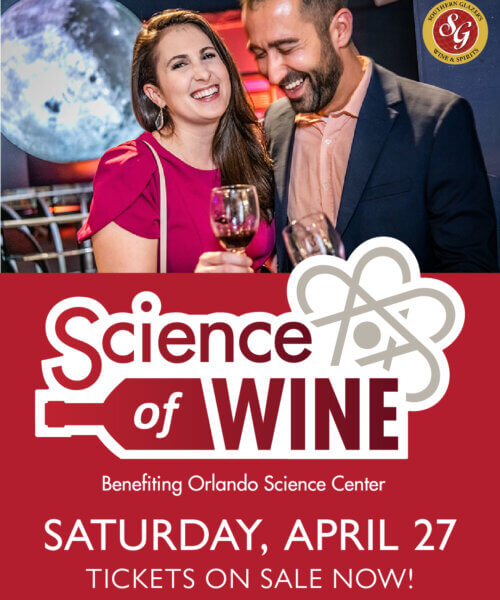
An “adult swim” of the science variety, the event features everything great about the Science Center. Experience all four floors of exhibits, films and hands-on programming aimed specifically for grown-ups, while enjoying adult food and beverages available for purchase. Must be 21 and older.


Keep your eyes to the sky December 7 - 14, 2010 to catch a glimpse of the year’s most prolific meteor shower display, the Geminids. The Geminid meteoroids originated from dust grains left behind from Asteroid 3200 Phaethon. Every time the Earth passes through the dust cloud or meteor stream, we experience what is known as the Geminids meteor shower. The shower’s radiant - the point in the sky from which the shooting stars appear to be falling from - is the constellation Gemini, which rises above the eastern horizon after 9:00 p.m. local time.

Geminid
Photo courtesy of National Geographic

Monday, December 13 will be the peak night, providing the chance to witness over 120 shooting stars in an hour, darting across the sky in various colors such as, blue, green and red. Mark your calendars, grab a blanket and head to a dark area from midnight until dawn for optimal viewing and an unbelievable show!


Bookmark and Share

Discovered in 1986 by Australian astronomer Malcolm Hartley, comet 103P or Hartley 2 is set for the closest encounter with earth in 24 years. This “dirty snowball” that is comprised of rock, dust, ice and frozen gases was visible in the constellation of Auriga as a fuzzy, green blur to Northern Hemisphere observers during Mid-October.

Through November, Southern Hemisphere stargazers can catch a glimpse of the comet as it travels away from earth, using the naked eye, binoculars and of course, a telescope. This year, Hartley 2 made its closest pass at a mere 11 million miles on October 20th and is calculated to orbit the Sun every 6 ½ years. EPOXI, or Extrasolar Planet Observation and Deep Impact Extended Investigation is a spacecraft that is due to make a flyby of Hartley 2 from only 600 miles away on November 4th. The mission plans to gather information on the comet’s surface and craters, as well as close-up images of dust and gas plumes.

Check back on our web site for "post fly by" information and updates!


Bookmark and Share

Orlando Science Center • 777 E. Princeton Street • Orlando, Florida 32803 • Phone: 407.514.2000 • Toll Free: 888.OSC.4FUN • Email: gservices@osc.org
  Supported by the City of Orlando, Orange County, and United Arts of Central Florida with funds from the United Arts campaign and the State of Florida,
Department of State, Division of Cultural Affairs and the Florida Arts Council, and the National Endowment for the Arts. Privacy Policy