




What Can You Do at OSC? (age range)
Become a Member
Enjoy an entire year of unlimited general admission to the Science Center, member-exclusive benefits, discounts, and more. See why members say it’s the best deal in town!
Become A Volunteer
From interacting with guests on the floor, to helping out at special events or providing office support, see how donating your time can make a positive impact.
Donate Online
As a nonprofit organization, Orlando Science Center relies on your generosity to support our operations, and to sustain and expand our education and accessibility programs.
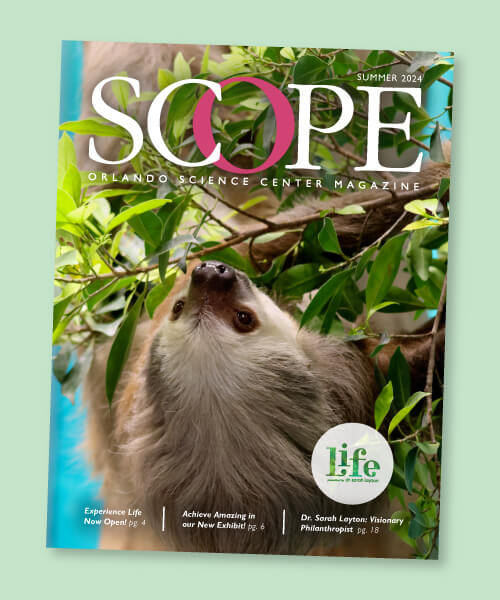
SCOPE Magazine
Flip through the current e-magazine or download it below.
Loading