Rent Movies From The Library For A DIY Film Festival

Did you know you can rent movies from the library as well as books?

Sometimes people don’t realize that they can rent movies from the library. Lots of movies are available in DVD form or to stream and download. Orange County Library System, encourages you to create your own DIY film festival using library resources. 

If you can't get enough of Orlando Science Center's new RESCUE exhibit, check out these search & rescue and survival films! 


Backdraft

True story: The author of this article once had a friend whose father was a firefighter. Once, the author slept over at this friend’s house and he was shown Backdraft for the first time. The author was so afraid of the noise that backdrafts made - and so insistent that the noise coming from the house’s a/c unit was, in fact, a backdraft - that he had to be picked up by his mom.

In the author’s defense, the film’s intense firefighting set pieces are still an excellent example of pre-CGI visual effects: you can practically feel the heat of the flames radiating from the screen. Backdraft also does an excellent job honoring the bravery and sacrifice of firefighters who risk their lives every day. Even if that message is sometimes undercut by the film’s overly campy tone.

the cover of the movie backdraft

Apollo 13

Based on the inspiring true story of astronauts Jim Lovell, Jack Swigert and Fred Haise, Apollo 13 is a white-knuckle voyage through the dangers of pioneering space travel. I’m scared of heights so being an astronaut was never in the cards, but the film does an excellent job of making me feel like I’m a part of the ill-fated lunar mission. Just as enjoyable are the scenes that take place on the ground, showcasing the ingenuity and quick-thinking of early NASA scientists and engineers.

apollo 13 movie cover

The Martian

Untethered by the gravitational hold of real-life events, The Martian launches the tale of space travel survival to new heights (again, no thank you). For those who loved the book, you may be comforted to know author Andy Weir’s devotion to realism and trademark comedic moments translate excellently to the screen. Thanks in no small part to skilled directing from Ridley Scott and an anchoring performance by Matt Damon.

The Martian movie cover

The Poseidon Adventure

It’s New Year’s Eve, 1972. You’re having a lovely time traveling to Greece aboard the luxurious ocean liner, SS Poseidon. Such a shame then, that someone would invite a 90-foot tidal wave to the party…

Though a defining example of the disaster movie genre, The Poseidon Adventure may seem trite compared to the visual spectacles and behemoth budgets of today’s tentpole pictures. But what keeps the movie afloat is a who’s who of early-70s celebrities including Gene Hackman, Ernest Borgnine, and Shelly Winters.

the poseidon adventure movie cover

Hunt for the Wilderpeople

Before the charismatic Taika Waitiki rose to superstardom as director of Thor: Ragnarok and JoJo Rabbit, he helmed this more intimate and comedic tale of a young boy and his foster father surviving in the New Zealand bush.

Based on the book Wild Pork and Watercress, Hunt for the Wilderpeople eschews the intensity of typical survival films with heartfelt humor and whimsical adventure.

the hunt for the wilderpeople movie cover

To explore Orange County Library System’s vast collection of digital and streaming movies, visit ocls.info/catalog.


Do you have what it takes to be a hero?

Search and rescue operations take place every minute, every hour, every day, all around the world. But what does a rescue scenario really involve? 

Through interactive exhibit pieces and the stories and testimonies of real-life heroes, the RESCUE exhibit will give guests a first-hand look into the technology and teamwork that goes into a rescue mission.
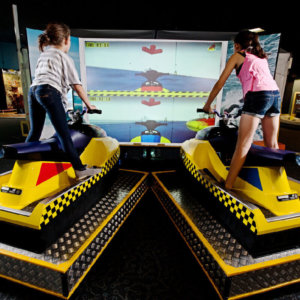
two kids on jet ski simulators

3..2..1.. Blast Off to Fun With This DIY Stomp Rocket Activity!

Space exploration requires more than brave astronauts. They won't get far without engineers to build their space crafts! Do you think you can build a rocket that could launch astronauts into orbit? Build your engineering skills with this DIY stomp rocket project!

We'd like to thank our longtime friend and corporate partner, FINFROCK for sponsoring this blog!

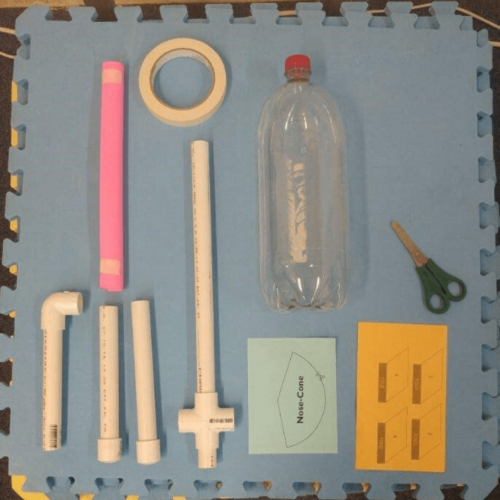
You Will Need:

  • Paper
  • Cone and Fin Templates
  • Scissors
  • Tape
  • 3 ½” x 12” pieces of PVC pipe
  • 1 ½” x 2” piece of PVC pipe
  • 1 ½” x 15” piece of PVC pipe
  • 1 ½” PVC Cross Fitting Connector
  • 1 ½” 45° PVC Elbow
  • 1 ½” 90° PVC Elbow
  • 2 ½” PVC End Caps
  • 2 Liter Bottles
  • Printable Template

Making Your Rocket:

  1. Tightly wrap your sheet of paper length-wise (so you have a longer rocket rather than a shorter one) around one of the pieces of PVC pipe. The paper should fit snugly around the tube, but not be wrapped so tight that the tube can’t be slid off. Tape the paper tube shut. The entire seam should be covered so that it is airtight. This will be your rocket’s fuselage.
  2. Cut out the cone template. Bring the straight edges together to create the cone and tape shut. Make sure that entire seam is covered so that it is airtight. If air escapes from the seam in the cone, the rocket won’t launch or won’t go far.
  3. Tape the cone over one end of the fuselage. Be sure the cone is taped on securely and is airtight. If the cone isn’t on tightly enough or air can escape from this part of the rocket, the cone may fly off the rocket when you try to launch it.
  4. Now choose how many fins you want and what shape they should be. You can use the templates provided, or make your own.
  5. Cut out the fins you want. Fold on the dotted line, the tape the small flaps to end of the fuselage opposite the cone. The fins work best when they are evenly spaced and all facing the same way.

Making Your Launcher:

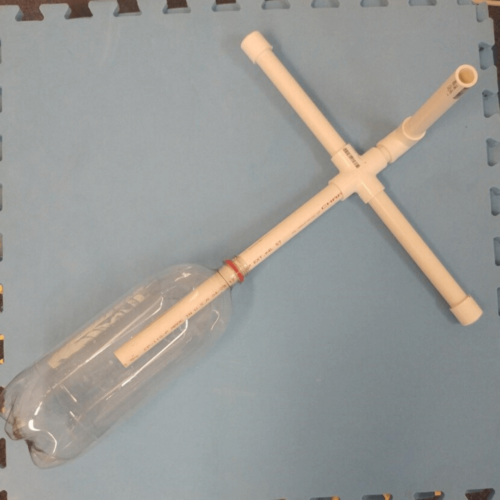
  1. Fit 2 of the ½” x 12” pieces of PVC pipe in the cross fitting connector across from each other.
  2. Place the end caps on these two pieces of PVC pipe to prevent air from escaping through the sides.
  3. Fit the ½” x 2” piece of PVC pipe in the cross fitting connector between the two longer pieces.
  4. Attach either the 45° or 90° PVC elbow on the other end of the 2” pipe. The angle of the elbow will determine the launch angle. If you want to launch the rocket straight up, use the 90° elbow. If you want to launch the rocket outwards, use the 45° angle.
  5. Fit the remaining ½” x 12” piece of PVC pipe in the other end of the elbow. This will be where you place the rocket.
  6. Fit the ½” x 15” piece of PVC pipe in the remaining opening of the cross fitting connector.
  7. Tape the 2 liter bottle onto the end of the 15”-long piece of PVC pipe.

Launching Your Rocket:

  1. Slide your rocket all the way onto the 12”-long piece of PVC pipe connected to the 45° or 90° elbow.
  2. Stand next to, not behind, the bottle on your launcher.
  3. Stomp down or jump on the bottle to launch the rocket.
  4. To re-inflate the bottle, remove the 15”-long piece of PVC pipe from the cross fitting connector. Blow into the end of the PVC pipe. The bottle will inflate. If the bottle is damaged, it can be removed and a new bottle can be taped on.

Can you make your rocket go higher or farther? What happens if you change the shape and/or number of fins? Make changes to your rocket and launch it again to find out!


Orlando Science Center relies on partnerships with industry experts to provide insight on how science, technology, engineering, and mathematics and the incredible innovators within the industry are pushing the boundaries of possibilities. As a longtime friend and corporate partner, FINFROCK helps us inspire the next generation of STEM professionals and industry leaders. With their commitment and generous support, we are able to bring pivotal technology and engineering learning to life.

FINFROCK is committed to revolutionizing the technological advancement of engineering design and manufacturing. FINFROCK handles the design, manufacturing, and building of hundreds of projects a year for clients throughout Florida and across the nation. Learn more about FINFROCK

Fresh Programming in Food Heroes Courtesy of The Pabst Steinmetz Foundation

The Pabst Steinmetz Foundation helps feed curiosity with fresh programming

At Orlando Science Center, we deliver awe-inspiring programs to encourage people to get hands-on with STEM and nurture their curiosity about the world we live in. Funding from The Pabst Steinmetz Foundation will enable OSC to create programming featured in our new Food Heroes exhibit sponsored by Orlando Health that melds the culinary arts with critical instruction on the impact of healthy food systems on our overall well-being.

Fresh programs include hands-on cooking demonstrations and farming workshops, reimagined live shows where visitors can step into the role of a soil scientist and conduct experiments, and expanded possibilities for speaking engagements with real-world experts.

We deeply appreciate this grant award from The Pabst Steinmetz Foundation as it makes it possible for us to create and pilot a fresh series of programs that highlight innovative technologies and STEM concepts related to our food and food systems.

Brandan Lanman
Vice President of Visitor Experience at Orlando Science Center
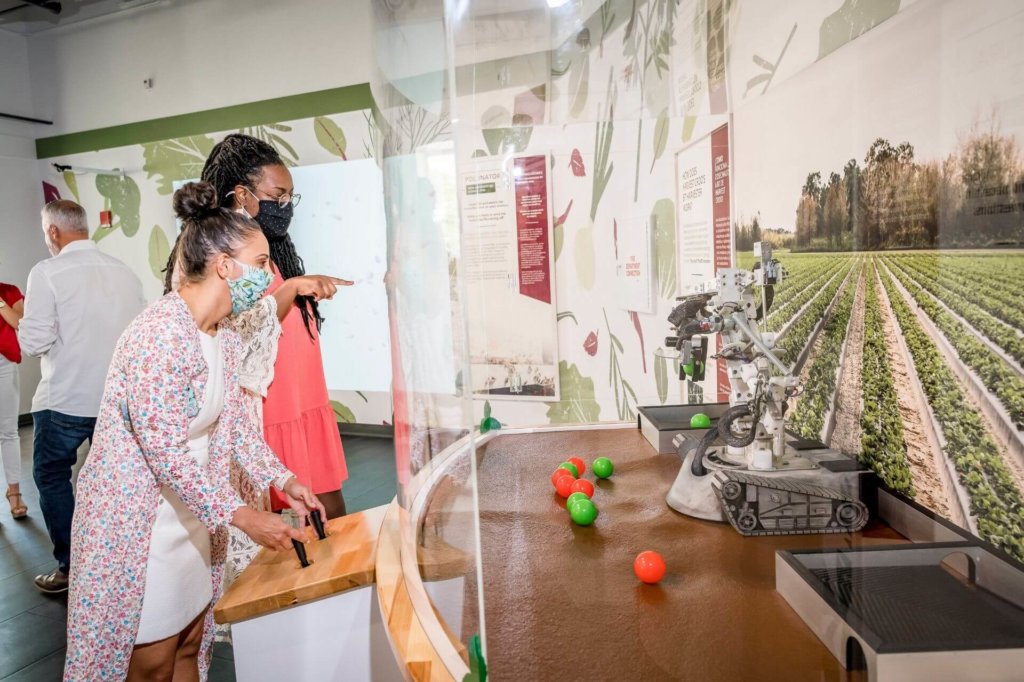
Guests controlling robotic arm to pick strawberries in Food Heroes exhibit

Orlando Science Center was one of six projects chosen from over 30 applications the foundation received from across the United States. “This year’s grant recipients have such range in the way they will impact the community.” says Chuck Steinmetz, Foundation co-founder and former Chair of the Orlando Science Center’s Board of Trustees. The Pabst Steinmetz Foundation placed special emphasis on funding new programming, or supporting ones in their infancy. Projects also possess the promise of sustainability and the development of models which can be replicated across Central Florida, the state, and the U.S.

Orlando Science Center is excited to present this programming to our students and visitors with support from The Pabst Steinmetz Foundation. To stay up to date on programming, be sure to follow us on social media and check our calendar of events!


Learn More About our New Exhibits and Dining Options

Outdoor Safety for Kids • 7 Survival Tips for Any Scenario

Check out these 7 outdoor safety tips for kids! 

When the sun is shining, there’s nothing better than getting outside, breathing in a breath of fresh air, and communing with nature! But don’t forget to keep safety in mind! Whether you’re camping or hiking the great outdoors — or just exploring your own backyard — check out these 7 outdoor survival and safety tips for kids! 

Get more safety and survival tips, and put your hero skills to the test with new, interactive exhibit RESCUE now on display! 

1. Not all who wander are lost. But if you are lost, stop wandering

If you find your surroundings are starting to become unfamiliar, it’s easy to want to retrace your steps, or find the last familiar setting. However, staying put

is the most important survival skill to teach your children. The farther they wander from the site where they were last seen, the harder it’s going to be for rescuers to find them. Staying in one place will also conserve energy and reduce their risk of falling or getting injured.

2. Wear bright colors 

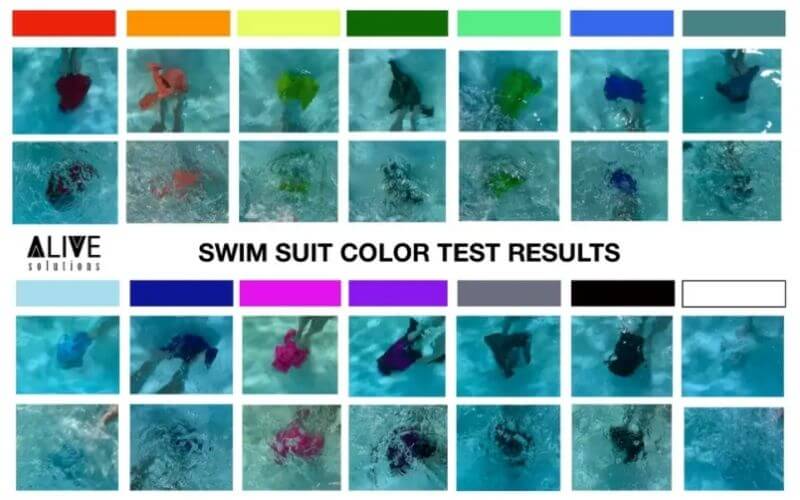
Bright colors will help you stand out from your surroundings, and even more so if your whole party is wearing matching colors. However, be mindful of your surroundings. If you’re spending time in or near water avoid blue, and if you’re spending time in a wooded area, avoid green.


Outdoor safety for Kids - a picture of what different colored swimsuits look like underwater

3.Keep calm and carry an explorer’s kit

Even on a short adventure, it’s always best to bring supplies! Here are some fundamentals to keep any adventure safe and fun.

  • Sunscreen and bug spray
  • A whistle
  • A flashlight or glow sticks
  • A poncho
  • Water and non-perishable snacks
  • A laminated emergency contact card
  • For basic first aid, include: adhesive bandages, hand sanitizer, antibiotic cream, and antiseptic, wipes or spray, and any personal medications, inhalers, or EpiPens

4. Build a shelter

This is not only a good survival tip, but a fun one to practice! Children are naturally creative and, with a little guidance, design excellent shelters. Can a jacket or a poncho make a tent? What kind or sticks or foliage are around you? Next time you’re enjoying the outdoors, challenge your junior explorers to see what kind of shelter can be made from their surroundings.

5. Always wear sunscreen. Even on a cloudy day

Can you get a sunburn on a cloudy day? While clouds do reduce some of the sun’s UV rays, they don’t block all of them. UVA rays can penetrate clouds, and they can also reach below the water’s surface.

UVB rays can also damage your skin year-round, cloudy or not. Reflective surfaces like snow and ice also intensify UVB rays and their effects on the skin so be sure to apply sunscreen anytime you plan on spending time outside.

6. Know when it’s okay to ask for help

Children who are lost or in another emergency situation can often fear rescuers, in part because they learn about “stranger danger” at an early age. Sometimes, they’re so afraid, they hide from the very people searching for them or trying to help.

Explain to your children that if they find themselves in an emergency, the people calling their name are trying to help them. Show them what emergency professionals look like in their various uniforms: firefighters, law enforcement officers, and search and rescue dogs.

outdoor safety for kids - kids dressed up in first responder gear

7. Expect the unexpected

No one ever plans an emergency situation, but you can plan for when one happens. Like fire drills or seatbelts, the best way to plan for the unplannable is to practice and incorporate safety into as much as your daily life is possible. Whether you’re just taking a walk in the park or exploring the wilderness, make sure you always have a plan, and know the plan! 

Check out some outdoor activities!

Are Jellyfish Older Than Dinosaurs? And 7 Other Fascinating Facts

Did you know jellyfish can age backward? Are jellyfish older than dinosaurs? Check out these seemingly immortal invertebrates!

What’s the first animal you think of when you think of the ocean? Chances are it probably isn’t a jellyfish. Many people don’t think about them beyond being careful not to be stung by one in the ocean or watching them gracefully float by in an aquarium.

But did you know that there is a jellyfish that can grow to be the length of a blue whale? Or that the answer to "are jellyfish older than dinosaurs" is an incredible YES! How about that many jellyfish can glow in the dark?

In honor of World Ocean’s Day on June 8th, let's dive into these eight extraordinary facts about jellyfish!

A jellyfish is a very simple animal.

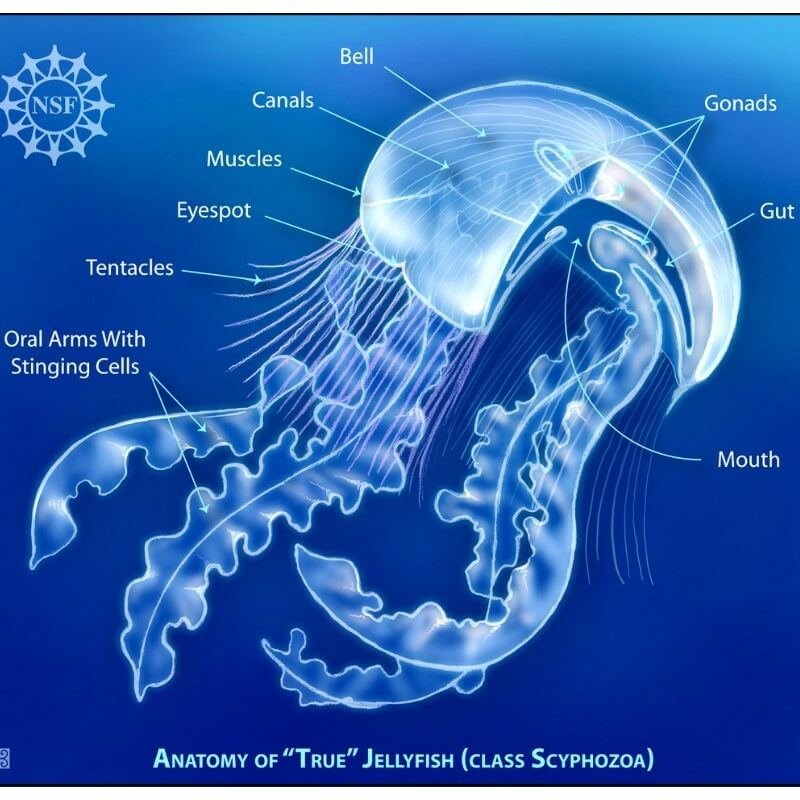
But what exactly is a jellyfish? A jellyfish isn’t a fish but an invertebrate, which means it doesn’t have a backbone. In fact, it doesn’t have much of anything. Jellyfish don’t have a brain, a heart, or even blood, and have a very simple digestive cavity with a single opening for eating and expelling waste. What they do have is water – lots of it. Jellyfish are about 95% water. This makes them highly camouflaged in the ocean. Going a little deeper, the body of the jellyfish is divided into three main parts: the bell, the oral arms (long appendages that move captured prey into their mouths), and the stinging tentacles.

anatomy of a jellyfish

Jellyfish come in a variety of shapes, colors, and sizes.

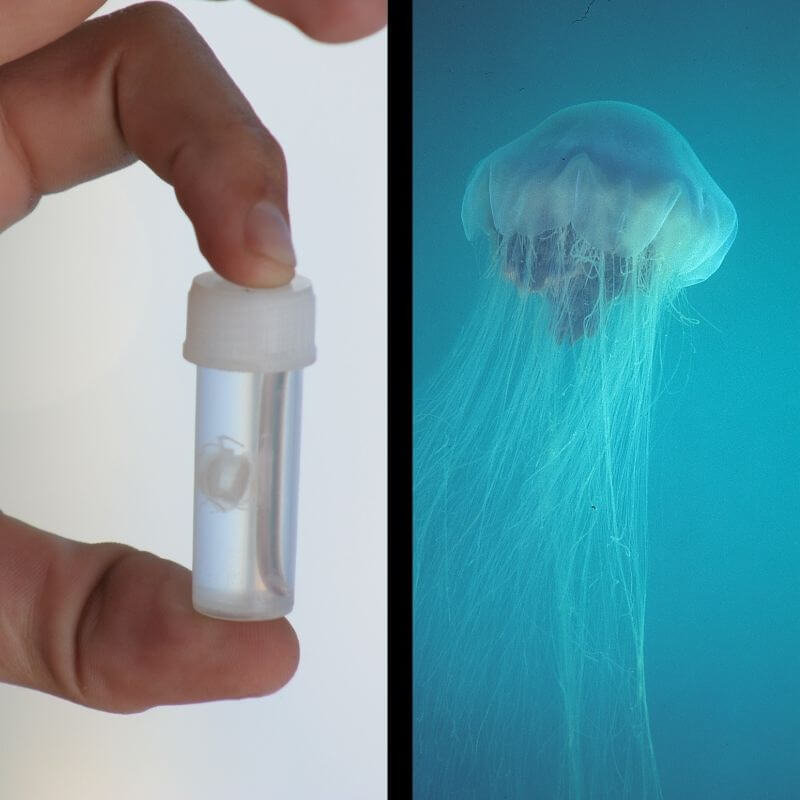
Though the basic parts of the jellyfish are fixed, the bells, oral arms, and tentacles can be different shapes, sizes, and colors. Thought to be the smallest jellyfish in the world, the Irukandji jellyfish has a bell that only reaches a maximum of 25 millimeters across, about the size of a quarter. A species of box jellyfish, they are one of the most venomous jellyfish in the world despite their tiny size.

The lion’s mane jellyfish (featured in the Sherlock Holmes story “The Adventure of the Lion’s Mane”) is the largest known species of jellyfish by length, reaching up to 120 feet from the top of the bell to the bottom of the tentacles. This is about the length of 4 school buses, making it longer than a blue whale! Nomura's jellyfish are the largest by weight; they can weigh up to 450 pounds. That’s the weight of a piano!

two images: tiny creature in a test tube and a very large one with long tentacles

Are jellyfish older than dinosaurs?

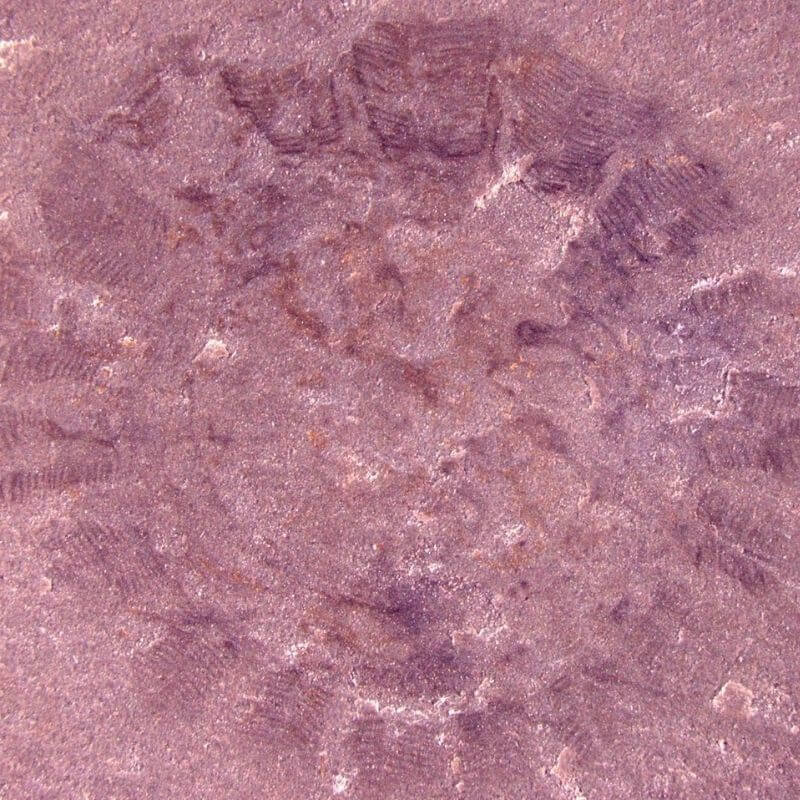
Jellyfish have been around for more than 500 million years. That means they appeared more than 250 million years before the first dinosaurs. However, because jellyfish are soft-bodied and almost all water, jellyfish fossils are incredibly rare. Of those that do exist, the oldest-known jellyfish fossils, found in Utah, date to 505 million years ago and have enough detail to show clear relationships with some modern species of jellyfish.

a close up of a jellyfish

Like butterflies, jellyfish undergo metamorphosis.

Have you ever wondered what a baby jellyfish looks like? What we usually think of as a jellyfish is called a medusa. Medusas lay eggs. Eggs grow into larva called planula – which have been described as looking like furry tic-tacs – and they start swimming until they find somewhere to stick themselves. Once a planula finds a rock, dock, or other place to attach itself to, it stretches into a tube called a polyp. When a polyp is ready, the tube becomes longer and separates out into a series of snowflake-like discs. Each disc will begin to wiggle then pop off the stack. The disc, called an ephyra, is a baby medusa. It pumps its body to swim away. It can grow an inch every few days until it becomes mature medusa. 

There is a species of jellyfish that is basically immortal.

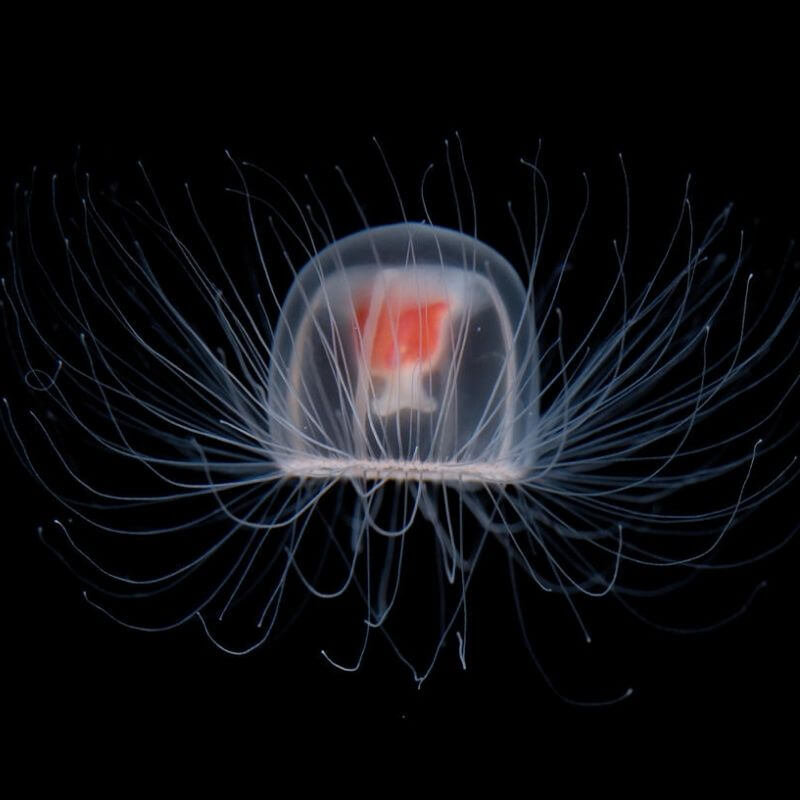
Now that we’ve talked about the jellyfish life cycle, the real fun can begin. Turritopsis dohrnii, a species of tiny jellyfish discovered in the Mediterranean Sea, can turn from medusas into polyps when damaged or starving. This would be like a butterfly turning back into a caterpillar or a frog turning back into a tadpole. T. dohrnii can go back and forth between its polyp and medusa stages, leading to it being known as “the immortal jellyfish.” Further research shows that other species of jellyfish may be able to reserve-age, too. Studying the cells of these jellyfish has potential uses for medicine.

a clear jellyfish with a bright red center

Some jellyfish get sleepy.

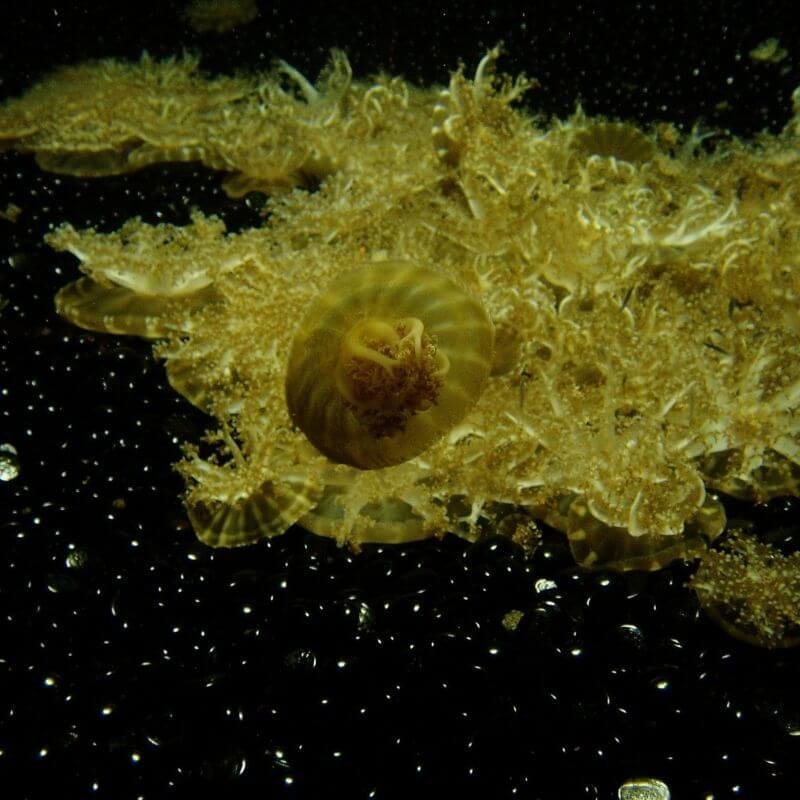
Since they lack a brain, jellyfish have a very different kind of nervous system from many animals. Jellyfish have what are called “nerve nets,” which are loose networks of neurons and sensors spread out across their bodies. Even with this very simple nervous system, jellyfish can carry out a variety of behaviors, including some once thought impossible. A 2017 study showed that one type of jellyfish (Cassiopea, or the upside-down jellyfish) enters a sleep-like state at night and were sluggish when they didn’t get a full night of sleep. This was the first time an animal without a brain was observed sleeping!

a cluster of jellyfish sleeping

Glow-in-the-dark jellyfish revolutionized biotechnology.

Bioluminescence is the ability of living things to make light through chemical processes. The jellyfish species Aequorea victoria, also known as the crystal jelly, glows bright green due to both bioluminescent and fluorescent proteins. The green fluorescent protein (GFP), which glows green under blue light, has since been cloned and inserted into other organisms’ genetic codes, allowing scientists to literally see how genes and cells work. According to Juli Berwald, scientists have used fluorescent proteins made from GFP to see how bacteria divide; how cancer, Alzheimer’s and HIV affect cells; to trace neurological pathways in the brain; to test for diseases like malaria and ebola; to build solar cells, and to make low-temperature, energy-efficient lasers.

bright green glow in the dark jellyfish

Scientists are making robo-jellyfish.

Scientists and engineers have created robotic jellyfish to assist them in studying the ocean. In 2018, Erik Engeberg, an associate professor of engineering at Florida Atlantic University, and his team tested prototypes of a soft-bodied robot that moves like a jellyfish. The robot can monitor and study the underwater environments of coral reefs without harming them, since these robo-jellyfish are quieter and safer for marine life than underwater drones. Dr. Edie Widder developed an electronic jellyfish as a lure to attract large, deep-sea predators. Her e-jelly, which used the bioluminescent patterns of the jellyfish Atolla wyvillei, was used to capture the first video footage of a living giant squid in 2012.

Expand on the activity! 

Want more jellyfish?

Check out these jellyfish live cameras from the Georgia Aquarium and Monterey Bay Aquarium!

Who is TIME’s First Kid of the Year? Get to Know Gitanjali Rao

Who is TIME's First Kid of the Year? Find out in this inspiring interview! 

Who says you have to be an adult to be a scientist? Definitely not this 15-year-old who is taking the world by storm! Orlando Science Center got the chance to chat with Gitanjali Rao.

Gitanjali Rao is a 15-year-old Indian American inventor, author, scientist, S.T.E.M. promoter, and engineer. She is working to solve some of the world’s messiest problems by inventing solutions - like a device that detects lead in drinking water, an app to help prevent cyberbullying, and more!

You've probably heard of TIME's Person of the Year, but for the first time ever, a kid was also chosen. Who is TIME's first Kid of the year? You guessed it, Gitanjali Rao! She was TIME Magazine’s first Kid of the Year, as pictured on the cover of the magazine. She was interviewed by Angelina Jolie and was chosen from more than 5,000 US nominees for the prestigious title of TIME’s Kid of the Year. "If I can do it, you can do it, and anyone can do it," she said.

While she is working to shape and save the future of our world, she has also written a new book entitled A Young Innovators Guide to S.T.E.M. Grab a copy and share it with your favorite aspiring scientist to help unlock their innovator within.

The Orlando Science Center had the pleasure of discussing some topics with Gitanjali. During our conversation, she explains that no matter your age or where you live, anyone can be a S.T.E.M. professional if they are passionate enough. We also had Gitanjali help us celebrate Asian American and Pacific Islander Heritage Month, by telling us what heritage means to her.

...heritage is a unique and inherited sense of one's identity, passed down from generations. This is what makes us who we are.

Gitanjali Rao

Gitanjali also highlights “values, traditions, culture, art, and cooking styles” which help us stay in touch with our heritage. She ends by telling us that she is proud of who she is, and her heritage. She believes everyone should be, too, because that is what makes us... us

Thanks Gitanjali Rao for helping OSC inspire science learning for life, no matter who we are, where we come from, and no matter our age. And a huge thanks for helping us celebrate Asian American and Pacific Islander Heritage Month. How will you be celebrating this heritage month? Try taking some time to find out what you can do for the community.

Orlando Science Center Experiences for Adults • Never Stop Learning!

We may host iconic field trips but the Science Center is a great destination for all ages! Check out these Orlando Science Center experiences for adults!

Learning never stops at Orlando Science Center. With four floors of exhibits, films, and live shows, we are proof that there is no shelf life on curiosity and imagination.

In addition to bringing in several large-scale exhibits each year, we offer a rotating schedule of films, both giant screen and digital, and a host of other new experiences. Lighter attendance on the weekdays this fall offers a more relaxed atmosphere, allowing you to explore displays and exhibits at your own pace. 

From animal encounters to live shows to interactive exhibits, Orlando Science Center brings you four floors of affordable, air-conditioned, engaging fun and discovery that will show you wonder never goes out of style.


Theaters

Enjoy extreme films on subjects ranging from nature to science to adventure.

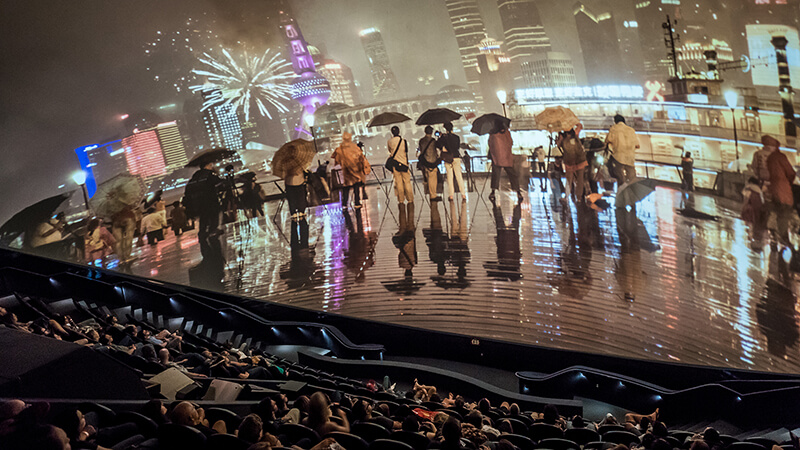
A giant-screen movie showing an image of people on a city street.

Dr. Phillips CineDome

Giant-Screen Theater – Level 1*

Choose a seat and be instantly transported to exotic and interplanetary lands. A projector's fish-eye lens projects onto an 8,000 square-foot screen, creating a 180-degree image that immerses the audience and extends beyond their peripheral vision.

*Wheelchair access located via Level 3.

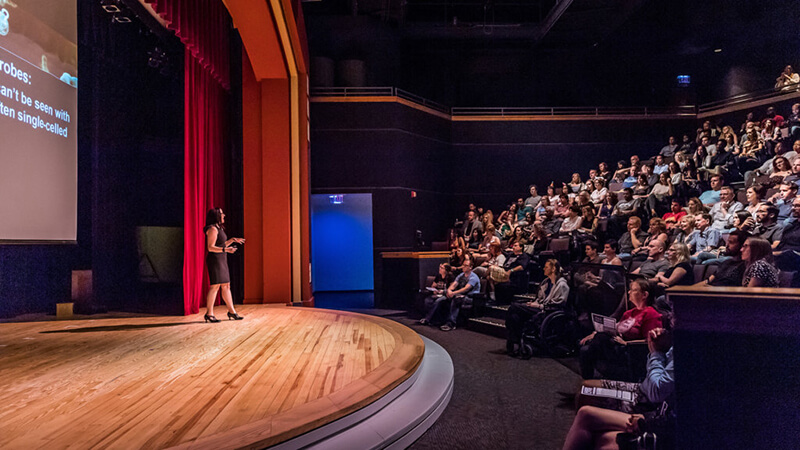
Guests listening to presenter on stage of Digital Adventure Theater.

Digital Adventure Theater

Immersive Digital Films – Level 2

Dive into the action inside the stadium-seated theater and watch films presented in 2D with state-of-the-art 4K digital projection and 7.1 surround sound! This venue is also home to Science Live! Shows, guest speakers, and special presentations offered at various times throughout the year. 


Educational and Hands-On Exhibits

Four floors of exhibit halls feature a vast array of exciting, interactive experiences from down-to-earth explorations in natural science to the high-tech world of simulation technology.

guests in the fusion

Fusion: A STEAM Gallery

See art from a new and exciting perspective as it’s fused together with STEM (Science, Technology, Engineering, and Mathematics).

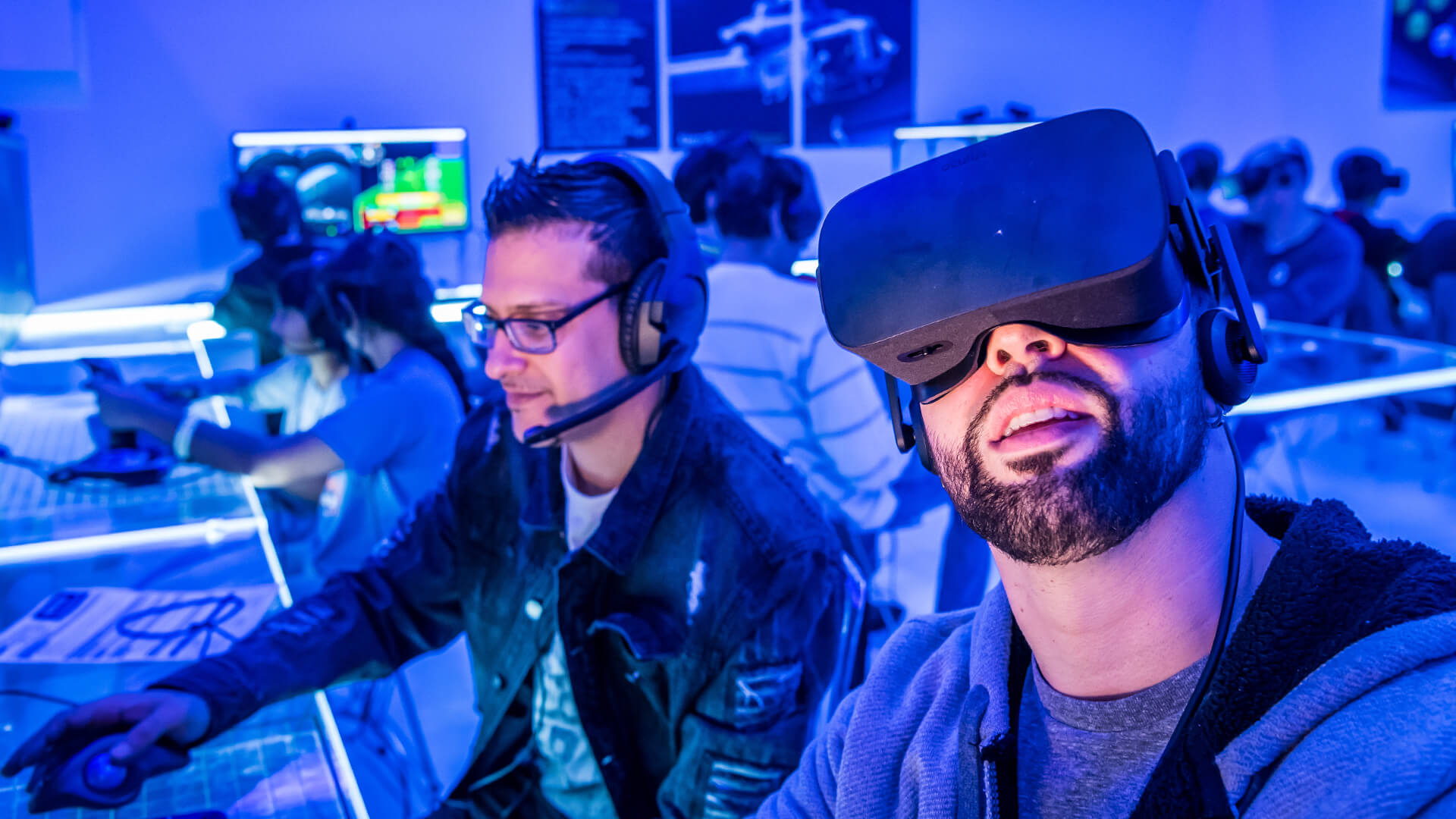
Visitors use virtual reality technology in the Flight Lab experience.

Flight Lab

Climb into the cockpit and experience the life of a pilot in this immersive experience for guests ages 13 and up!

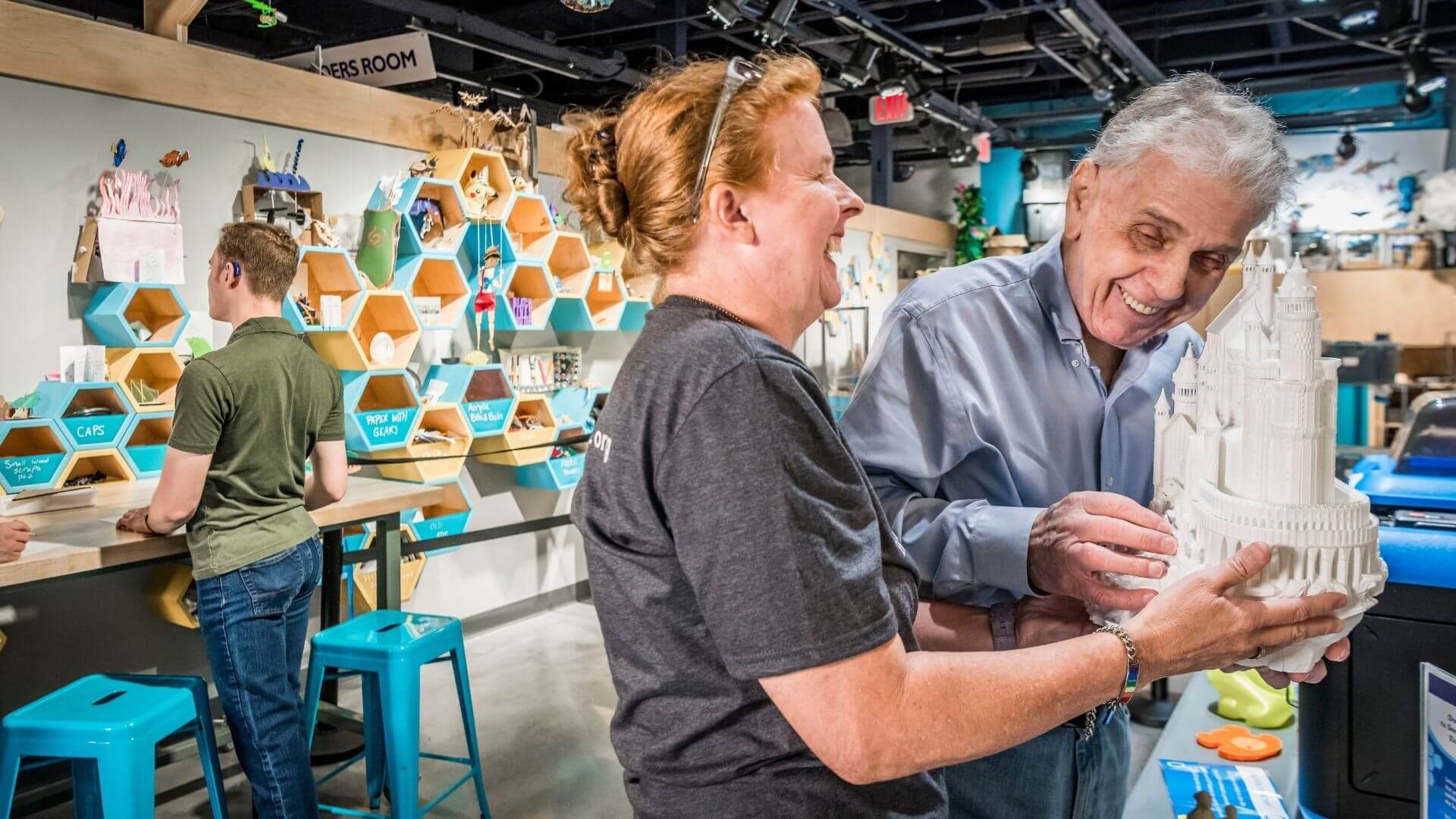
guests in the hive

The Hive: A Makerspace

Access to real tools, materials and mentors that will help you turn your creative ideas into reality!


All-New Experiences

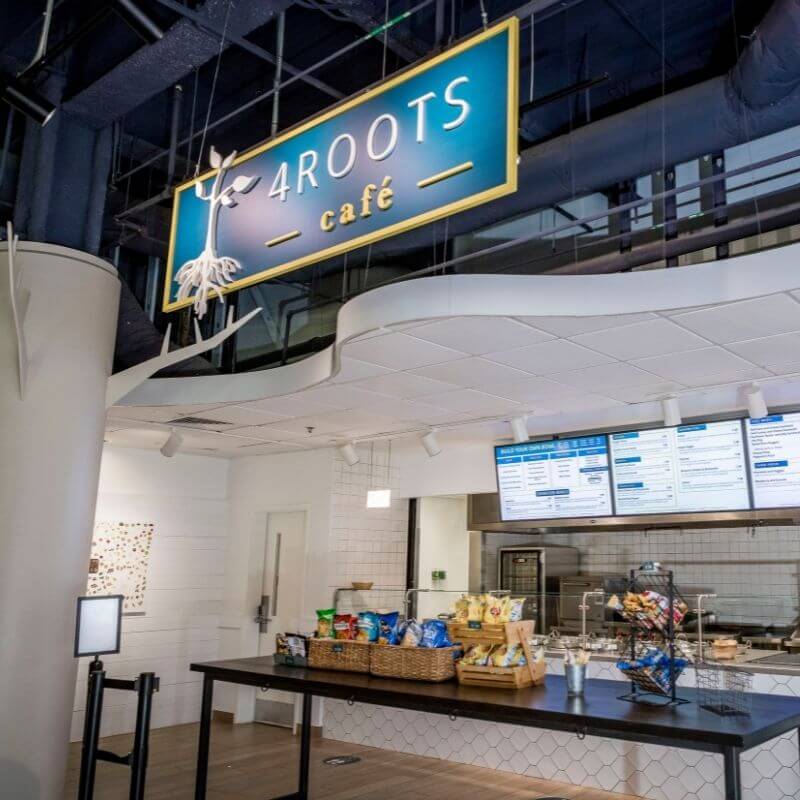
4Roots cafe

4Roots Cafe

An entirely new concept in dining that will feed both your mind and body by John Rivers, of 4Rivers BBQ and the 4Roots team. Enjoy fresh, locally sourced food that is as tasty as it is good for you.

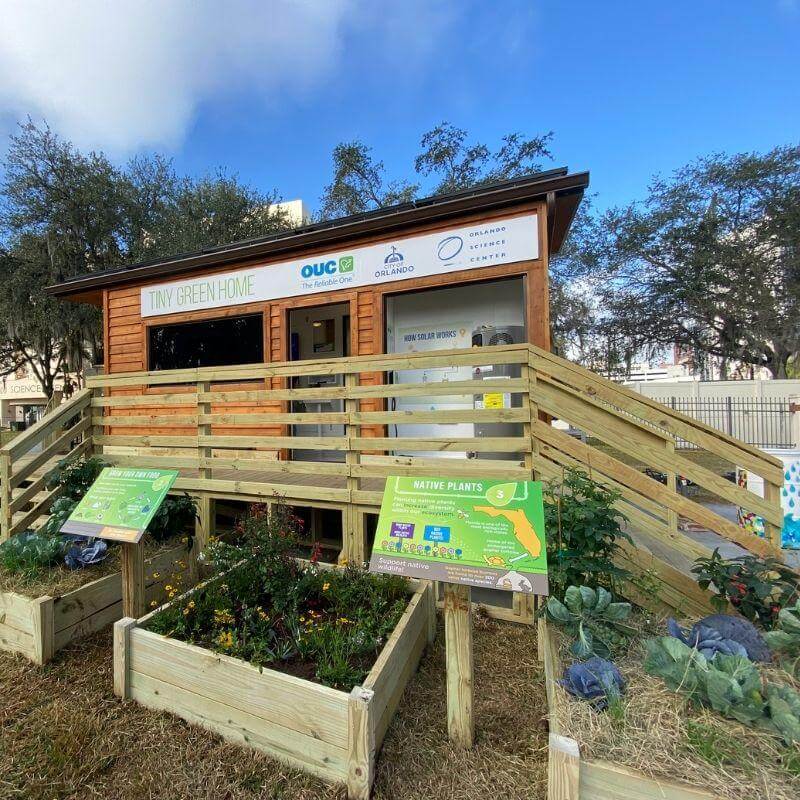
Tiny Green Home Tours

From sustainability to recycling, this Tiny Green Home is showing us how to make a BIG difference!
 
Tours will be scheduled on select days and times and sign-ups are first come, first served.

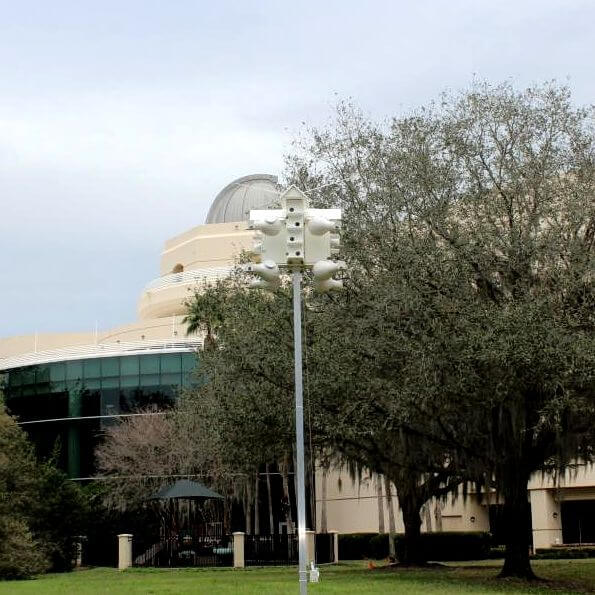
Purple Martins House

The Science Center is partnering with Disney’s Animals Sciences & Environment to carry out research on purple martins birds! Learn about this exciting conservation project with tours of their new house.

Want FREE Admission to Orlando Science Center All Year Long?
Become a Member Today!

Annual memberships to Orlando Science Center include major perks like free admission, free parking, free admission to events like Science Night Live and Otronicon, special member-only previews of exhibits and films, and so much more! 

Purple Martins: Their Home at Orlando Science Center and Conservation Efforts

Did you know purple martins travel over 5,000 miles a year? They’re the largest swallows in North America and they spend most of the fall and winter in Brazil. When spring comes along, they make the journey all the way to the states where they nestle in their cozy homes built by us!  

Yes, you read that right, purple martins don’t build their own nests. They actually depend entirely on human-made nests to raise their chicks. And they have been for a long time. Purple martins have adapted to humans providing birdhouses for them, so they can’t create their own. 

Disney’s Animals, Science and Environment department has built a specialized purple martin house for us at the Science Center, which is located just outside the 4Roots cafe in Loch Haven Park.  

At OSC, we monitor 22 nesting cavities and use two types of housing: a wood house and aluminum gourds. Active nest monitoring is critical and our team checks every cavity multiple times a week from March to June. It’s possible for other birds to take over the nests meant for purple martins, which is why it’s important to actively monitor them.  

Members of our Life team also lower our purple martin house several days a week to make sure it’s ready for our guests! They observe every nest, record what they see and send their observations to scientists who are working hard to preserve purple martin populations.  

Last year it was confirmed that one fledgling, a chick that successfully left the nest, came from one of our aluminum gourds! The first eggs appeared in mid-April, a chick hatched in May and the fledgling was documented by early June. This was a great milestone for the colony! As the 2026 season is still in its early stages, we’re still waiting for our purple martin friends to visit. 

Florida has lost nearly 50% of its purple martin population in the last 20 years due to loss of habitat and decreased insect populations. But the good news is that we can all help provide a safe space for them in our very own yards! By adding native plants to your yard, patio, school, or business, you can provide a much-needed rest stop for martins on their 5,000 mile journey. The martins will also appreciate the buffet of native insects living in your garden! Enter your ZIP code HERE to find local nurseries and websites where you can get native plants for your home or community garden.  

As for the incredible researchers and scientists, they use a conservation tool called bird banding to track purple martins across seasons and their migration routes. This is just one way they know that purple martins return to the same nesting sites year after year. 

To learn more about our house and help us create the perfect home for baby birds, visit the Life exhibit and join us for a Purple Martin Tour or read more about purple martins! 

This project was made possible with support from Disney Conservation.


Orlando Science Center Wedding Options for Every Couple

Say "I do" to Orlando Science Center Weddings

With a variety of indoor and outdoor spaces, Orlando Science Center sets the perfect scene for an unforgettable wedding! Whether you’re looking for an epic Star Wars adventure, a fairy tale ending, a classic celebration, or anything in between, Orlando Science Center has everything you’ll need to tie the knot in your very own style.

With an Orlando Science Center wedding, not only will you have the opportunity to make the space your own, you’ll also be providing mission-enabling support to our organization, ensuring that inspiring and engaging educational experiences are available for curious minds of all ages throughout our community and beyond. 

wedding at sunset on orlando science center terrace
PB&J studios
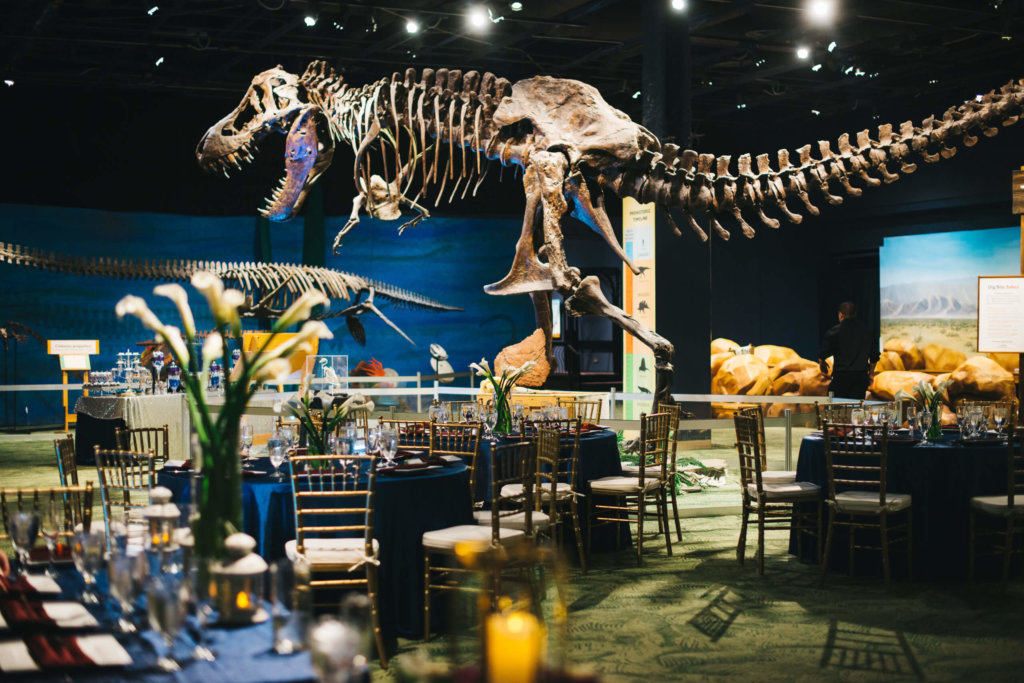
Dinner tables set up around a t-rex
Rudy & Marta Photography

Tie the knot with a ceremony on the terrace, enjoy cocktail hour as the sun sets in the distance overlooking “The City Beautiful” or dance the night away under a canopy of market lights during a moonlit reception. The terrace invites each couples’ unique style, taste, and personality to take shape in our most customizable space. It also provides plenty of room for dinner, dancing, and all of your wedding celebration!

Looking for some larger-than-life wedding guests? Look no further than DinoDigs! This one-of-a-kind space boasts dramatically high ceilings and epic photo backdrops, ensuring a memorable reception or cocktail hour. Guests are sure to have a pre-historic good time taking a selfie with one of many dinosaurs, digging for fossils, or roaring alongside an animatronic dino. DinoDigs provides a unique, whimsical, and exciting atmosphere unlike anything in Orlando. 

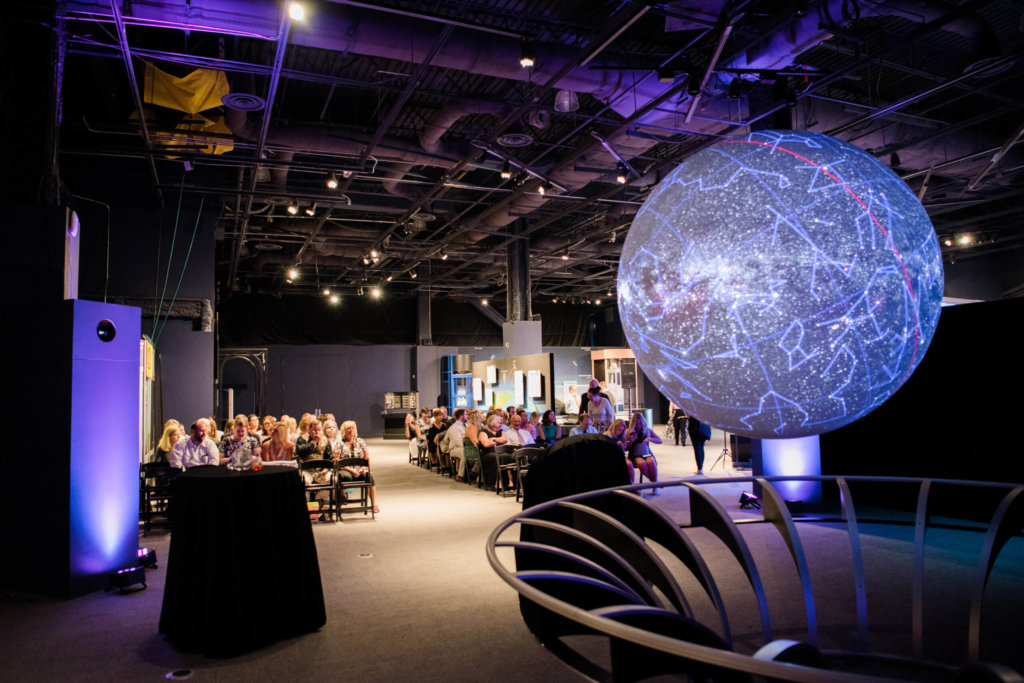
Next, stroll into the Our Planet exhibit for a ceremony space that is out-of-this world, or a fun interactive cocktail hour. Say “I Do” in front of a suspended globe with projected images of Mars, the Moon, or even objects from galaxies far far away. Watch as guests unearth the wonders of Our Planet during cocktail hour with an array of engaging hands-on exhibits and let science set the scene!

Worried about the weather? Don’t be. Orlando Science Center wedding packages include plans for a weather back-up just a couple of feet away inside our facility. If there’s one thing we know about planning a Florida wedding, it’s that weather backups are a must!

Floating sphere with stars
Lisa Marshall Photography

You’ve picked your venue, now what?

Our events team is here to help! From recommendations, creating room diagrams, and contacting and scheduling vendors to conducting rehearsals the day before, setting up décor, and sending everyone down the aisle on the big day, our events team will assist in every step of the way to help make your wedding dreams come true! 

 Your wedding venue should be a reflection of who you are. When your guests arrive, they’ll know they stepped into a place that captures the essence of your relationship.

Adventure seekers, constantly curious, epically fun, uniquely different. If these describe you and your partner, then you may have just found your wedding’s home. Contact Helen Tillem at htillem@osc.org or visit osc.org/weddings to book your event now.

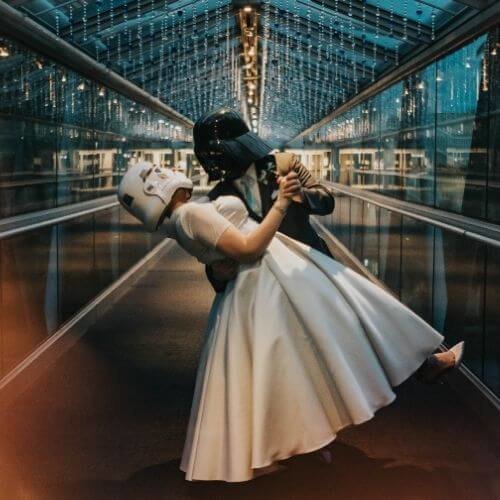
Groom in Darth Vader mask dipping Stormtrooper in a dress
SB Vision

Books About Exploring Space for Any Planet Pioneer

From the moons of Endor to the moons of Jupiter, astronaut enthusiasts will love these books about exploring space!

Scientists from Albert Einstein to Carl Sagan have emphasized the importance of imagination. For something to be achieved, it must first be imagined. It’s little wonder then that science fiction has time and time again become reality.
Jules Vern imagined landing on the moon as far back as 1865 with From the Earth to the Moon. In 1953, Ray Bradbury described listening devices that sounds suspiciously like Bluetooth headsets in Fahrenheit 451. In 1898, the internet was described in a short story called “From the ‘London Times’ of 1904” by none other than Mark Twain. These are but a few examples.

In this spirit, here are some books about exploring space that you can find on your library’s shelves that complement the Science Center’s exhibit Our Planet. They’ll have you imagining what could be next!

Books selected by the Acquisitions Services department of Orange County Library System.


Whether you're a Trekkie or a Wookie, these books about exploring space are phenomenal for all sci-fi fans! 

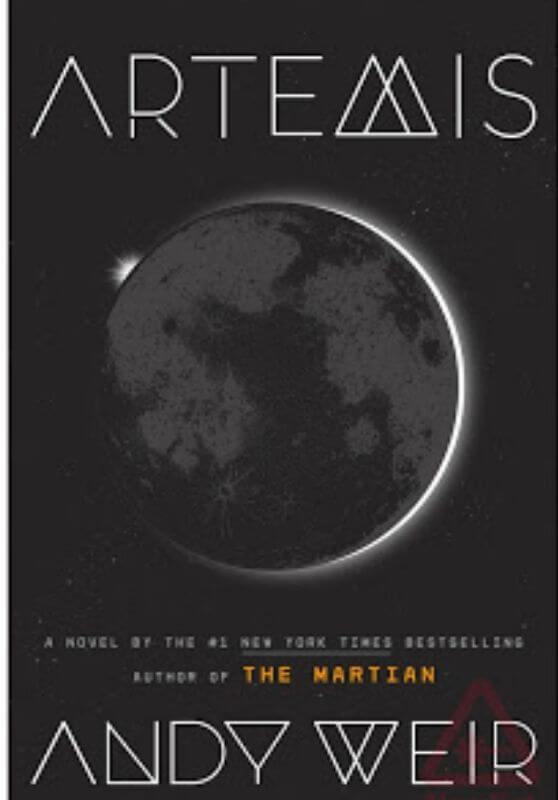
Artemis
by Andy Weir

Taking place in 2080, this novel is set in Artemis, the first and thus far only city on the Moon. The main character finds herself caught up in a conspiracy to control the city.

Artemis by Andy Weir

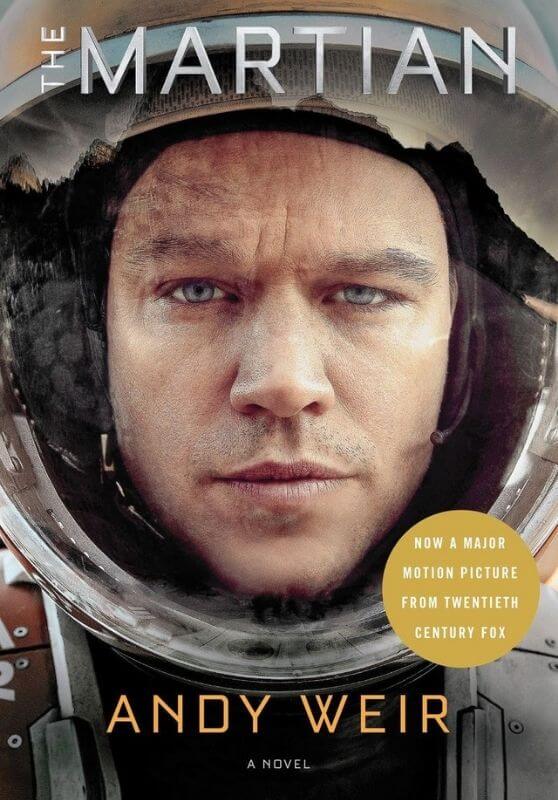
The Martian
by Andy Weir

The story follows an American astronaut, Mark Watney, as he becomes stranded alone on Mars in 2035 and must improvise in order to survive.

The Martian by Andy Weir

Aurora
by Kim Stanley Robinson

Jumping forward in time quite a bit, this novel is set in 2545 and concerns an interstellar ark starship launched to being a human colony. The story is narrated by the ship’s artificial intelligence.

books about exploring space - Aurora by Kim Stanley Robinson

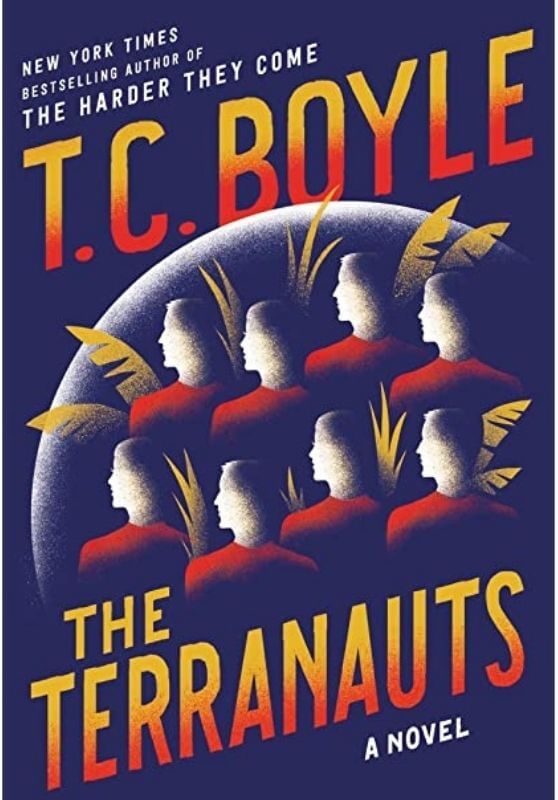
The Terranauts
by T.C. Boyle

A similar ark theme but set in a biosphere in 1994 as climate change threatens Earth. Human nature is under the microscope as eight scientists live and work in a prototype of a possible off-earth colony.

Books about exploring space - The Terranauts by T.C. Boyle

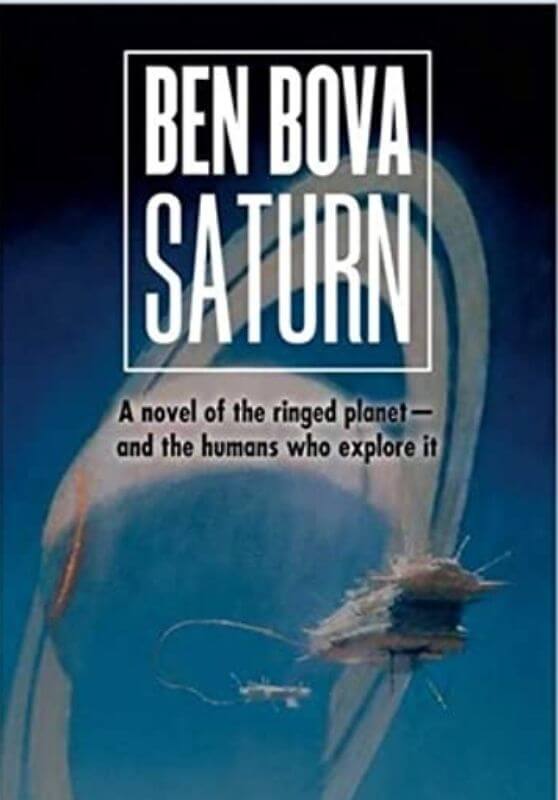
Saturn
by Ben Bova

Part of the author’s Grand Tour Series, each novel follows the colonization of the Solar System by humans in the late 21st century.

Saturn by Ben Bova

Check out the history, herstory, and future of space travel with this non-fiction selection!


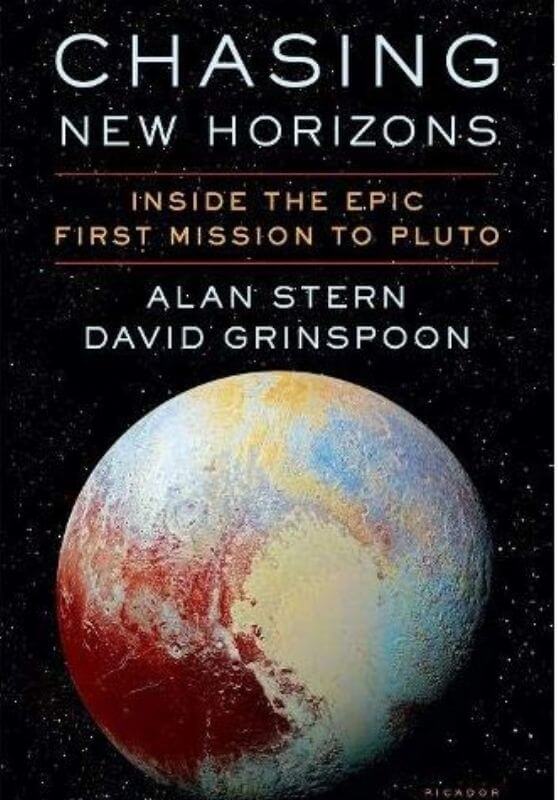
Chasing New Horizons: Inside the Epic First Mission to Pluto
by Alan Stern and David Grinspoon

The story of the men and women behind this amazing mission and their decades-long commitment and persistence. You’ll also get a look into the political fights within and outside of NASA.

Non Fiction Books About Exploring Space Chasing New Horizons Inside the Epic First Mission to Pluto by Alan Stern and David Grinspoon

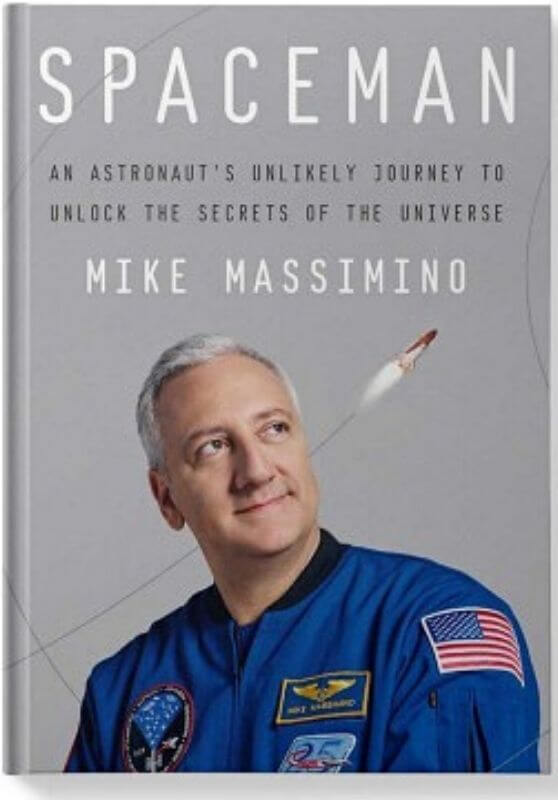
Spaceman
by Mike Massimino

Have you ever wondered what it would be like to look back on Earth from outer space and see the surprisingly precise line between day and night? This author has been there and he puts you inside the astronaut suit with his book.

Spaceman by Mike Massimino

Rise of the Rocket Girls: The Women Who Propelled Us, from Missiles to the Moon to Mars
by Nathalia Holt

Based on extensive research and interviews with all the living members of the team, this is the riveting true story of the women who launched America into space.

non fiction books about exploring space -Rise of the Rocket Girls: The Women Who Propelled Us, from Missiles to the Moon to Mars by Nathalia Holt

The Mighty Mars Rovers: The Incredible Adventures of Spirit and Opportunity
by Elizabeth Rusch

For younger readers, this books tells of two Mars rovers that were intended to do research for three months and wound up exploring the red planet for six years.

The Mighty Mars Rovers The Incredible Adventures of Spirit and Opportunity by Elizabeth Rusch

Packing for Mars
by Mary Roach

From the space shuttle training toilet to a crash test of NASA's new space capsule (cadaver filling in for astronaut), Roach takes you on a surreally entertaining trip into the science of life in space and space on Earth.

Packing for Mars by Mary Roach

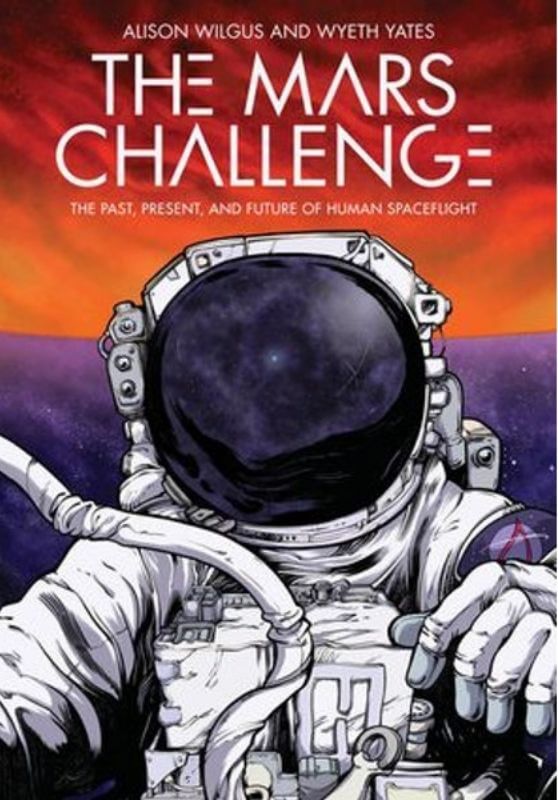
The Mars challenge: The Past, Present, and Future of Human Spaceflight
by Alison Wilgus

This nonfiction graphic novel in which a teen who dreams of being the first woman on Mars is taken on a conceptual journey of what that might be like.

non fiction books about exploring space - The Mars challenge: The Past, Present, and Future of Human Spaceflight by Alison Wilgus


Try a Stellar Activity!

Have you ever looked up at night and thought "what does the moon feel like?"

Using our DIY Moon Sand recipe, you too can experiment and make your own moon craters and touch the surface of the moon!