Using Science to Outsmart the Storm

Using Science to Outsmart the Storm 

From June through November, Floridakeeps a close watch on the tropics—andfor good reason. Hurricanes, with windsstarting at 74 miles per hour, are amongthe most destructive forces in nature.According to the National Oceanic andAtmosphericAdministration, the Atlanticbasin averages 14 named storms, 7hurricanes, and 3 majorhurricaneseach year.  

Florida is no stranger to these storms,weathering Hurricane Charley (2004),Hurricane Michael (2018), and mostrecently, Hurricane Helene (2024)—among many others over the years.While it's always smart to evacuate if instructed to by local officials, sometimes we have to shelterin place.That’s why knowing how to staysafe at home is so important.  

A basic hurricane kit with extra clothes,important documents, flashlights, andnon-perishable food is a good start. Butprotecting your home can make a bigdifference too. Here are five science-based ways to prepare: 


 1. Protect Structural Integrity 

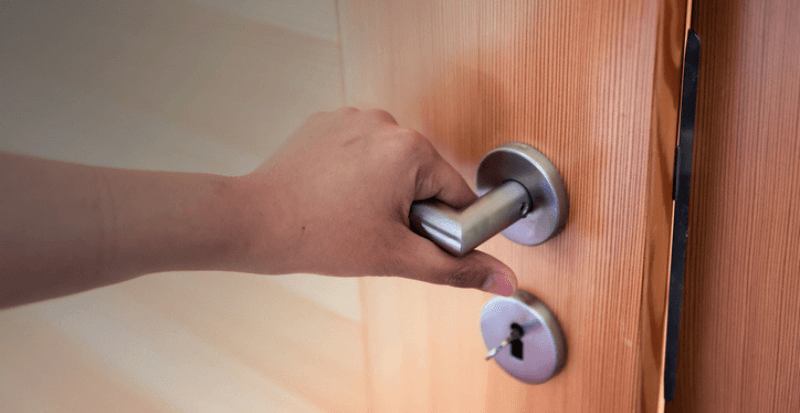
Closing all interior doors during astorm might seem minor, but it helpsreduce pressure on your roof. If awindow or door breaks, air rushesin and pushes upward, like inflating aballoon inside your home. 

This added pressure can cause majorroof damage. According to theInsurance Institute for Business andHome Safety, keeping interior doorsclosed can reduce that pressure by upto 30%. 
2. Bring the Outside In 

Outdoor items like chairs, toys, andtrash cans can become dangerousprojectiles during strong winds. TheNational Hurricane Center warnsthat wind-borne debris is a leadingcause of damage during hurricanes.As wind speed increases, so does thekinetic energy behind objects it lifts.Even small items can break windowsor cause injuries. Bring in anything thatcould get picked up by the wind, andanchor heavier items like grills andpropane tanks. 

3. Keep Water Out 

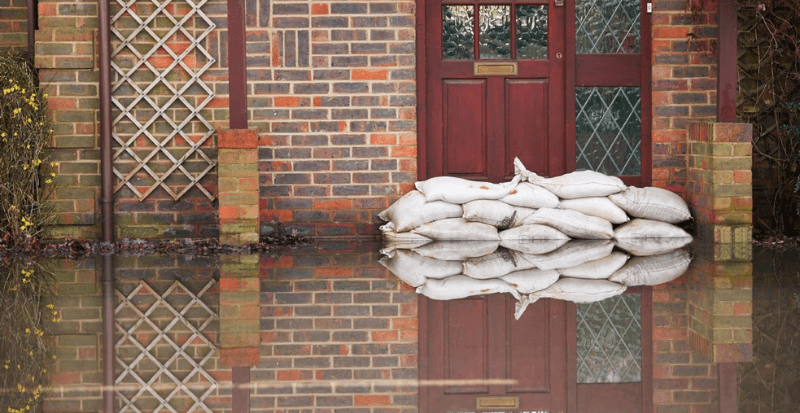
Flooding is one of the mostcommon—and costly—effects ofhurricanes, especially in low-lyingareas. Just a few inches of water cancause serious damage. Use sandbagsor plastic sheeting to block doorwaysand prevent water from seeping inside.FEMA recommends using sandbagswith plastic liners to better directwater flow away from your home.Sandbags absorb water and act liketemporary levees. 
4. Emergency Water Supply 

When power outages strike, so canwater issues. That’s why it’s smart tostore clean water ahead of time, notjust for drinking, but also for flushingtoilets and bathing. Filling bathtubs,buckets, or large storage containerswith water before a storm ensuresyou’ll have what you need for basicsanitation. The Center for DiseaseControl and Prevention recommendsat least one gallon of water per personper day for three days. 

5. Power Up the Essentials 

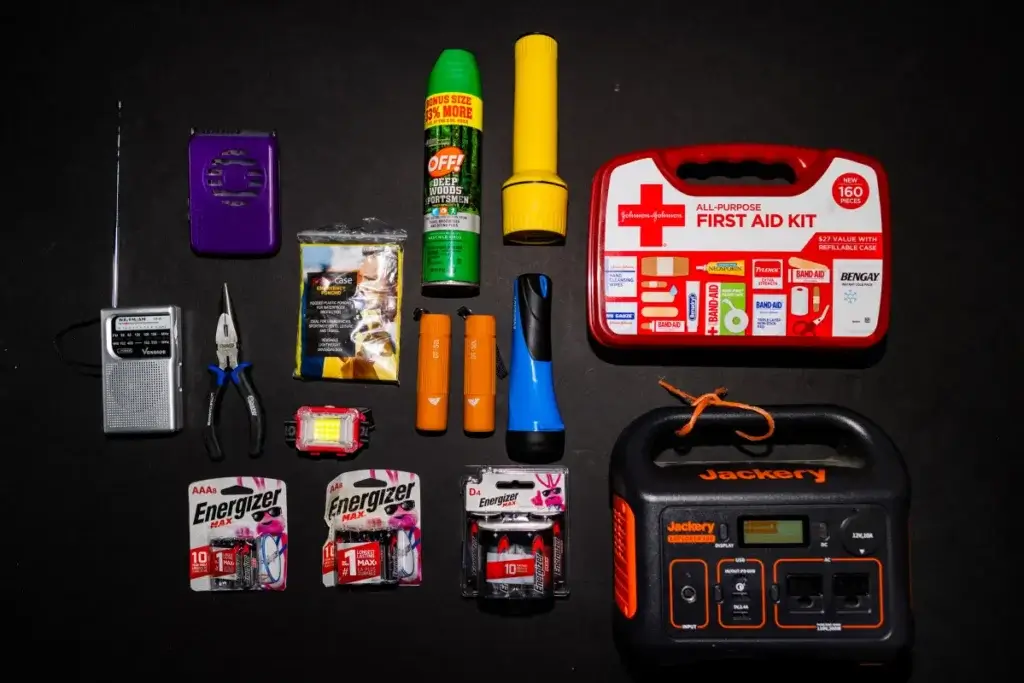
Hurricanes often cause power outages.Keep flashlights, portable chargers, andbattery-powered radios handy. If celltowers go down, radios help you stayinformed. Also, think about food safety:a fridge without power keeps food safefor about 4 hours; a full freezer, up to48 hours. Keep the doors closed anduse a thermometer to make sure foodstays under 40°F. 
Hurricanes can be intimidating, butknowledge is one of our best defenses.And, if schools remain closed once theskies clear and the power comes backon, we’ve got your family covered withour Hurricane Camps, filled with learningand fun for the little ones. Stay safe,stay smart, and let’s weather the seasontogether. 
Hydro-Dipped Painted Pot Activity for Kids

Dip into gardening with a hydro-dipped painted pot activity

Lend a hand to our pollinating pals with a hands-on hydro-dipped painted pot activity that kids of all ages will enjoy! 

Hydro-dipping is the process of decorating an item by dipping it into water with a film of paint floating on top. The paint sticks to the object perfectly and completely, no matter its shape! 


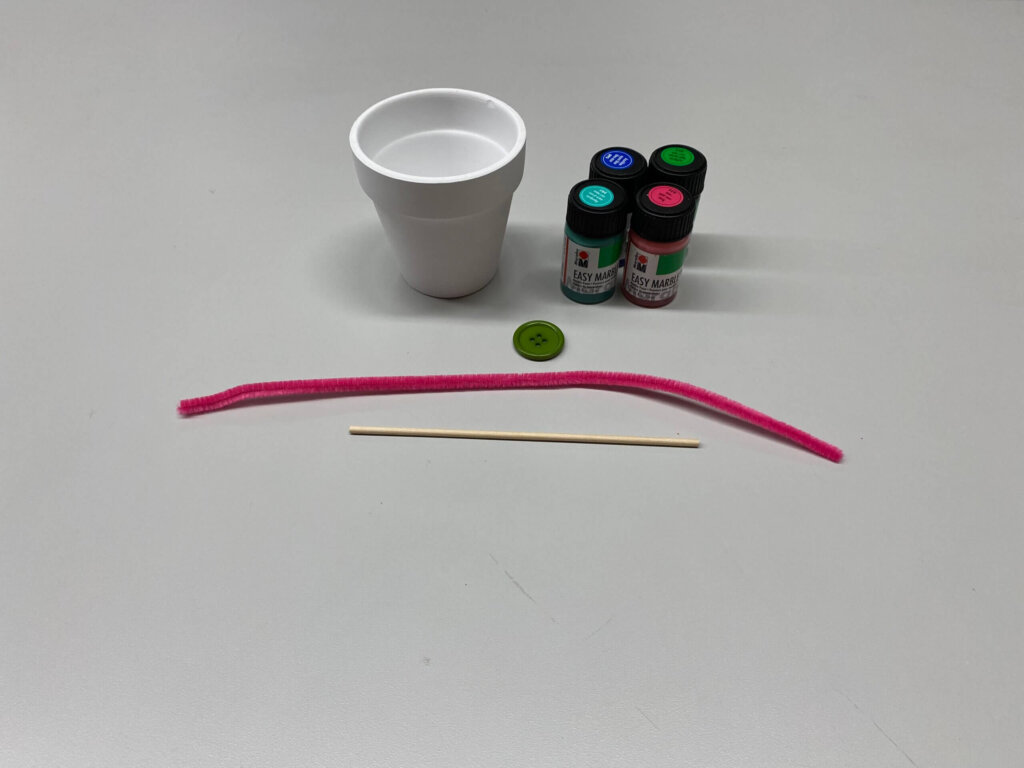
Materials:

  • White terracotta pot (A regular terracotta pot will work too, the colors will just look slightly different!)  
  • 5-gallon bucket, or another large container 
  • 1 large button  
  • 1 pipe cleaner  
  • 1 dowel rod   
  • Paper towels 
  • Hydrophobic Marbling Paint (We use the brand Marabu) 
Materials needed for hydro-dipped activity

Step 1:

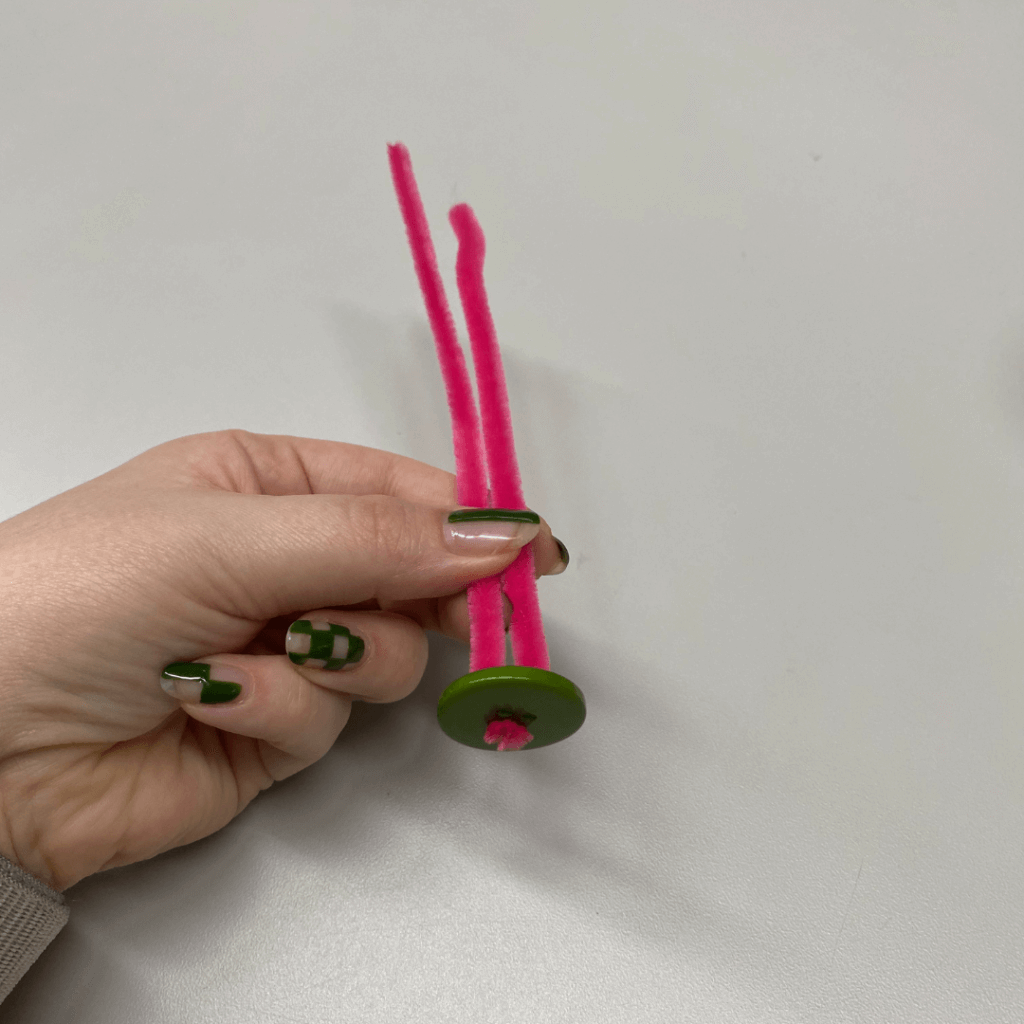
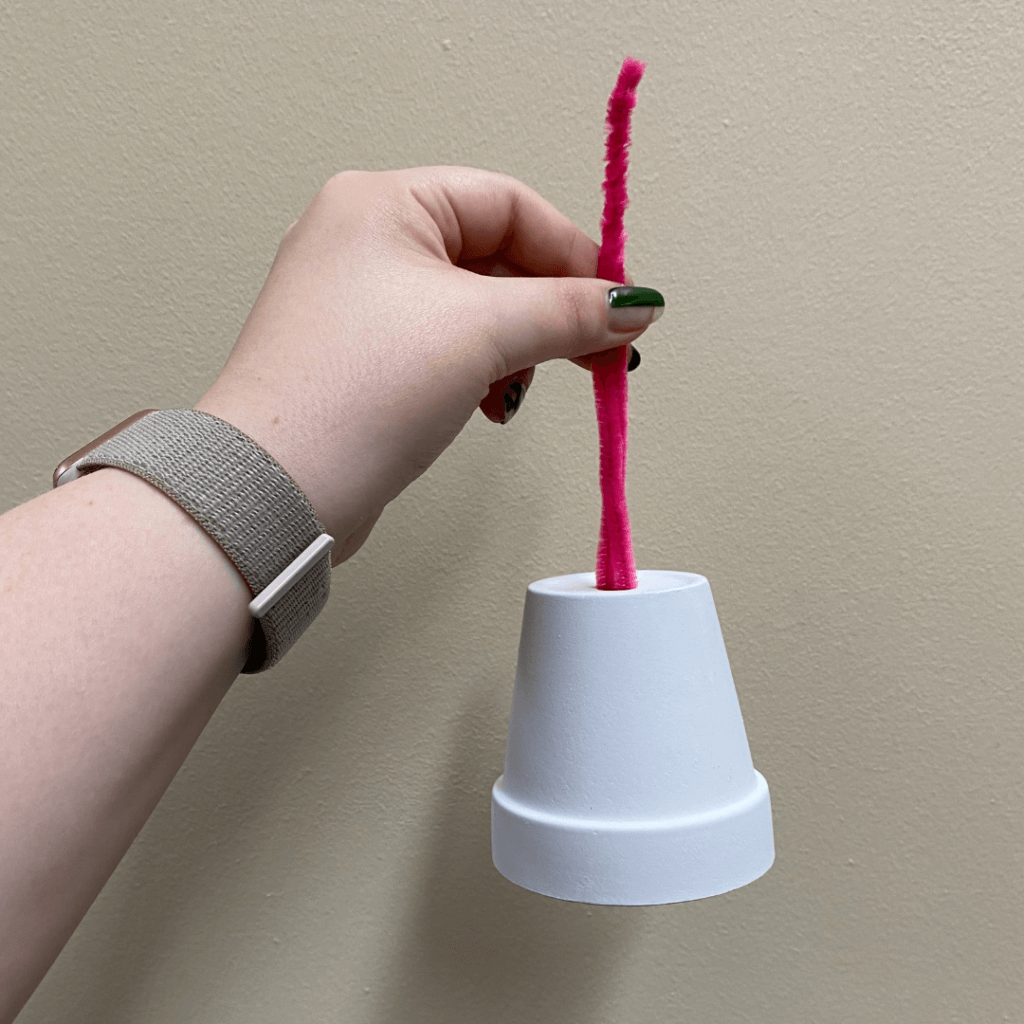
Create a Hydro-Dipping Mechanism!Thread both ends of your pipe cleaner into the button, then pull your button down towards the middle.Next, twist your pipe cleaner ends together. This will be used as a hydro-dipping mechanism for your pot. Poke the twisted ends of the pipe cleaner through the drainage hole at the bottom of the pot. The result should leave you with pipe cleaner to hold while dipping so your hands stay clean. 

Creating a dipping mechanism

Step 2:

Prepare your Dipping Station!Fill your bucket or container with enough water for your pot to be fully submerged when dipping.At this time, it’s a good idea to set up your paint, dowel rod, and some paper towels near your bucket.  

pre hydro-dipped pot

Step 3:

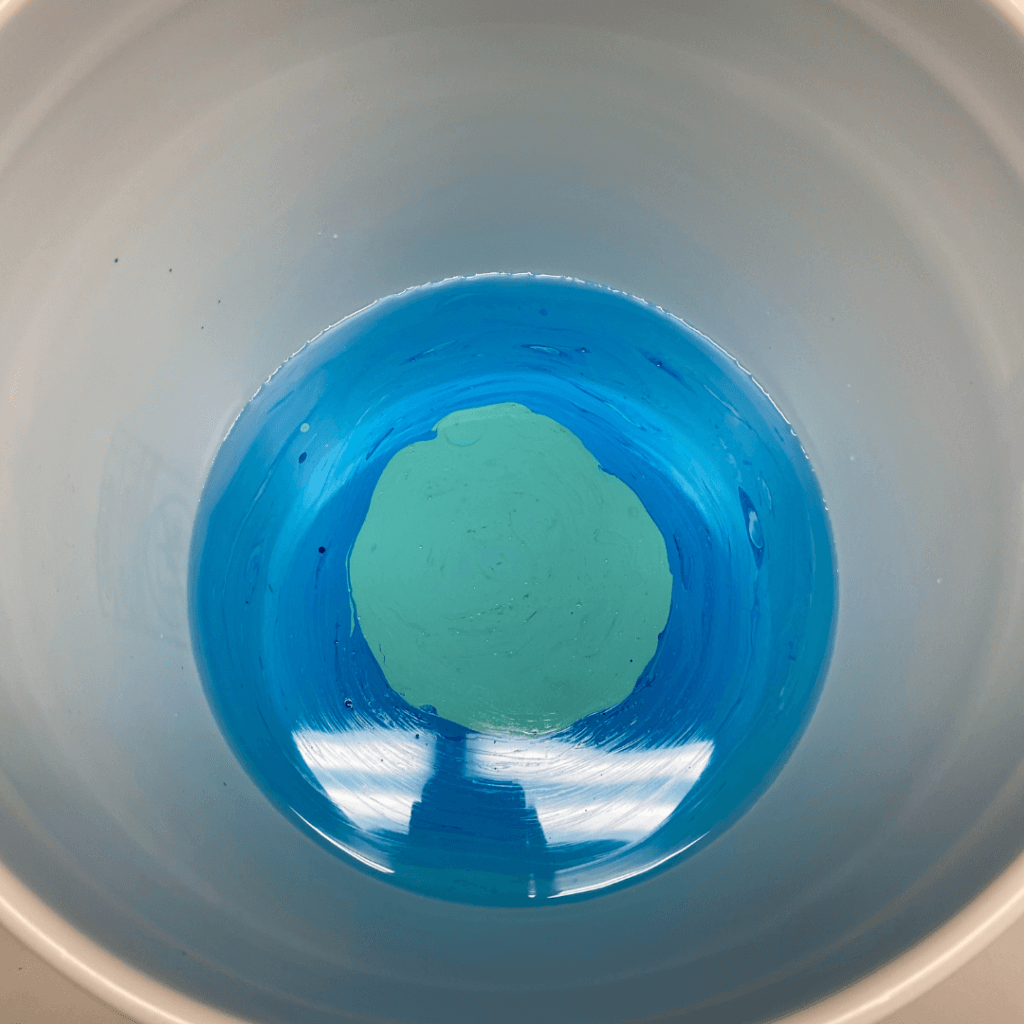
Pick your Palette! Choose at least two colors of paint and shakeabout 5-6 drops of each into the bucket.  

pick your pots colors

Step 4:

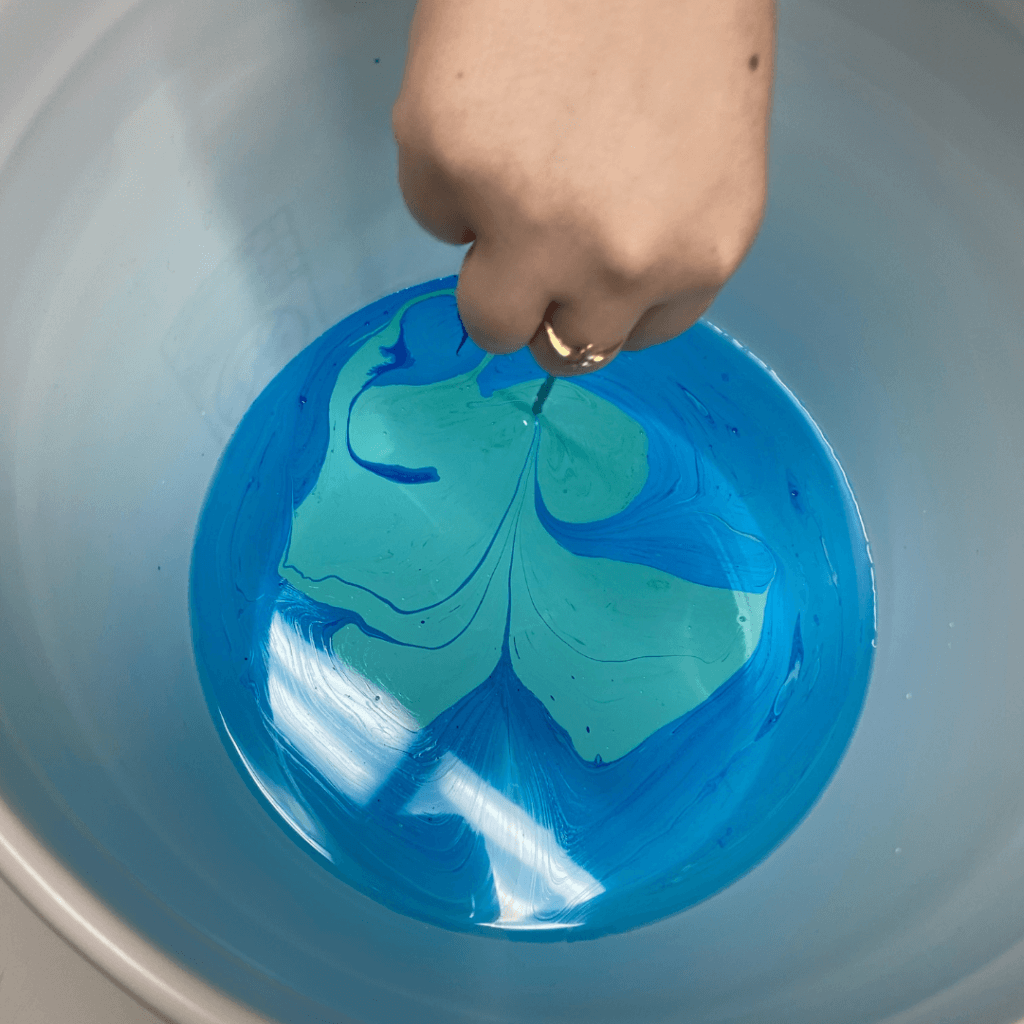
Give it a Swirl!Working quickly, use your dowel rod and gently make a few swirls in the paint. This will help achieve a marbled look when dipping the pot. Be careful! The paint will want to stick to the dowel rod!  

swirl your paint

Step 5:

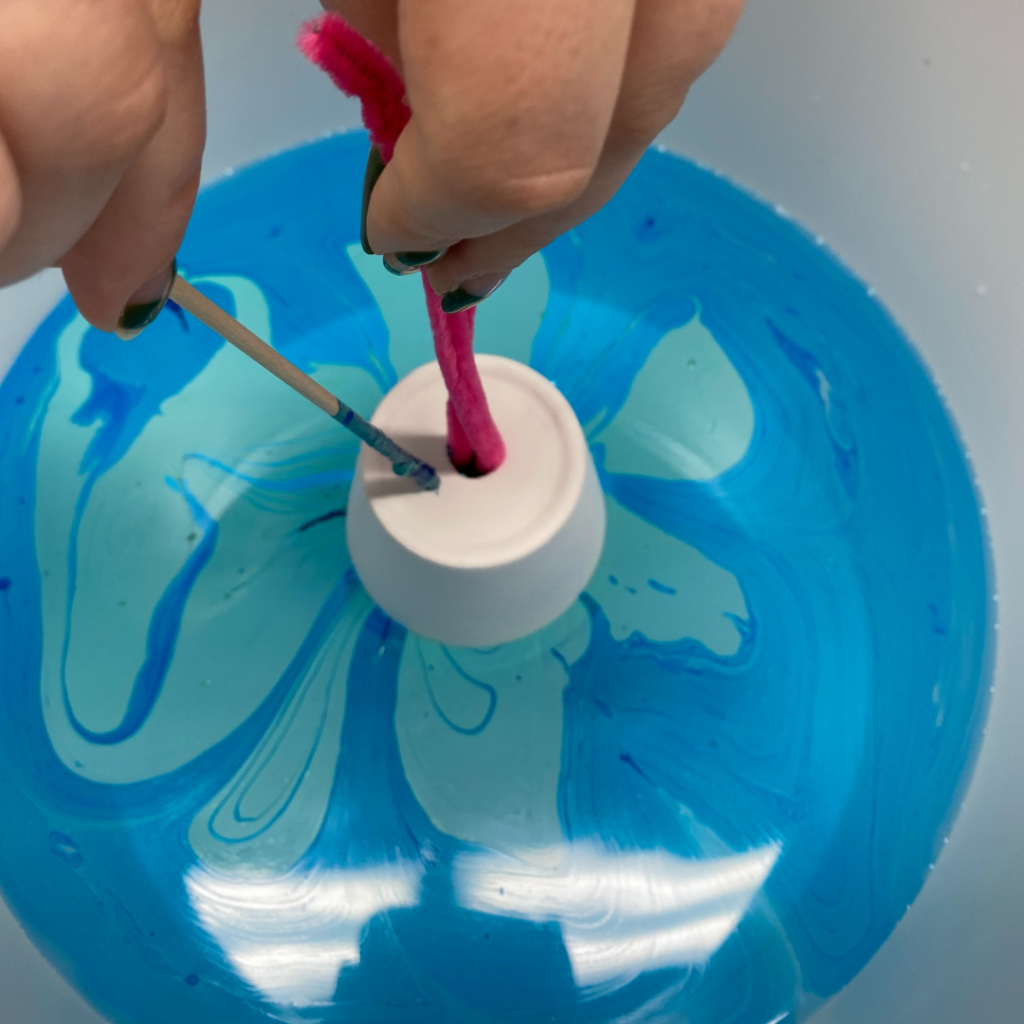
Dip your Pot!Slowly dip your pot into the paint. You can use your dowel rod to help push your pot down into the water by gently pressing down on the bottom of the pot with the dowel rod

hydro-dip your pot

Step 6:

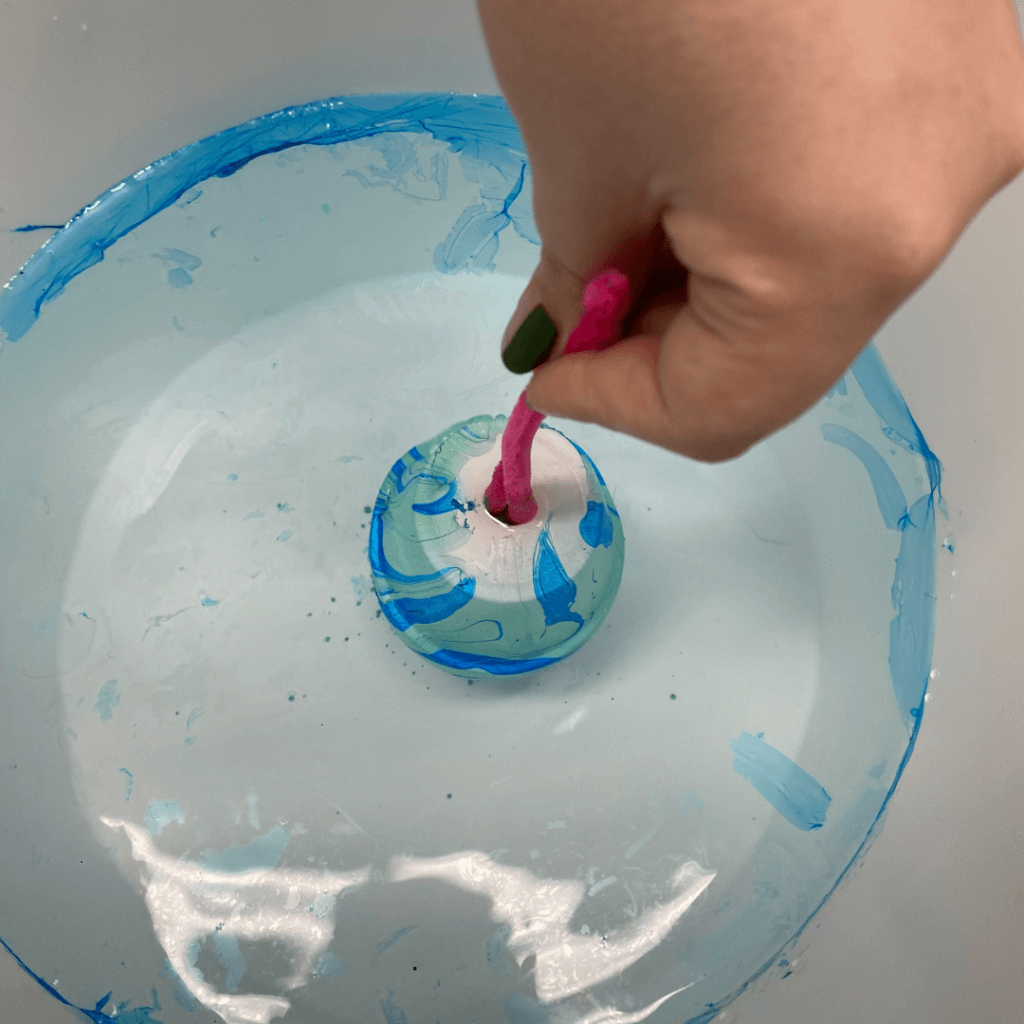
Clean the Water!Before pulling your pot back out of the water, use the dowel rod to move any excess paint still floating on the top of the water away from your pot. This is to avoid your pot getting a double coating of paint and looking clumpy. Once the water around your pot is clean and clear, pull your pot out!  

clean the water

Step 7:

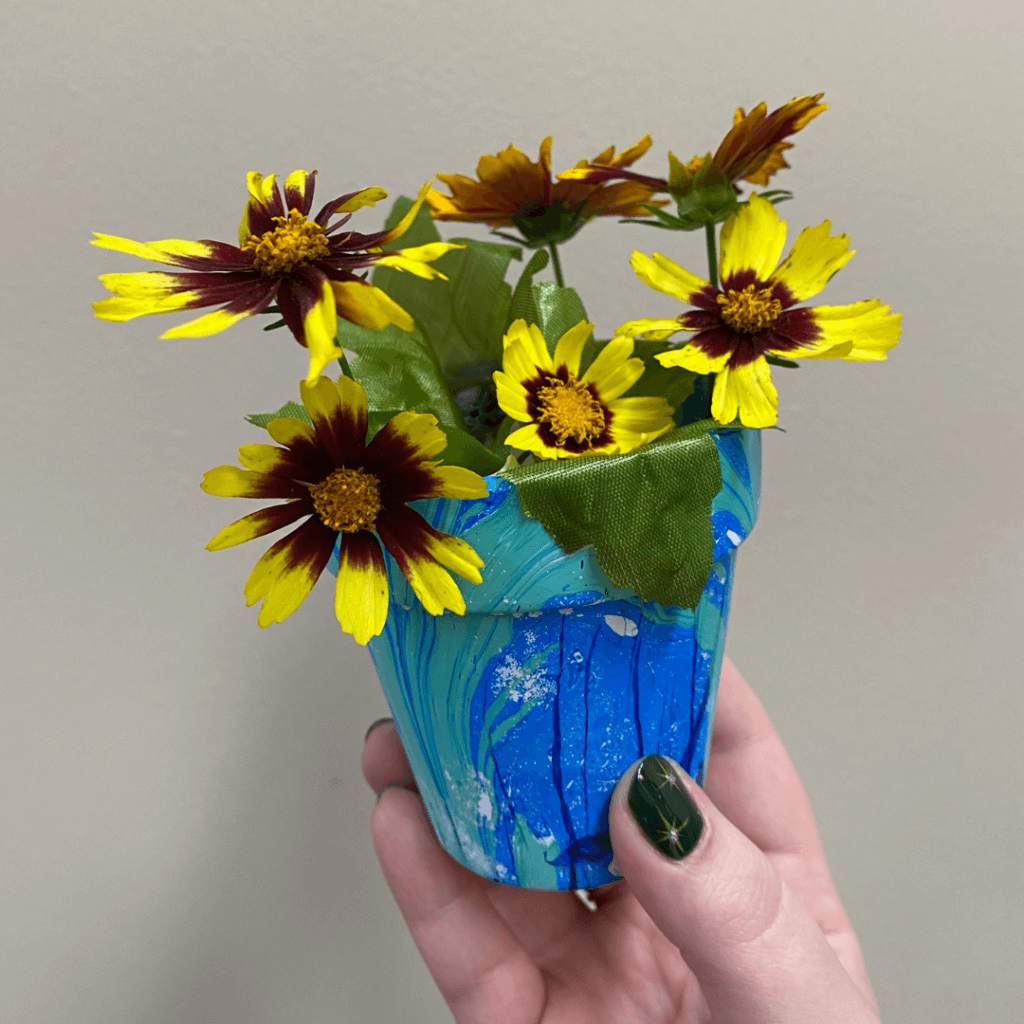
You are an Artist!Admire your beautiful work! The paint should be dry almost instantly, you will just need to wait for the water to dry before planting any seeds!Place your pot on your paper towels, and you’re all finished! 

the completed Hydro-Dipped Painted Pot

Expand on the Activity


While you're working, let's learn HOW your hydro-dipped painted pot activity is working! 

Paint is hydrophobic – which means it doesn't mix with water. Just like oil separates from water when combined, so does hydrophobic paint! The paint floats on top because it is less dense! Surface tension also helps to pull the paint towards our pot as it moves, giving us an even coating.  

Try using your pot to create a pollinator garden! Sadly, deadly pesticides have hurt Florida's pollinator count greatly. But we can support our pollinators by providing them with the Florida native wildflowers that they love to eat! Even a small garden makes a big difference. A patchwork of pollinator gardens around the country could provide enough habitats to restore healthy communities of pollinators!  

Planetary Ring Toss • How to Create Your Own Ring Toss Game

Create your own Planetary Ring Toss with simple household objects!

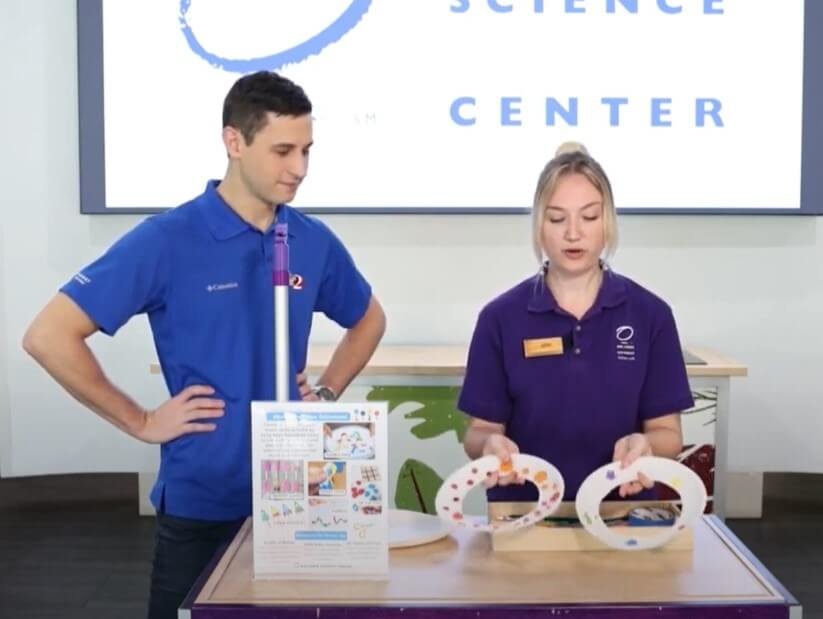
Don't wait for the carnival to arrive, make your own with a DIY carnival ring toss game! This fun, hands-on activity can be made with household materials, and is a great way to practice our motor function skills.

The DIY Planet Ring Toss was recently featured on WESH 2 News' segment, The Science of It. Feel free to follow along with the video or follow the steps below!

This maker-inspired activity requires the use of scissors, so we recommend grown-up supervision for the little learners.


Materials:

  • Paper plates (small and large)
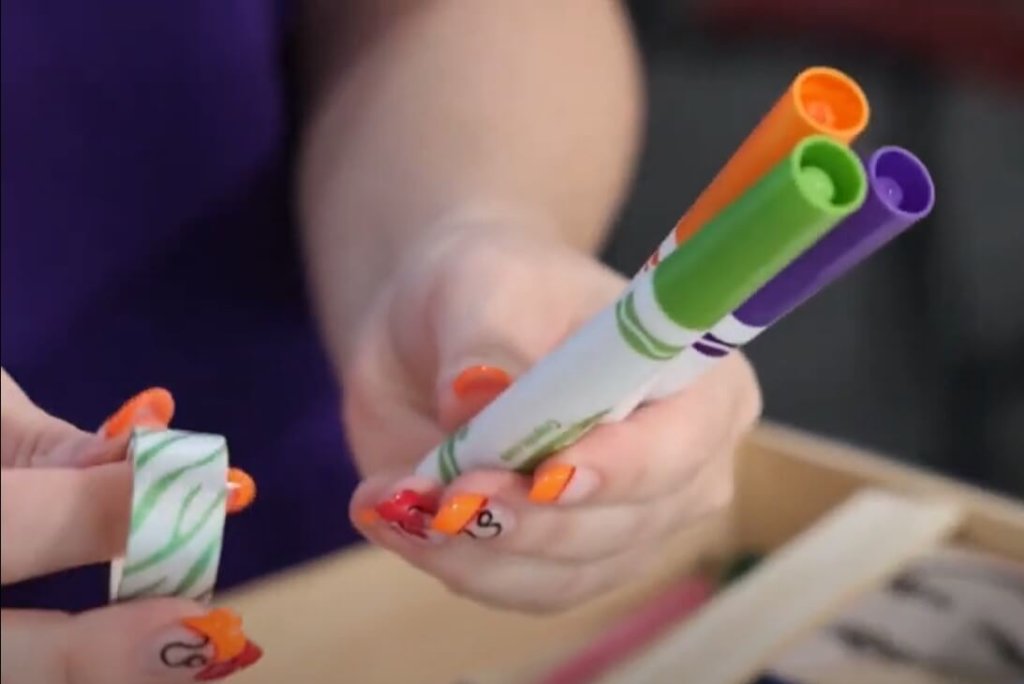
  • Washable markers
  • 1 ruler
  • Stickers, washi tape, or other decorations
  • Painter's tape
  • A pen
  • Scissors

Let's get started! 

  1. Begin by punching a large hole in the center of a paper plate using your pen. The hole should be large enough to insert the blade of your scissors. 
  2. With grown-up supervision, insert your scissors into the hole and cut a large circle out of the center of your plate. 
  3. Using your washable markers, stickers, washi tape, or other decorations, unleash your creativity and decorate your planetary ring! Rings may look like they're made of solid material from Earth, but they're actually made up of rock, ice and dust. Try creating patterns to reflect that - or just let out your inner Picasso. You're the creator here!
  4. Repeat steps 1-3 as many times as you'd like. Planets like Saturn have large rings, but other planets have smaller rings. You can use your smaller paper plates to create small rings for an extra challenge!
  5. Grab your painter's tape and your ruler and find an elevated surface, such as a counter or a table. 
  6. Cut off a piece of tape and use it to secure your ruler to the counter vertically, so that one end sticks straight up into the air. This is your peg!
  7. Now comes the fun part! Do your best to toss your ring onto your peg. For an extra challenge,  you can create a scoring system and make it a competition! Try assigning more points to smaller rings, as they're harder to toss onto the peg. 

More Space-Related Activities

Unique Reptiles at Orlando Science Center

You can meet these magically unique reptiles at Orlando Science Center! 

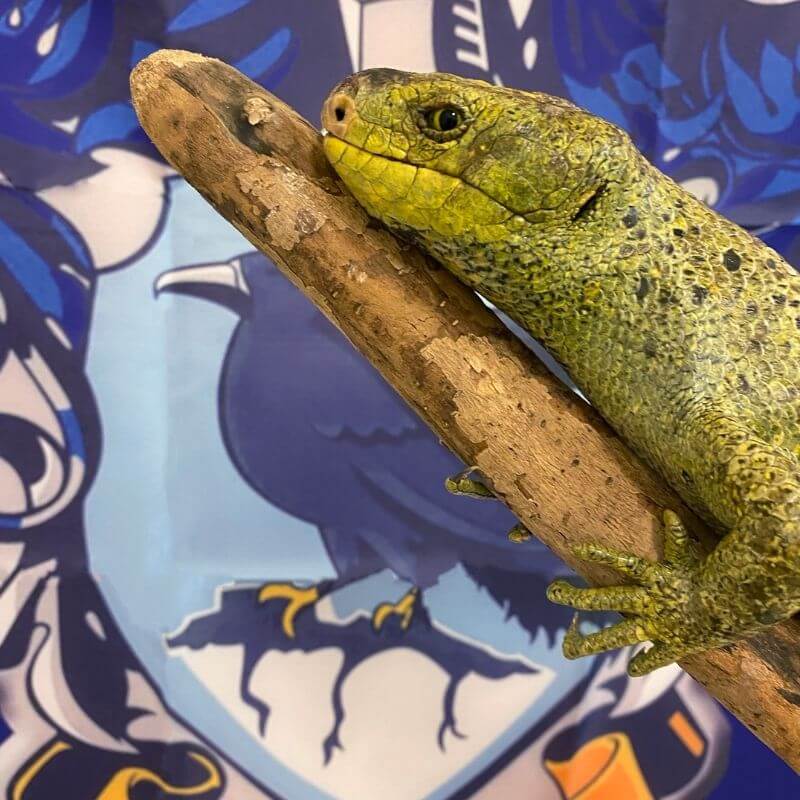
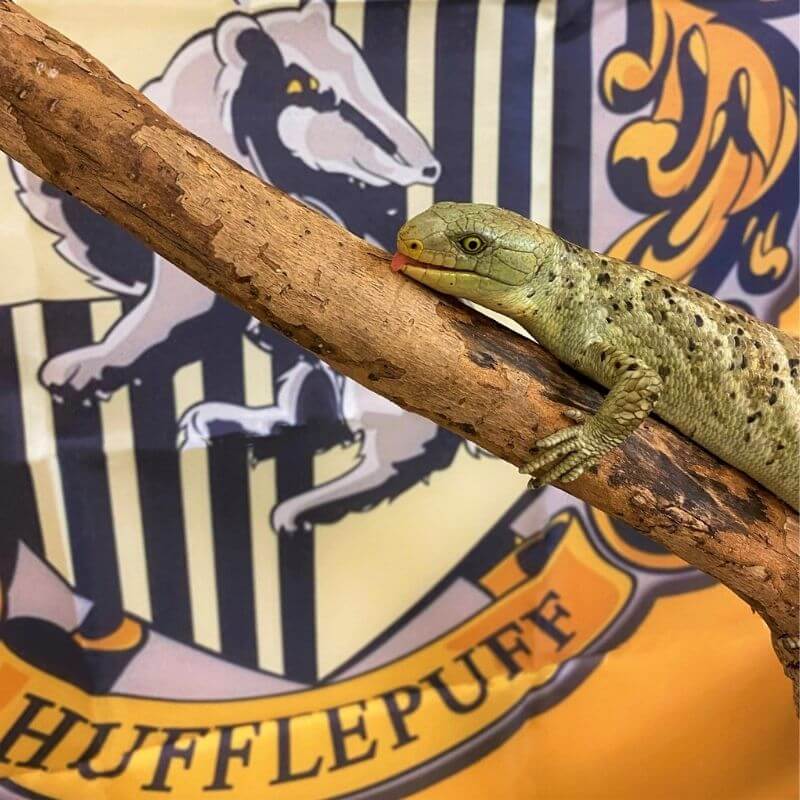
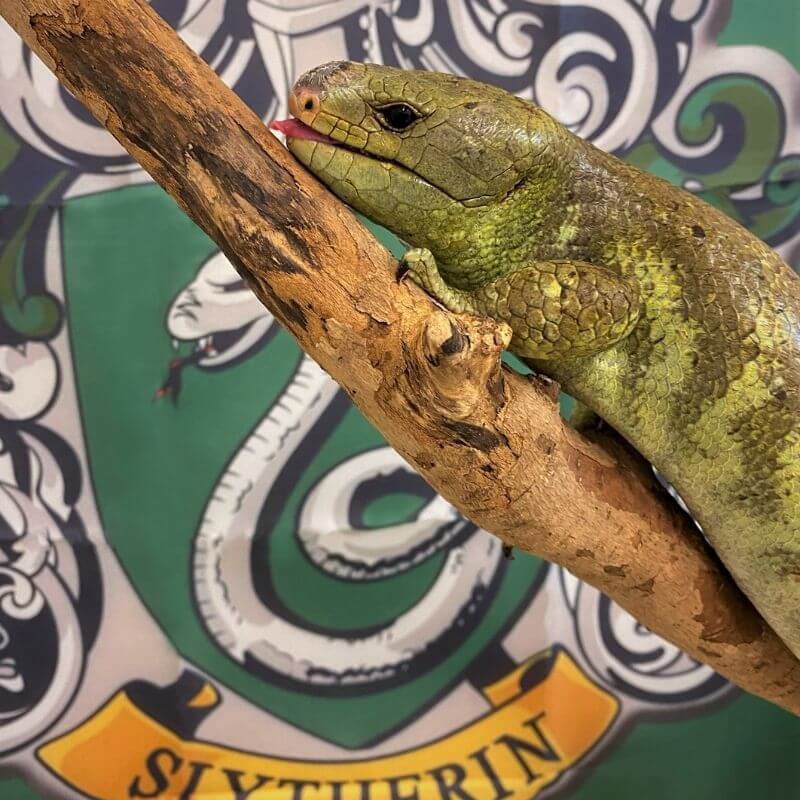
The fantastic beasts: prehensile-tailed skinks. Where to find them: Orlando Science Center

Say hello to our new and unique reptiles at Orlando Science Center — Gryffin, Sly, Raven, and Puff, four prehensile-tailed skinks who have found a new forever home.  


They don’t have their own broomsticks yet, so they flew to us via airplane all the way from California. They were confiscated by the United States Fish and Wildlife Service in a wildlife trafficking incident. Their bewitching good looks make this species a popular target for the pet trade. Gryffin, Raven, and Sly were collected in the Solomon Islands (located north of Australia) and illegally brought into the United States before being found by wildlife authorities.  

Following their rescue, Raven gave birth to Puff!

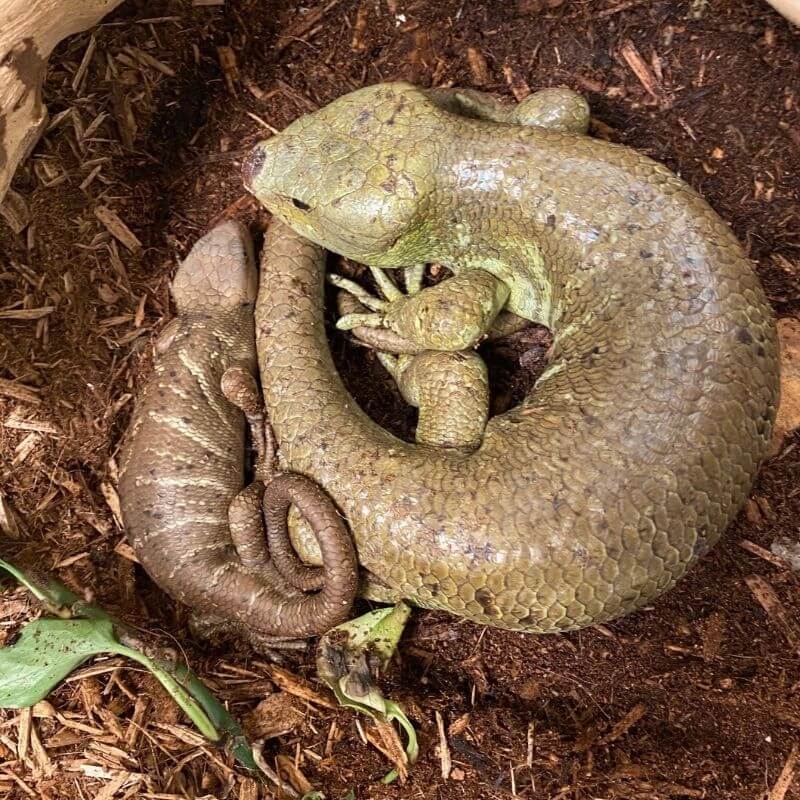
These reptiles lay their eggs inside their body and the young hatch within the parent’s body. A group of skinks is called a circulus and all of the adults in the circulus help to raise the baby. Puff seems to prefer spending most of their time with Sly, the other adult female. We are especially excited to watch Puff grow into an adult skink! 

When the skinks were first rescued, they were underweight and fighting off a parasite infection. They have been under the care of our animal experts, and we are happy to report that our veterinarian now deems them to be in excellent health! We are honored to provide a forever home and quality care to these big lizards with a big story!  

two unique reptile skinks cuddling
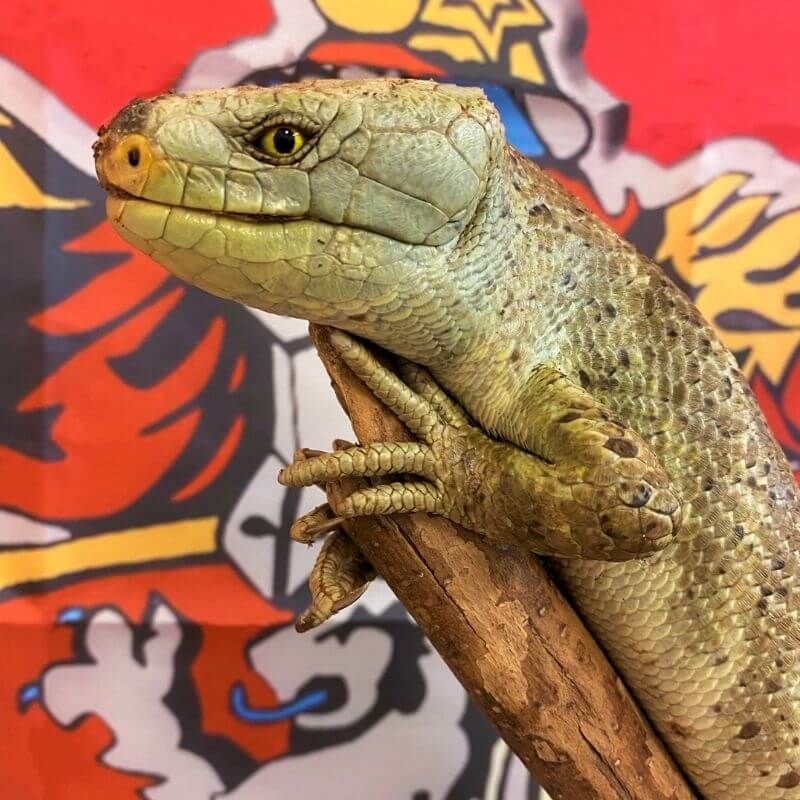
a skink on a stick with a gryffindor flag in the background
a momma skink on a stick with a ravenclaw flag in the background
a baby skink on a stick with a hufflepuff flag in the background
a skink on a stick with a slytherin flag in the background

Cool Reindeer Facts You Didn’t Know

Eenie meenie miney doe, how many reindeer facts do you know?

You know Dasher and Dancer and Prancer and Vixen, Comet and Cupid and Donner and Blitzen. But do you recall, the biology of them all? You’ve probably heard this song before, but have you heard the science behind Santa’s fluffy helpers?


A reindeer by any other name...

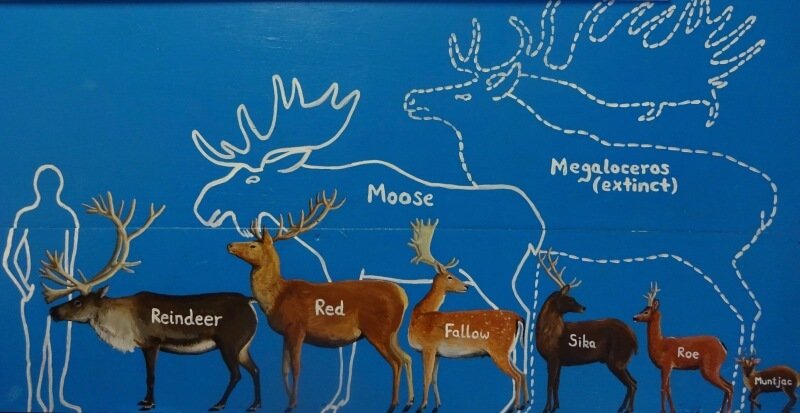
What exactly is a reindeer? These animals are part of the deer family, or Cervidae, which includes deer, elk, moose, and wapiti. Reindeer are also commonly known as caribou. This classification is primarily based on location, or habitat. Reindeer refers to the domesticated animal, while caribou refers to the wild animal.

an imgae comparing the size of reindeer, deer, elk, and moose

Female reindeer are slaying it!

Scientists have observed that male reindeer shed their antlers in early December after mating season, while female reindeer keep their antlers all year. This means that if the reindeer spotted pulling Santa’s sleigh on December 24 have antlers, they must be females, as males would have already shed their antlers.

The real red-nosed reindeer

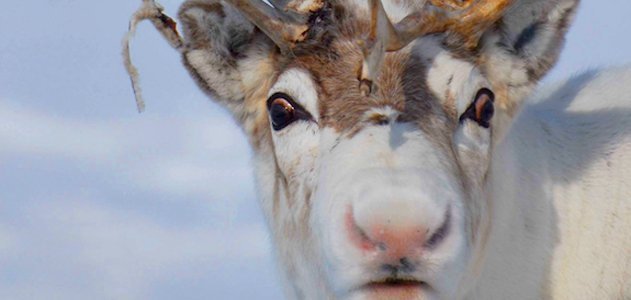
You may remember Rudolph the Red-Nosed Reindeer, and his shiny schnoz. Scientists say that having a rosy nose is not only possible but common in Santa’s furry friends. Reindeer have 25% more blood vessels in their nose than humans. This helps keep their noses warm, which allows them to warm up the frigid air before they breathe it in. Exposure to extreme cold, or exercise increases blood flow, and with so many extra blood vessels in their noses, they can turn a light rosy color.

a reindeer with a pink nose

Eye on the prize

Reindeer have also adapted to see ultraviolet light. While humans are no strangers to ultraviolet light, we are unable to see it. UV rays are commonly known to cause sunburn or snow blindness by reflecting brightly off of the white snow. Reindeer, however, have adapted the ability to see these wavelengths. This not only protects their eyes but allows them to better see food or other animals camouflaged in the snow.

The cold never bothered them anyway

Why does Santa have a reindeer-drawn sleigh instead of a horse-drawn carriage? Reindeer are native to cold climates like Alaska, Canada, and Scandinavia and have adapted to the cold. A reindeer’s fur is made up of hollow hairs that trap in air and keep them well-insulated. They are also the only animal to have hair completely cover their noses. This helps warm up the cold air they breathe before it reaches their lungs.

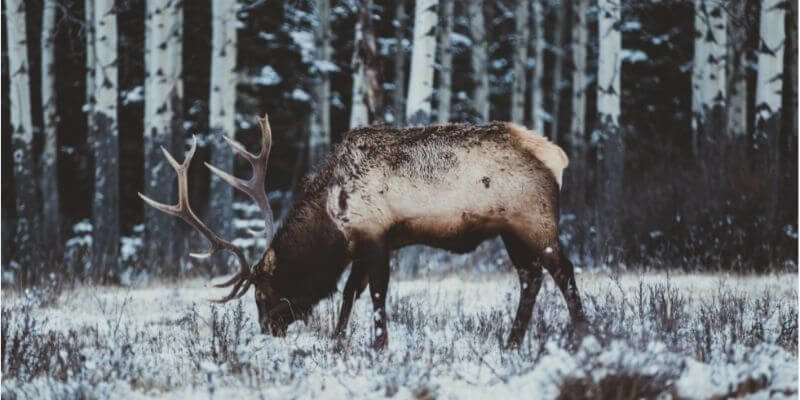
a reindeer in a snowy forest

So next time you hear the pitter-patter of hooves on your roof, remember it’s no coincidence that Santa uses these gentle giants to pull his sleigh. Reindeer have adapted to weather their frosty environment and help deliver Christmas cheer all over the world!


Learn some more COOL science! 

Can Service Dogs Help STEM Professionals?

Learn how service dogs can help people with disabilities breakdown barriers!

Have you ever seen a person using a service animal? Why do some people have animals that help them complete tasks? 

When most people think of service animals, what probably comes to mind is a person who is blind using a seeing-eye dog, but there are a wide variety of disabilities and medical conditions where a service animal can be used to help people.

People who have disabilities sometimes use service animals, like dogs, to help them complete day-to-day tasks easily. Service dogs are specifically trained to help their owners complete tasks they would not be able to do independently; like open a door, bring them their car keys, and even guide a person who is blind across a street. Some dogs can detect when a person’s heart rate lowers, or when they are showing signs of anxiety from previous trauma. The dogs can alert their owners, and they can then take medications they need, prevent an anxiety attack, or get to a safe space away from people.

Service dogs are “tasked trained” meaning there is a specific task or behavior they have been trained to perform to help their owner. This is what separates them from just your average pet dog. Not every person with a disability needs a service dog, but some people can’t imagine trying to live their life without one!

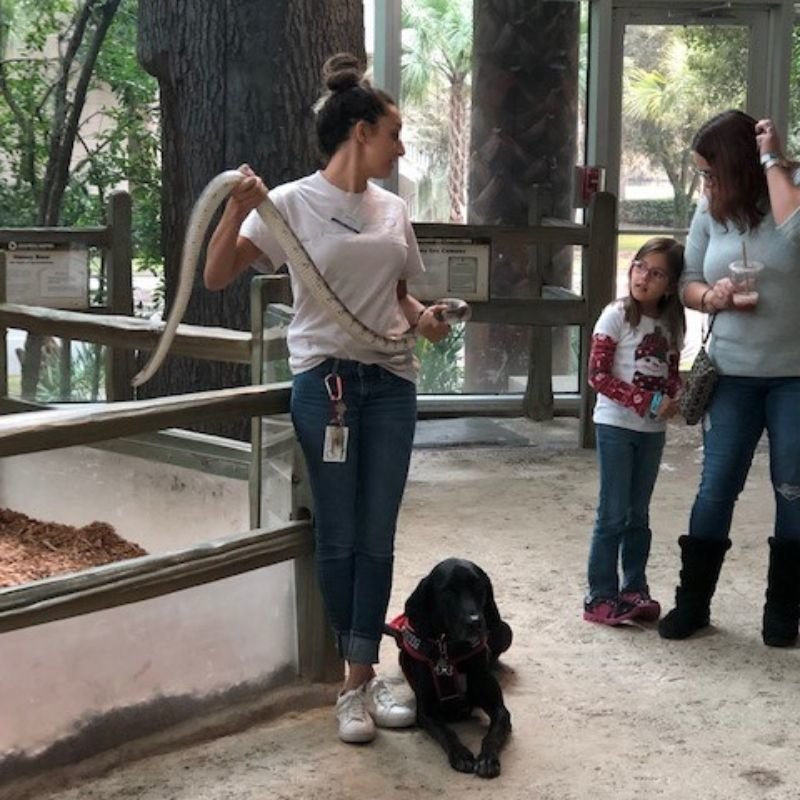
Sierra Middleton was an animal care intern at Orlando Science Center where she helped to clean enclosures, walk animals outdoors, provide a science learning experience for guests, performed water chemistry testing, and learned how to train exotic animals, accompanied by her loyal service dog, Duke. 

To me, Duke is more than just my service dog - he’s my lifeline in a lot of ways. He means an increased quality of life; helping me with things every day as simple as picking up my dropped phone to as great as alerting me to an impending medical episode.

The many ways I have trained him to help mitigate my disabilities have certainly helped me in more ways than I can count, but in all honesty it was the mere existence of his unconditional love that acted as a light at the end of a long, dark tunnel.

Sierra Middleton
OSC Intern & Volunteer
a STEM professional with her service dog

The Americans with Disabilities Act (ADA) was signed into law on July 26, 1990, by President George H.W. Bush. The ADA is one of America's most comprehensive pieces of civil rights legislation that prohibits discrimination and guarantees that people with disabilities have the same opportunities as everyone else to participate in the mainstream of American life -- to enjoy employment opportunities, to purchase goods and services, and to participate in State and local government programs and services. 


Learn More!

Soil Science Experiment • How to Demonstrate Soil Erosion

Learn about erosion with this soil science experiment!

Forces of nature like wind and rain shape and reshape Earth’s surface by gradually wearing away, or eroding rocks and soil.

When it rains, water that is not used by plants or dried up by the sun slowly flows through the topsoil downhill into nearby water basins like lakes, rivers, streams, and aquifers. Natural areas like Mangroves, Cypress Swamps, Coral Reefs, and Pinewood Flats act like buffer zones which lessens the harmful effects of natural disasters like tropical storms and hurricanes have on Florida.

In this soil science experiment, you will see how different environments can affect water runoff and soil erosion. 


Materials:

  • 3 plastic bottles
  • 6 cups of soil
  • 1 cup of mulch with some leaf litter
  • 1 square of grass taken from outside. Not the grass pulled out, but a small section removed with a garden spade to be placed inside one of the bottles
  • 1 watering can which will simulate rainfall
  • 3 clear disposable cups
  • 3 pieces of twine that are 12 inches long
  • Scissors or a box cutter
  • Hole puncher (optional)


Let's get started! 

  1. Begin by cutting off one side of all 3 of the plastic bottles. (Cut the bottles vertically in half from top to bottom.)
  2. Place the bottles on their sides and fill each one with two cups of soil.
  3. In one bottle, add the 1 cup of mulch and leaf litter and pack it down.
  4. In the second bottle, add the grass that was collected and pack it down.
  5. Lay the bottles horizontally with the mouth of the bottle hanging over the edge of a table.
  6. Make 2 holes at the top on each side of the “catch-cups” using the hole puncher or you can use the scissors or box cutter.
  7. Pull the twine through the holes and tie them to make handles for the cups.
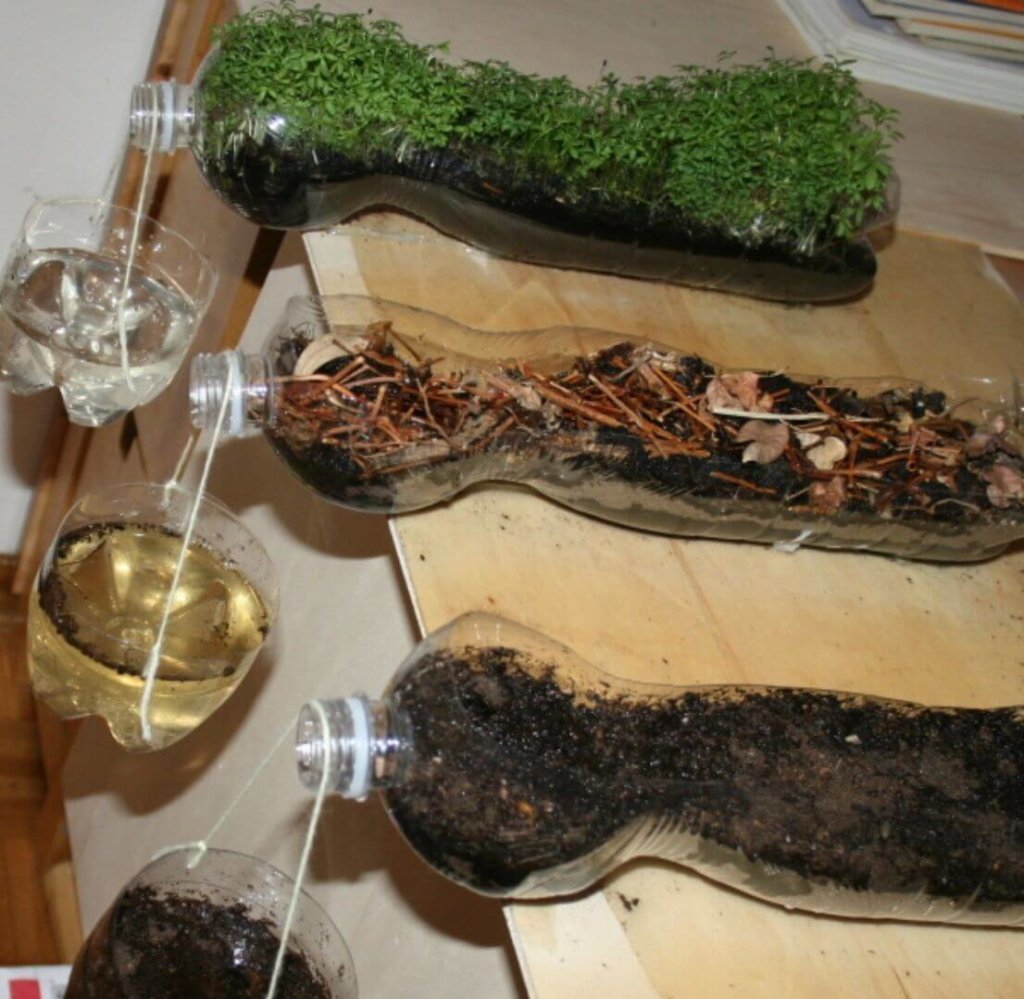
  8. Attach one cup with twine to each one of the bottles so that each one has a cup hanging from the mouth over the end of the table (see photo).
  9. Now the fun part! Use your watering can to simulate a rainstorm by watering each of the soil science bottles
  10. Make observations and record your findings about which model held the most rainwater, and what the water looks like in the catch cups.
Soil Science Experiment

Expand on the Activity


Post-Activity Discussion Questions:

  1. Which model did the best job at keeping the soil in place?
  2. Do you think it’s a good idea to have natural areas with a lot of plants to protect Florida when it rains?

How to Identify a Legless Lizard from a Snake

Slither in and learn how to identify a legless lizard you may think is a snake

What do you call a lizard with no legs?

You may be waiting for a punchline, but legless lizards are real reptiles that commonly get mis-snake-n for another commonly limbless creature. Florida is home to a few legless lizard species and, you may even come across them while hiking, playing outside, or doing yard work.

Let’s take a closer look at the differences and learn how to identify a legless lizard from a snake. Help remember what you've learned by downloading and filling out this Research Learning Adventure activity sheet as you go!

Research Learning Adventure Activity Sheet


Eyes

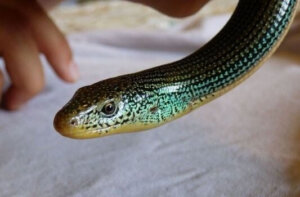
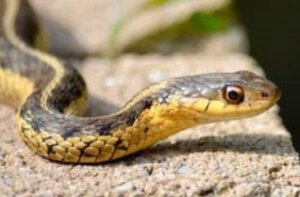
While looking right at the eyes of the legless lizard, you can see that they have eye lids. Kind of like you and me! Snakes, however, do not have eye lids. Snakes’ eyes are protected by a durable, see-through eye scale. Glass lizards can blink, but snakes cannot!

close up of a legless lizard eyes
Legless lizard
close up of a snake eye
Snake

Jaws

Now let’s take a look at the legless lizard’s jaw structure. The upper and lower part are not detachable like in snake species. Snakes can dislocate their jaw using their face muscles to eat large prey. Eastern glass lizards have minimal jaw muscle control and eat mostly insects, small mice, and bird eggs. How wide can you open your mouth? Is your jaw more like the legless lizard, or the snake?

legless lizard jaw
Legless lizard
snake jaw
Snake

Ears

Legless lizards have on opening on their head for hearing, just like us! Snakes actually use their jaw bones to hear vibrations. Have you ever felt the sound vibrations from a really deep or loud sound? Snakes rely on that sensation to hear all the time! Sound information travels in the form of vibrations from the jaw to the cochlea, a special hearing structure. We have cochlea in our ears too!

Legless lizard ear
Legless lizard
Snake Ear Original
snake ear

Legless Lizards & Snakes

Legless lizards and snakes are very important parts of Florida habitats. Glass lizards help control our insect populations, while snakes help to control rodent, lizard, and bird populations. Together they help to balance Florida food webs.

Both legless lizards and snakes pose no major threat to humans. Any bites that do happen are usually on accident because the animal was startled and scared. The best thing to do with all wildlife is to keep a safe distance of at least 15 feet away at all times.

Make sure to visit Orlando Science Center to see all the amazing snake species in NatureWorks or learn more about legless lizards and snakes in Florida by checking out this video.

Expand on the Activity!

Can Snakes Be Venomous AND Poisonous?

Are snakes venomous or poisonous? Can some snakes be venomous and poisonous?

Florida is home to 44 different snake species, from the large and dramatic eastern indigo snake, to the teeny tiny ringneck. All of our serpentine friends, even the venomous ones, serve important roles in our ecosystem by helping to regulate rodent populations, and by providing food to larger predators. Notice, we said venomous snakes, not poisonous ones. That’s because venom and poison aren’t the same things. But can some snakes be both venomous and poisonous?

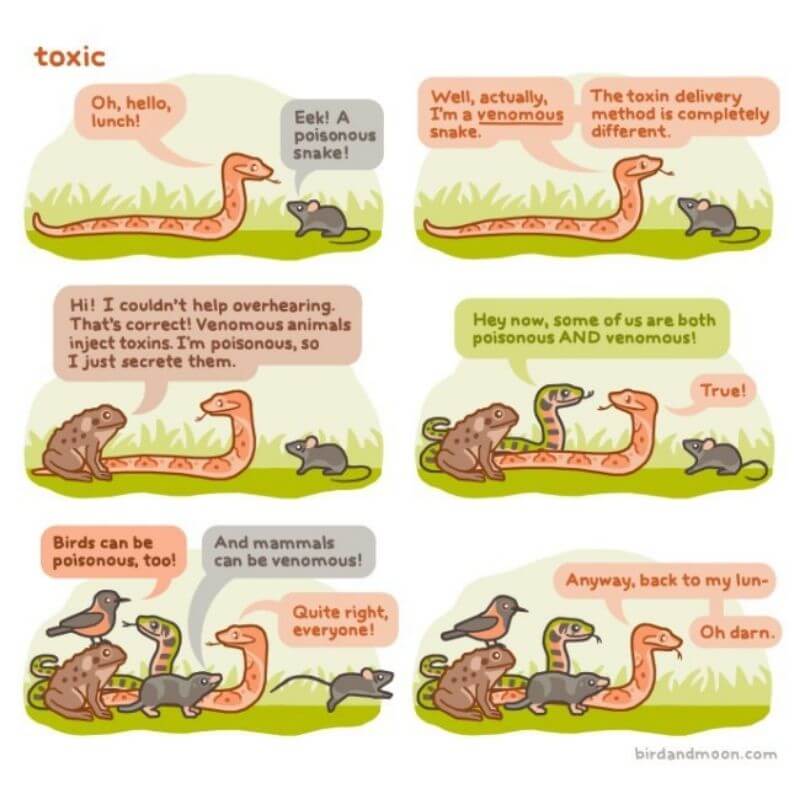
First, let's break down what it means to be venomous versus poisonous. Both venom and poison are toxins, which means they can cause harm to our bodies. The difference between venom and poison is how the toxin gets into a body. Poison is either eaten or touched, like poison ivy or arsenic. Those can only hurt you if you put them in your mouth or on your skin. Venom, on the other hand, is injected. Think of the fangs of a snake or the stinger of a scorpion. Venomous animals must puncture the skin of their victims to get their venom into the victim’s blood. 

 While unusual, there are a few species of snake that are actually poisonous. Rhabdophis keelback snakes are both venomous and poisonous – their poisons are stored in nuchal glands and are acquired by sequestering toxins from poisonous toads the snakes eat. Similarly, certain garter snakes from Oregon can retain toxins in their livers from ingesting rough-skinned newts.

Of these 44 different species of snakes that call Florida home, only six are dangerous to people, those being:

  • Eastern coral snake
  • Southern copperhead
  • Cottonmouth
  • Eastern diamondback rattlesnake
  • Timber rattlesnake
  • Dusky pygmy rattlesnake

That all sounds pretty scary, but don’t worry! It’s actually very unlikely to be bitten by a snake in the state of Florida. In fact, it is much more likely for a person to be struck by lightning than to be bitten by a venomous snake! This is because snakes want nothing to do with people. They usually are very likely to flee at the first sight of a person. They don’t want to end up as a larger animal’s dinner after all!

Can Snakes Be Venomous and Poisonous

Unfortunately, the majority of reported snake bites are due to handling snakes or even trying to hurt them. If you’re still concerned about snakebites, educate yourself and family about them, make sure not to reach into dense bushes where you can’t see your hands, and seek out snake avoidance training for your pets. Fortunately, even those who do get bitten are almost always fine, as long as they seek out medical attention immediately. Snake venom has been heavily researched by medical scientists for creating new highly effective medicines.

Take a few minutes to find out which venomous and nonvenomous Florida snakes are your favorites, and see which ones you can find in NatureWorks next time you slither into Orlando Science Center!

Outdoor Safety for Kids • 7 Survival Tips for Any Scenario

Check out these 7 outdoor safety tips for kids! 

When the sun is shining, there’s nothing better than getting outside, breathing in a breath of fresh air, and communing with nature! But don’t forget to keep safety in mind! Whether you’re camping or hiking the great outdoors — or just exploring your own backyard — check out these 7 outdoor survival and safety tips for kids! 

Get more safety and survival tips, and put your hero skills to the test with new, interactive exhibit RESCUE now on display! 

1. Not all who wander are lost. But if you are lost, stop wandering

If you find your surroundings are starting to become unfamiliar, it’s easy to want to retrace your steps, or find the last familiar setting. However, staying put

is the most important survival skill to teach your children. The farther they wander from the site where they were last seen, the harder it’s going to be for rescuers to find them. Staying in one place will also conserve energy and reduce their risk of falling or getting injured.

2. Wear bright colors 

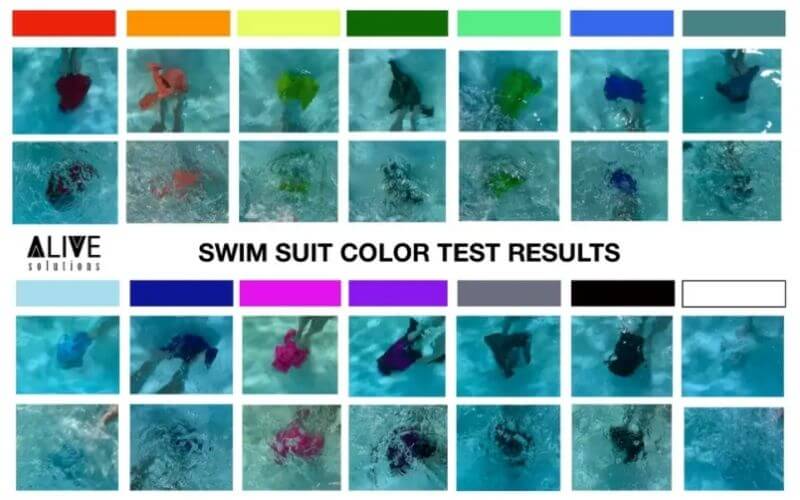
Bright colors will help you stand out from your surroundings, and even more so if your whole party is wearing matching colors. However, be mindful of your surroundings. If you’re spending time in or near water avoid blue, and if you’re spending time in a wooded area, avoid green.


Outdoor safety for Kids - a picture of what different colored swimsuits look like underwater

3.Keep calm and carry an explorer’s kit

Even on a short adventure, it’s always best to bring supplies! Here are some fundamentals to keep any adventure safe and fun.

  • Sunscreen and bug spray
  • A whistle
  • A flashlight or glow sticks
  • A poncho
  • Water and non-perishable snacks
  • A laminated emergency contact card
  • For basic first aid, include: adhesive bandages, hand sanitizer, antibiotic cream, and antiseptic, wipes or spray, and any personal medications, inhalers, or EpiPens

4. Build a shelter

This is not only a good survival tip, but a fun one to practice! Children are naturally creative and, with a little guidance, design excellent shelters. Can a jacket or a poncho make a tent? What kind or sticks or foliage are around you? Next time you’re enjoying the outdoors, challenge your junior explorers to see what kind of shelter can be made from their surroundings.

5. Always wear sunscreen. Even on a cloudy day

Can you get a sunburn on a cloudy day? While clouds do reduce some of the sun’s UV rays, they don’t block all of them. UVA rays can penetrate clouds, and they can also reach below the water’s surface.

UVB rays can also damage your skin year-round, cloudy or not. Reflective surfaces like snow and ice also intensify UVB rays and their effects on the skin so be sure to apply sunscreen anytime you plan on spending time outside.

6. Know when it’s okay to ask for help

Children who are lost or in another emergency situation can often fear rescuers, in part because they learn about “stranger danger” at an early age. Sometimes, they’re so afraid, they hide from the very people searching for them or trying to help.

Explain to your children that if they find themselves in an emergency, the people calling their name are trying to help them. Show them what emergency professionals look like in their various uniforms: firefighters, law enforcement officers, and search and rescue dogs.

outdoor safety for kids - kids dressed up in first responder gear

7. Expect the unexpected

No one ever plans an emergency situation, but you can plan for when one happens. Like fire drills or seatbelts, the best way to plan for the unplannable is to practice and incorporate safety into as much as your daily life is possible. Whether you’re just taking a walk in the park or exploring the wilderness, make sure you always have a plan, and know the plan! 

Check out some outdoor activities!