National Hummingbird Day

Happy National Hummingbird Day! 

Wildlife — Conservation — Awareness

National Hummingbird Day is celebrated each year on the first Saturday in September. Hummingbirds are incredibly adapted pollinators, which makes them very important to their ecosystems. Three quarters of the world's flowers depend on pollinators like hummingbirds, insects, and bats for pollination! Join us to learn more about these incredible, tiny birds, how we can support our fluttering friends, and even make your own Hummingbird Feeder!

Fun Facts About Hummingbirds

The most common hummingbird seen in Florida is the ruby-throated hummingbird, which weighs approximately 1/4 ounce. That's as light as a penny!

Hummingbirds belong to the avian family Trochilidae. Trochilines often have iridescent feathers of metallic red, orange, green and blue. They are the only birds that can truly hover!

Hummingbirds use wicking action to draw nectar into their mouths using their long, narrow bills and tongues.

  • Of the 338 known hummingbird species, all can be found exclusively in the Americas; 16 are found in the United States; and 3 occur in Florida!
  • Hummingbirds can beat their wings up to 200 times per second, creating the humming sound that gave them their name.
  • Hummingbirds can suspend their bodies in midair, fly backwards, upwards, and even upside-down, much like helicopters.
  • Most hummingbirds will pollinate and feed from a wide variety of flowers, but they are mostly attracted to plants that produce:
    • Large amounts of nectar with substantial sugar content to sustain their high-speed habits.
    • Red and orange flowers or bracts.
    • Flowers that are long and tubular and point downward.
    • Long stamen that deposit pollen on the hummingbird's forehead.

What We Can Do to Help Hummingbirds

  • More than half of the hummingbird species live in the tropics, so purchasing shade-grown coffee is an effective way to protect hummingbird habitats.
  • In Florida, hummingbirds nest spring through summer, so having lots of tubular flowering plants and hummingbird feeders is helpful!
  • When shopping for a hummingbird feeder, choose one with red fixtures, multiple feeding stations, and a means to monitor nectar levels. It’s best to clean your feeder once a week with hot water.
  • Petroleum jelly is an environmentally friendly way to deter pests such as ants from invading your feeder!
  • Hummingbird food sources can be implemented easily by providing sugar water in hummingbird feeders and planting flowers, such as:
    • Bottlebrush (Callistemon citrinus and Callistemon viminalis)
    • Cigar Flower (Russelia equisetiformis)
    • Columbine (Aquilegia canadensis)
    • Coral Bean (Erythrina herbacea)
    • Coral Honeysuckle (Lonicera sempervirens)
    • Firebush (Hamelia patens)
    • Firecracker plant (Russelia equisetiformis)
    • Firespike (Odontonema cuspidatum)
    • Horsemint (Monarda punctata)
    • Red Buckeye (Aesculus pavia)
    • Scarlet Salvia (Salvia coccinea)
    • Shrimp plant (Justicia brandegeana)
    • Soap aloe (Aloe maculata)
    • Starburst Clerodendrum (Clerodendrum quadriloculare)
    • Turk’s Cap Mallow (Malvaviscus penduliflorus and Malvaviscus arboreus)
    • Swamp mallow (Hibiscus coccineus)

Make Your Own Hummingbird Feeder

Supplies: 

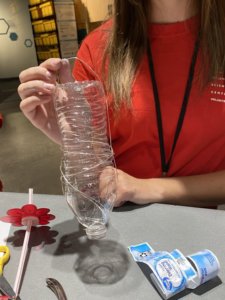
  • 3 plastic bottles, empty with labels removed
  • 3 yellow drinking straws with a bend
  • 3 disposable plastic red plates
  • Electric drill
  • Hole punch
  • 12 gauge craft wire
  • Rubber band
  • White glue
  • Scissors

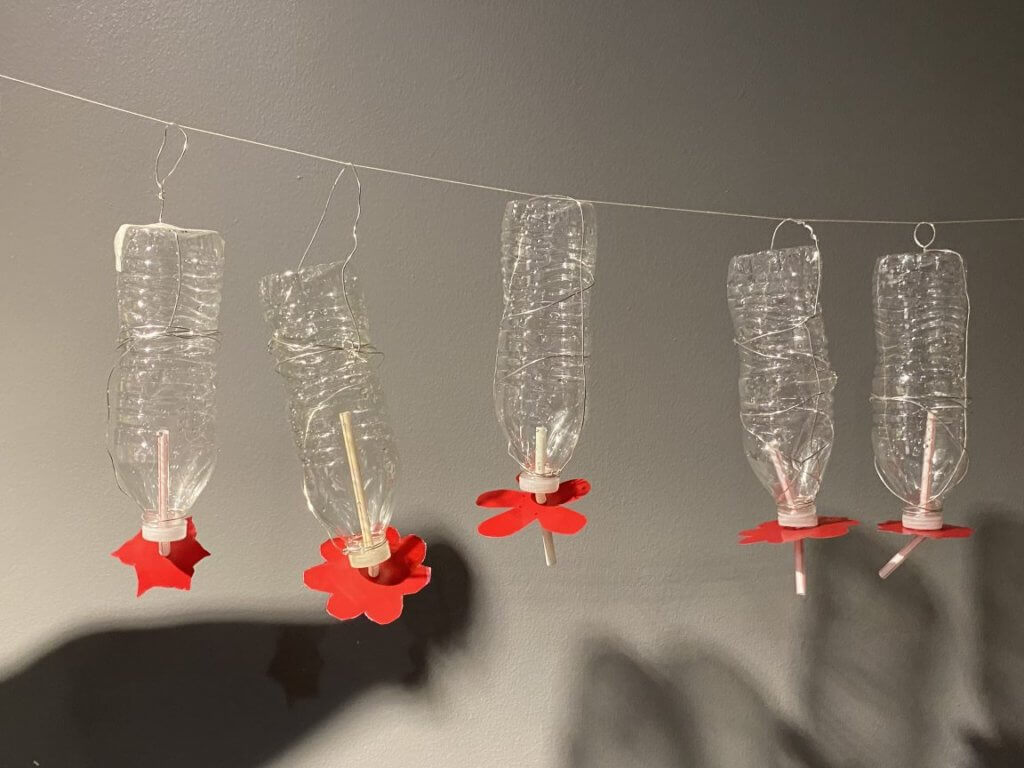
Step 1: Trace and cut out a flower shape on each red plate.
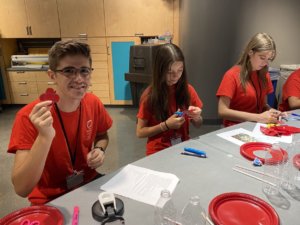
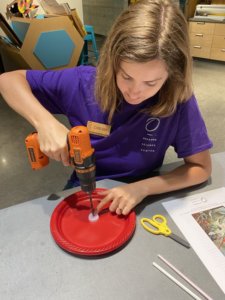
Step 2: Use the drill to create a hole in the top of each bottle cap that is just wide enough for a straw to fit through.
Step 3: Punch a hole in the center of each red plastic flower and thread each one onto the end of a straw. Insert the straw into the cap of a bottle and seal with white glue. Make sure the bend of the straw is just outside the cap opening so the straw bends at an angle as it comes out of the bottle. This is where the hummingbird will drink from!
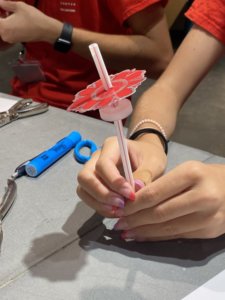
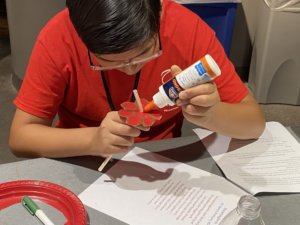
Step 4: Arrange the flower so it is at the end of the staw's bend to attract the hummingbirds. Glue in place. (You'll need to remove the cap to add nectar to the bottles, so keep that in mind as you apply glue!). 
Step 5: Allow to dry overnight.

Step 6: Once set, wrap the wire around the neck of a bottle, then pull it up to create a hanger for the bottle.
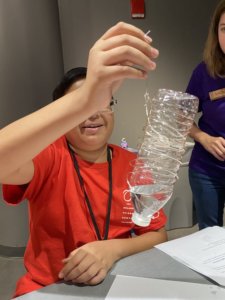
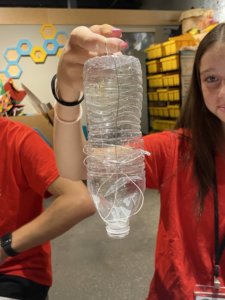
Step 7: You can attach all three of your bottles together in a pyramid shape to create a larger feeding station! Use the rubber band to go around the top and hold the bottles together.
Make Your Own Hummingbird Nectar

During hot, dry weather, when hummingbirds risk dehydration, it's best to make your nectar mixture no stronger than a quarter cup of sugar per cut of water.

Recipe:

  • 1 cup hot water
  • 1/4 cup white table sugar

Steps:

  1. Mix sugar with hot water until completely dissolved.
  2. Let cool to room temperature.
  3. Add mixture to hummingbird feeder!
NatureWorks is Under Construction

Orlando Science Center is breathing new life into NatureWorks! 

NatureWorks is currently closed to the public while we make way for Life, a new exhibit on nature and conservation premiering spring 2024.

We understand that you may have some questions about this transition, so please read on to learn more!

What is the meaning of Life?

Life is an exciting new exhibit that will take guests on a journey through three unique habitats. Through hands-on activities and animal encounters, guests will learn how they can positively impact and protect life all around our changing planet.

Photo by Courtney Shapiro

How long will it be under construction?

Design and production of an all-new exhibit experience is a time-consuming process, and our team is working with world-class exhibit designers to make sure this one-of-a-kind opportunity is just right. Life will be premiering at the Science Center in Spring 2024.

Where will the animals go?

While all our animal encounters happen on the exhibit floor, we have several areas behind the scenes where we care for our critters so none will be displaced during this transformation. A few of our friends are moving to new residences at partner zoos, aquariums, and science centers, but many of your favorite animal ambassadors will remain to help us engage and educate visitors.

Will there still be animal encounters during construction?

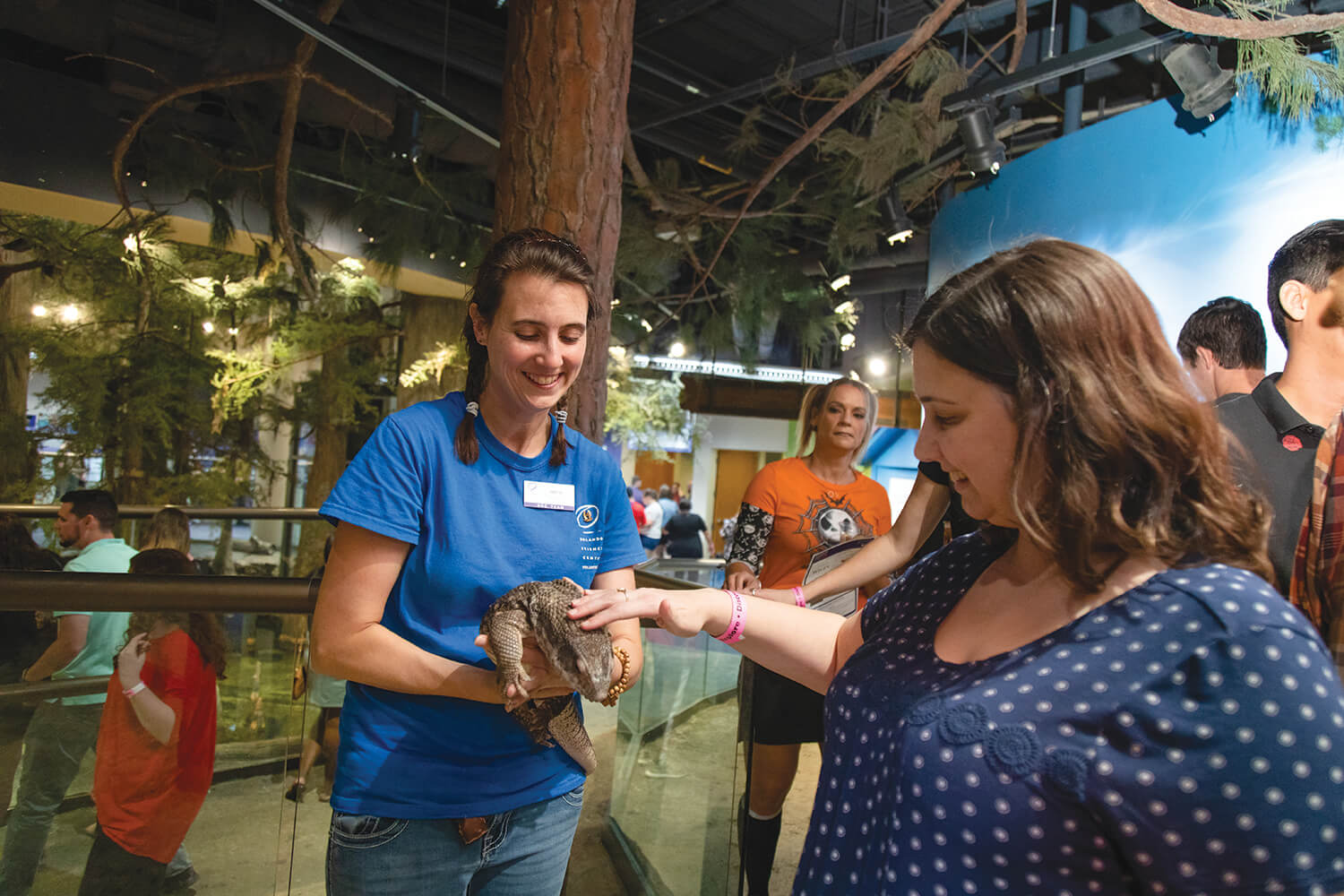
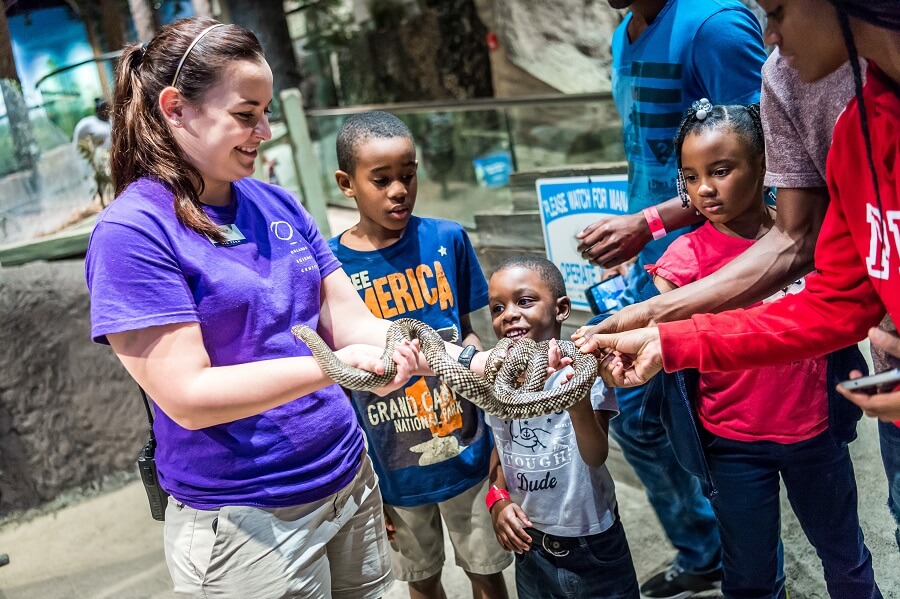
Yes! The animals in our care will remain active ambassadors for the Science Center through animal encounter experiences and meet and greets around the building. We also have presentations and programs starring our animals so you can learn even more!

Will the Cypress tree and swamp still exist?

You won’t have to say “see you later” to our gators! Florida wildlife and environmental conservation are very important to the Science Center. The iconic swamp will be upgraded and be featured as one of three unique habitats in Life, which will include our gigantic and beloved Cypress tree plus some new features.

Will Life introduce new animals?

We feel the best way to tell the story of our changing world is through the animals that call it home. Get ready to make several new friends when Life premieres spring 2024. Stay tuned for exciting updates to be unveiled along the way!

Photo by Roberto Gonzalez

A Letter from an OSC Events Intern

A Letter From An Events Intern

In late 2021, I was searching for an internship position in Central Florida to gain more experience in the events industry. After contacting countless businesses and companies, the Orlando Science Center’s Meetings and Events Department reached out to me to offer an internship position with their team. Reflecting on all the events I helped facilitate and the in-depth knowledge I have gained as an events intern, I am confident when I say that interning at the Orlando Science Center is one of the greatest decisions I have made.

The events industry is vast. It ranges from corporate meetings to weddings to trade shows. Although the Orlando Science Center mostly hosts weddings, it does bring in many different types of events including fundraisers, meetings, and corporate galas, just to name a few. As a meetings and events intern, I have learned many tips and tricks as well as best practices that will undoubtedly prove to be beneficial in my professional endeavors, no matter what sector of the events industry I pursue.

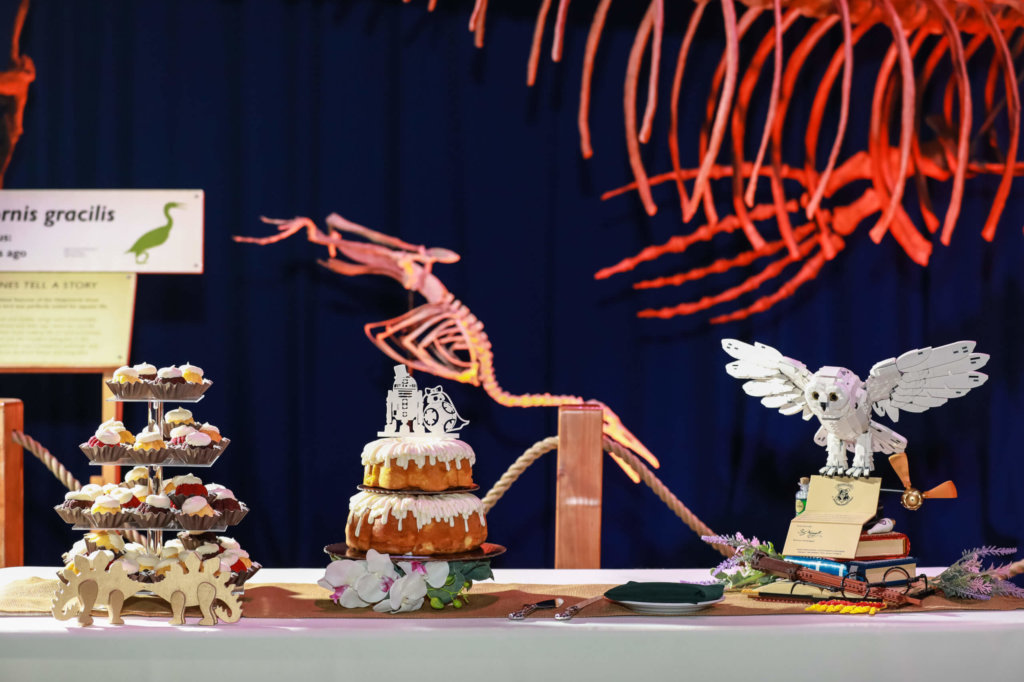
This internship opportunity has not only been skillfully enriching, it has also been outright fun. All events and weddings are different, which is why I love them. Every time I come in for my shifts, there is always something new to do. For instance, I once found myself building a couple’s Harry Potter Lego set for their wedding day decorations! If you enjoy hands-on activities and inputting your own creative touch, you will love interning at the Orlando Science Center.

Live Happy Studio
Katie Fletcher Photo

As part of the Meetings and Events Department, I have gained extensive event production abilities by creating contracts, submitting work orders, developing event production schedules, and so much more. This internship also pushes you to develop your interpersonal skills with all types of personnel including staff from other departments, your supervisors, and event vendors. Talking about vendors, this position has helped me become more familiar with our local Central Florida vendors and distinguish who are the top service providers in the City Beautiful.

Vendors are crucial in all sectors of the event industry so acquainting myself with experienced businesses and being able to distinguish quality service will definitely be fruitful in the long run. This image below shows MJ from Junction 88, one of the preferred entrainment providers at the Orlando Science Center. He dressed up in Jedi cosplay for a Star Wars-loving couple! As an intern, you truly will be able to differentiate those highly dedicated vendors, like MJ, who go above and beyond.

All in all, putting everything that the Orlando Science Center has taught me into words is simply not possible. You learn how to implement the right lighting for events, how to facilitate vendor load-in and load-out to minimize waiting, what a standard wedding timeline looks like, and overall, how to exceed a client’s expectations by creating the most phenomenal event for them. I would recommend interning with the Orlando Science Center’s Meeting and Events Department in a heartbeat because I am confident that you will love it as much as I did.

Interested in joining the OSC team?

We are looking for highly passionate and dedicated people to help support our mission of inspiring science learning for life. Orlando Science Center offers a variety of employment opportunities which vary from entry level positions to supervisory and management roles. 

Local Teen Scientists Compete to Save the World at Dr. Nelson Ying Science Competition

From fighting climate change to saving bees, local teen scientists are changing the world!

To compete in the prestigious Dr. Naleson Ying Science Competition, each entrant must be a Central Florida high school student and pursue a research project that has the ultimate goal of benefiting humanity. This year, each finalist’s research had an environmental focus, from cleaning up microplastics in the oceans to monitoring methane emissions to combat climate change to protecting and sustaining bee populations. In addition to the grand prize winner, each finalist received $500 to continue their research.

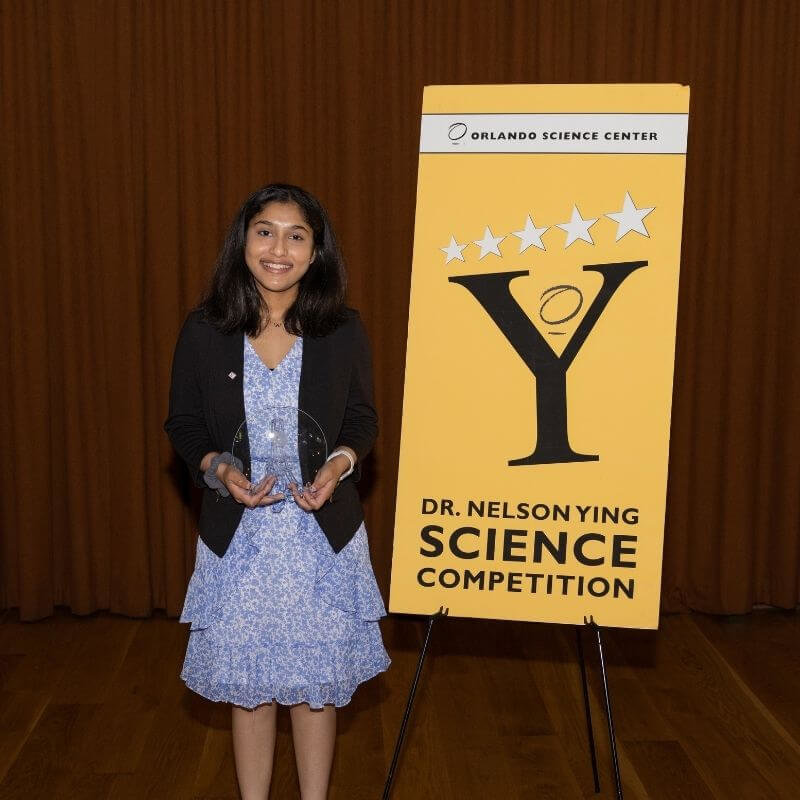
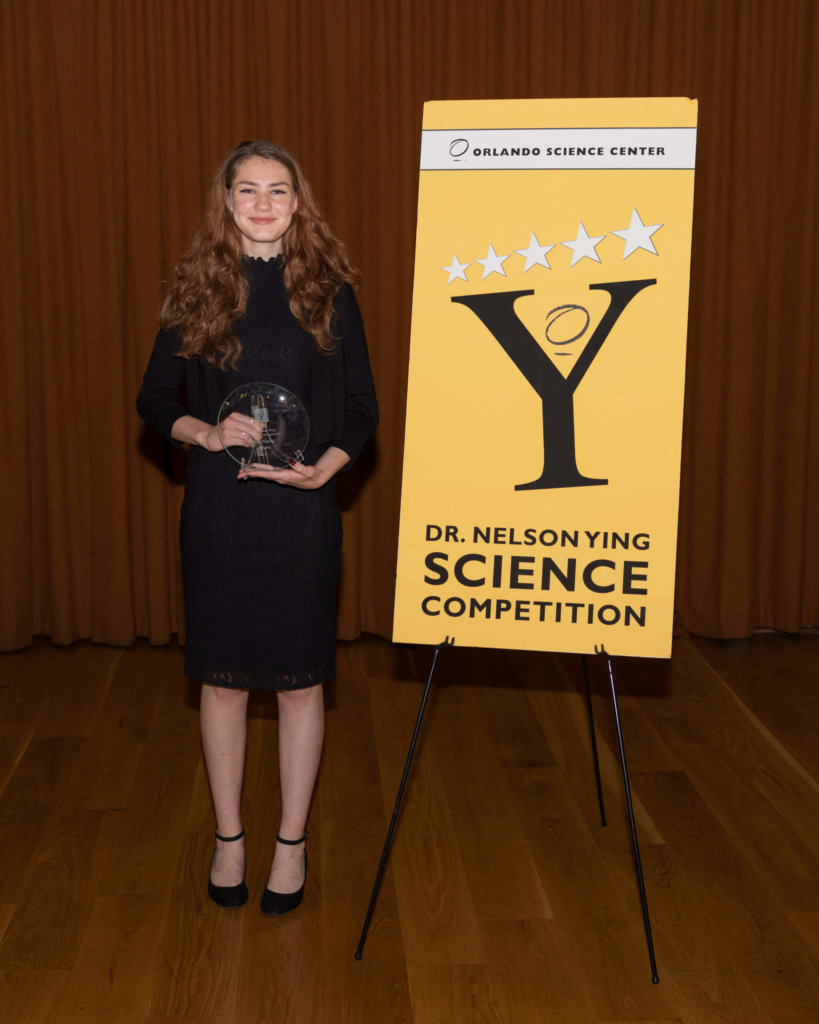
Ella Pilacek, a sophomore at Oviedo High School in Seminole County, has won the top prize in the prestigious Dr. Nelson Ying Science Competition at Orlando Science Center. Her research project, which was focused on proving that bees could be encouraged by Pavlovian conditioning to pollinate specific plant species, won a scholarship of $5,000, a $1,000 award for her science teacher, and an additional $1,000 for their school.

Pilacek was named winner during an awards ceremony at the Historic Dubsdread Ballroom on Sunday, April 24, following a day of presenting her findings to judges on Saturday, April 23, at the Science Center. This year, the competition and the awards ceremony were held in person for the first time since 2019. The previous two years, they had been conducted virtually due to the pandemic. Since 1999, Dr. Nelson Ying — local scientist, entrepreneur and philanthropist — has partnered with Orlando Science Center to celebrate outstanding student scientists through his creation and sponsorship of this competition.

Ella Pilacek - OSC Ying Competition Winner holding trophy

Meet the Finalists!

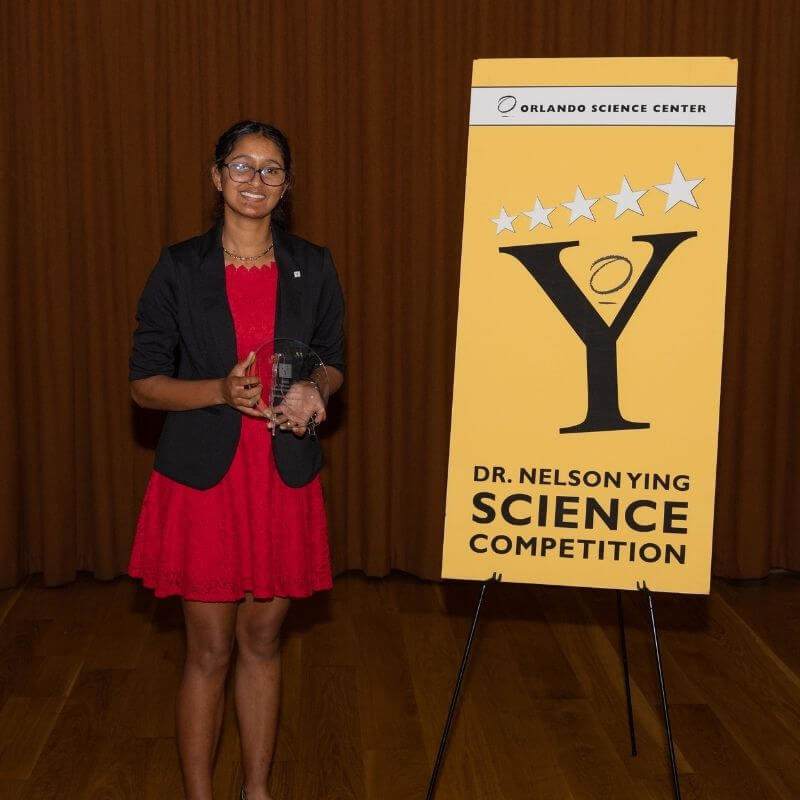
Kyra Henriques, Oviedo High School, Seminole County

Microplastics have potential to harm health and her research could lead to ways to easily extract them from aquatic environments to combat pollution. The chemical properties of ferrofluids contribute to their binding to microplastics, which could facilitate magnetic extraction of microplastics.

Kyra Henriques - OSC Ying Competition Finalist holding trophy

Lavanya Natarajan, Viera High School, Brevard County

Landfills emit methane during waste decomposition, but large portions of this potent gas escapes undetected, fueling global warming. She developed a system to monitor methane emissions in real-time, which could help reduce greenhouse gases by 50% by 2030.

Lavanya Natarjan - OSC Ying Competition Finalist holding trophy on stage

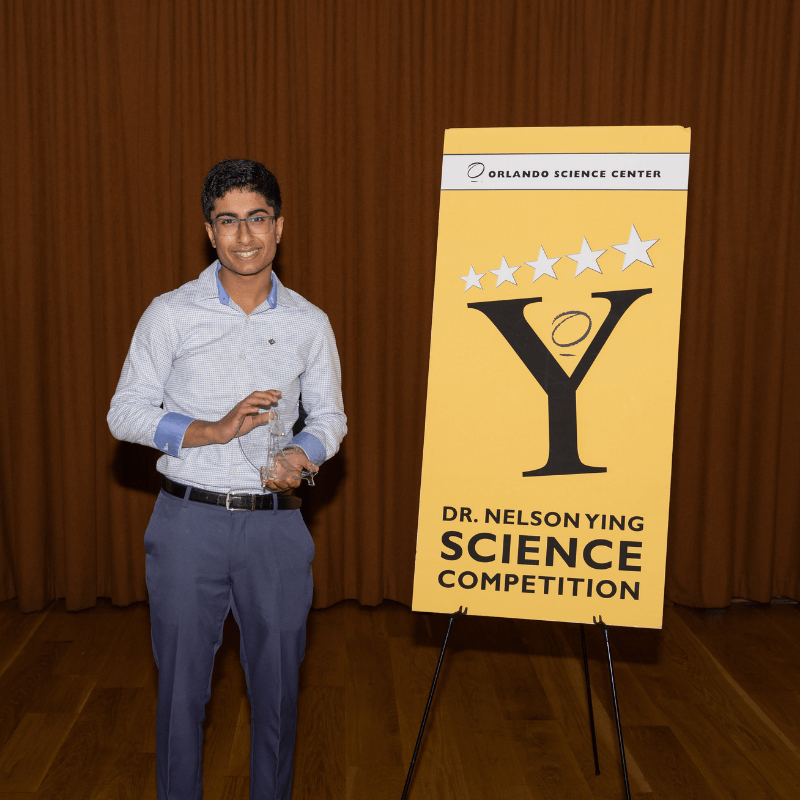
Varun Madan, Lake Highland Preparatory School, Orange County

Honeybees are extremely important to our natural ecosystem due to their role as an essential species of pollinator. This project involved creating a probiotic treatment mixture made from lactic acid bacteria and a type of machine learning technology to help honeybees fight off a harmful gut parasite.

Varun Madan - OSC Ying Competition Finalist holding trophy

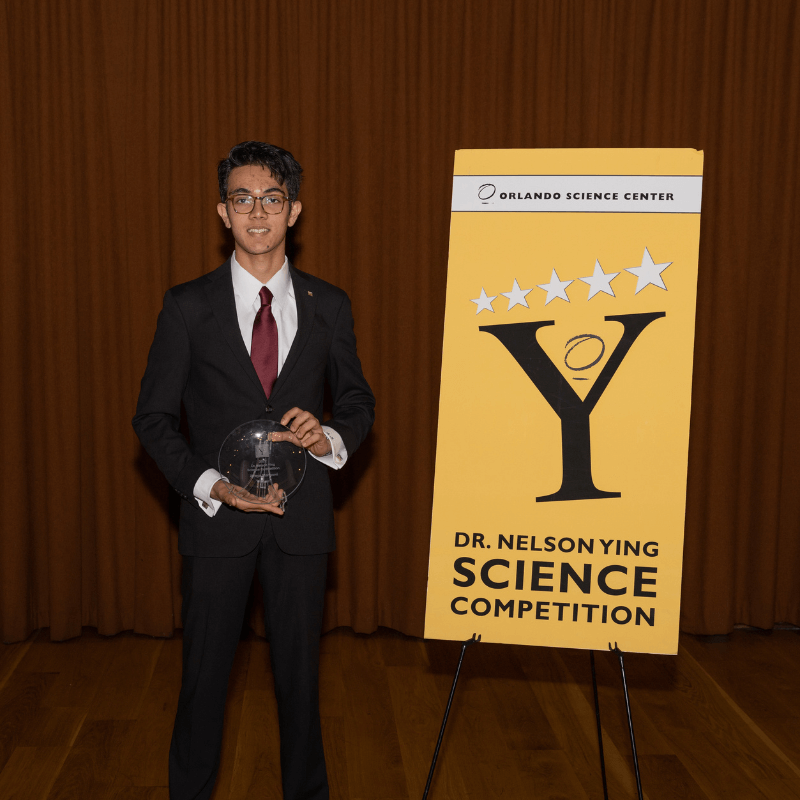
Atreya Manaswi, Orlando Science High School, Orange County

Hive beetles are an invasive pest and a danger to bees, a very important pollinator species. This project built on his previous research that suggested beer was extremely effective for attracting and trapping small hive beetles. He investigated the attractiveness of a volatile oil blend that was fabricated by isolating key odor compounds found in beer. Trapping small hive beetles can ensure protection and survival of beehives.

Atreya Manaswi - OSC Ying Competition Finalist holding trophy

Pilacek’s winning research supported using Pavlovian conditioning with bees so they would follow specific scents to plants that aren’t their usual food sources. The next step in her research will be to test it in the field, using these scents to attract bees to endangered plant species, which would encourage pollination and combat habitat fragmentation. Previous winners of the Dr. Nelson Ying Science Competition have gone on to continue their research at top universities, compete in national science competitions and ultimately pursue exciting STEM careers, including positions at NASA’s Jet Propulsion Laboratory.

Ying is a longtime supporter of Orlando Science Center. After sponsoring numerous exhibits and serving on the Science Center’s board of trustees, he decided to invest in the long-term impact of our mission to inspire science learning for life. In 1999, he and volunteer Fred Curtis launched the Dr. Ying Science Competition with Orlando Science Center to celebrate and inspire exemplary science students to use their expertise to address real-world problems. Ying’s son, Nelson Jr., now oversees the competition with Curtis in collaboration with Orlando Science Center. They continue to engage and mentor young people to leverage their passion for science to make the world a better place.

Community Scientist Movements You Can Contribute to

Add to Scientific Research Projects as a Community Scientist!

There are thousands of brilliant scientists with PhDs and decades of experience who are on the cutting edge of science and technology. But that doesn’t mean we can’t all do our part in pushing the field of science further! Zooniverse is an online collection of scientific projects that everyday science enthusiasts – also known as community scientists – can take part in.

There are numerous different ongoing experiments that require the eyes, ears, and minds of the masses. Want to join the fight against antibiotic resistance? Or perhaps you want to further the research of penguins and their environment? You can even help astronomers find ripples in the very fabric of spacetime! These and even more fantastic projects are taking place right now, and they need YOU to become a citizen scientist to help out!

Check out some of the exciting projects you can help with below, or visit the main Zooniverse website to explore more ways YOU can become a community scientist!

Out-of-this-world astronomy!


Galaxy Zoo 

There are hundreds of billions of galaxies in our observable universe, waaaay too many for astronomers to classify on their own. This is where you come in! Analyze actual photos of distant galaxies that few humans have ever seen, and help us to better understand our universe in the process.

Planet Four

In this project, scientists can study pictures of Mars’ southern polar region to determine seasonal changes. Helpers will mark CO2 vents as fans or splotches to help understand how Mars’ seasonal pattern works.

Field Work


Notes from Nature 

This project allows you to explore the hand-written notes of historical botanists. Help modernize and digitize the important work that scientists from hundreds of years ago embarked on.

The University of Wyoming Raccoon Project

Look at pictures of raccoons trying to access food from a puzzle box! Using these pictures, citizen scientists will use special tools to identify what type of animal is onscreen to improve the project’s algorithm. The algorithm will help researchers study the behavioral patterns and traits of our favorite “trash pandas!”

Hummingbirds at Home

Using the Audubon Hummingbirds at Home app, you can create your very own “patch” to study hummingbirds and their activity. The patch can be your backyard, your porch, a local park, or any area you’d like! By studying hummingbirds and the nectar they collect, you can help scientists study the impact of global climate change!

iNaturalist

Have you ever seen a plant or animal and wondered what it was? There's an app for that! The iNaturalist app not only helps you identify new organisms, but hare your findings with scientific data repositories like the Global Biodiversity Information Facility to help scientists find and use your data. All you have to do is observe, point, and click! You can download the free app for Apple or Android devices.

Making Change


Power to the People 

Close to 1 billion people live without electricity worldwide but fixing this has proven to be an expensive and time-consuming endeavor. The only way to solve this problem is to train an AI to identify homes in rural areas but training such a complex algorithm requires the help of hundreds of people... people like you!

Anti-Slavery Manuscripts

Guests will review handwritten correspondence between 19th anti-slavery activists and turn them into text that can be more easily read by teachers, students, historians, and artificial intelligence programs.

We hope you enjoy these citizen scientist projects. Thank you for making a difference and furthering scientific research!

OSC At Home Emails

Get a round up of our latest activities and ideas delivered straight to your inbox so you don't miss a thing!

Find out when we release new resources by following us on social media!


Follow us on social media for even more science fun including fun facts, games, behind-the-scenes photos, and more!


Facebook LogoInstagram LogoYouTube LogoTwitter Logo

Support OSC At Home

In these ever-changing times, it is our pleasure to adapt quality Orlando Science Center experiences to engage with everyone while they are safe at home. Please consider supporting our operating fund to ensure we can continue developing resources today and well into the future. Thank you for your generosity and support!

STEM Starts Here: Orlando Science Center Preschool

Learn and grow with Orlando Science Center STEM Preschool! 

STEM starts here at Orlando Science Center! A few spots remain for three-year-olds in Orlando’s oldest and most prestigious STEM preschool. Act now so you don’t miss out on this amazing opportunity for your early learner. Since 2009, Orlando Science Center’s trained preschool educators have nurtured young children while building critical 21st-century skills in a fun and safe environment.

Students benefit from a learning space that includes hands-on activities, plus the content-rich STEM experiences available only at Orlando Science Center. Every facet is explored as a learning opportunity. Storytime can use the “Three Billy Goats Gruff” as a basis to explore bridge building or arts and crafts to encourage students to invent a solution for a problem in their lives.

Introducing STEM concepts within the preschool learning environment reduces the barriers of entry found later in the life. Students are excited, rather than intimidated, by these subjects and their confidence with STEM concepts stays with them as they progress to kindergarten and beyond. Orlando Science Center has also created professional development for preschool educators so they can bring hands-on STEM learning into their own classrooms.

a preschool childand teacher excited about the success of a science experiment

Over the past decade, Orlando Science Center’s preschool has graduated hundreds of confident, inquisitive learners. Our team has created a learning environment unmatched by any other preschool in the region. Teachers ignite the curiosity of their students and present challenge-based activities created to nurture skills in problem-solving, critical thinking, collaboration, and communication. 

Orlando Science Center’s STEM preschool fills to capacity quickly so don’t delay. Enroll your child now to provide them with a learning environment unmatched by any other preschool. Three-year-olds enrolled for this Fall will be guaranteed a spot in our VPK program when they turn four. Contact Reservations at 407-514-2112 or classes@osc.org for more information or to arrange a tour of the Preschool.

Licensed by the Department of Children and Families – Childcare Center  C09OR0729

Voluntary PreKindergarten Provider (VPK) – Early Learning Coalition of Orange County

Open to any child and family regardless of race, ethnicity, faith or creed


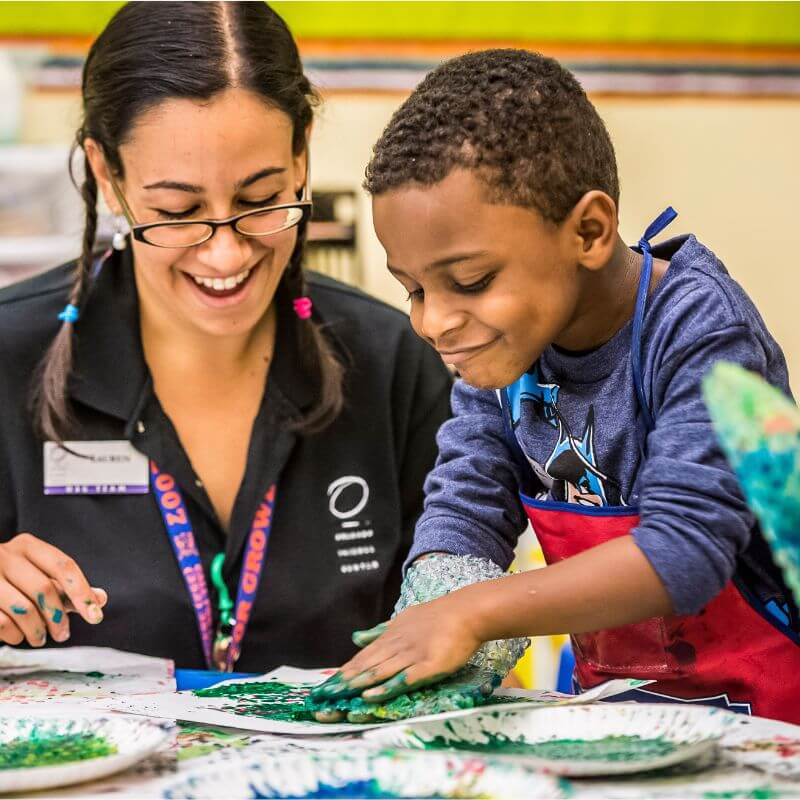
a preschool boy finger painting

Pilots & Patients • The Complicated History of the Tuskegee Institute

The Tuskegee Institute Study and its Health Impacts Today

Standing outside Orlando Science Center in Loch Haven Park stands the Red Tails Monument — a 12-foot bronze spire leading up to four P-51 Mustang aircrafts in the “missing man” formation. This monument to the “Red Tail Angels” of the Tuskegee Airmen pays tribute to a group of Black pilots who graduated from the Tuskegee Institute.

However, not everything about the Tuskegee Institute is a cause for celebration. In fact, for the 40-year span between 1932 and 1972, the university was home to a horrific experiment whose impacts are still felt even today.

The Tuskegee Experiment, as it is commonly known, sought to study the long-term effects of untreated syphilis, a disease caused by the bacterium Treponema pallidum. Over the course of the investigation, 399 African-American men with latent syphilis (that is to say, they were asymptomatic but had bacteria present in their bodies) were observed, along with 201 healthy men in a control group.

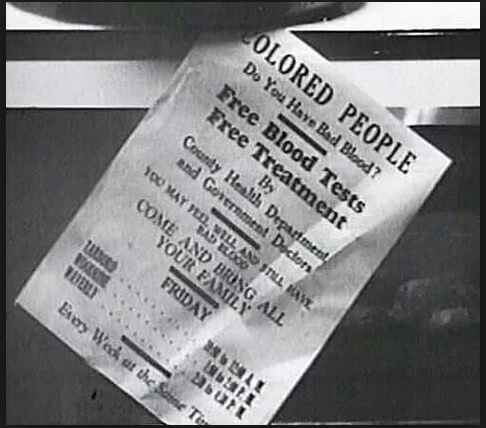
Signs stating “YOU MAY FEEL WELL AND STILL HAVE BAD BLOOD. COME AND BRING ALL YOUR FAMILY” were posted in Macon County, Alabama — the area around the Tuskegee Institute — in the fall of 1932. As you may recall from history class, this was deep in the middle of the Great Depression. Many folks in this part of the country were sharecroppers, tending farmland in exchange for a portion of the food that was grown. With the promise of a free medical exam and a meal to go with it, lots of people understandably took the signs up on their offer.

What the study designers neglected to do was tell participants that they had syphilis. That’s right—in a study of how a disease affects a human long-term, the human participants were never told they had the disease in the first place! Most egregiously, penicillin was a widely-accepted, widely-available standard treatment for syphilis by 1947. The study leaders did not allow the patients enrolled to receive this treatment, instead choosing to allow them to continue to be sick for almost 25 more years. Out of 600 initial participants, only 74 were alive at the time the study ended.

There was public outrage after the story of the Tuskegee experiment came out in 1972. Congress responded to the outcry and passed the National Research Act in 1974. This law mandated that study participants give “informed consent,” meaning they must know what they are being studied for, and that they be given accurate medical information of their diagnoses and test results.

The effect of this eroded trust in medicine persists even now. There are known racial gaps in access to healthcare and enrollment in medical school. Groups such as the Association of Black Cardiologists (ABC) are working to eliminate these differences in access, with the vision that all people—regardless of race, gender, or other characteristics—should equally benefit from known ways to reduce the occurrence of heart disease.

Unfortunately, public trust in health systems was severely shaken by this news, especially among Black Americans. Studies have shown that there was an over 20% reduction in preventive healthcare by older Black men in the area around Tuskegee.

It is important to remember why we honor February as both Black History Month and American Heart Month. Heart disease claims over 650,000 American lives every year. Due to disparities in our healthcare system, this includes a disproportionate number of people of color, including Black Americans.


Educator Resources

If you'd like to learn more about the Tuskegee Institute Syphilis Study or turn this lesson into a lesson for students, check out some of the following educator resources.

The Science of Self-Care

January at the Orlando Science Center is Self-Care Aware Month!

But what does "self-care" mean anyway? We're here to tell you, it's more than just spa days and daily chocolates! 

When you think of self-care, chances are you think of taking daily walks, meditating, reading, playing music, or any other activity that makes you happy. These activities are external to you, meaning they’re things that happen outside of your body. But stress is an internal experience. You feel it inside your body, and it impacts each of us a little bit differently.

Some people might have trouble sleeping, while others might experience scattered thoughts when facing stressful situations. Some people may even have difficulty breathing! So how do we battle these internal feelings of stress?

The scientific answer is to regulate your nervous system. Your nervous system controls everything you do – walking, thinking, feeling, and even breathing. It’s important that any kind of self-care you practice cares for your entire nervous system – both your body and your brain. There are some activities that scientists recommend to help you do this, including mindful breathing, meditation, and progressive muscle relaxation, which involves intentionally relaxing one muscle at a time.

When you make self-care a routine part of your life, research suggests that you can reduce stress and avoid burnout, which is a feeling of emotional, mental, and even physical exhaustion that can be caused by prolonged stress. Tuning into yourself and enhancing your emotional self-awareness through regular self-care is a great way to create balance in your life.

Here's a list of science-based activities to help you practice self-care at home:

  1. Is reading your favorite way to unplug and spend time with yourself? Make yourself an Iridescent Bookmark to help keep your place.
  2. Take your meditation outside, and then tune into your body and your surroundings with this Outdoor Scavenger Hunt.
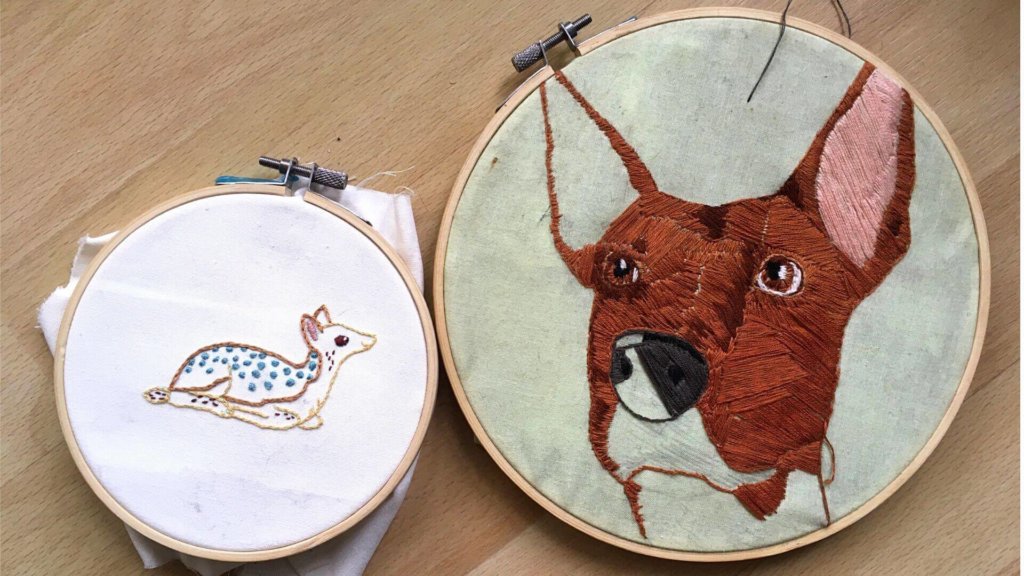
  3. Do you like to fidget? Give your fingers something to do while you take some mindful time for yourself with these Embroidery Techniques.
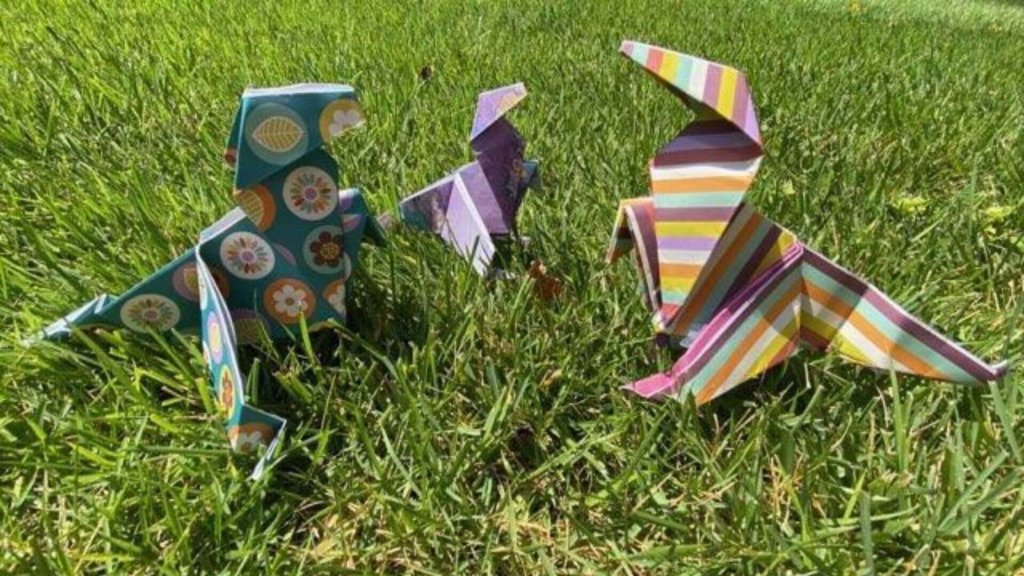
  4. In Japanese culture, origami cranes have come to symbolize a sense of peace. Find your inner peace with the Art of Paper Folding.
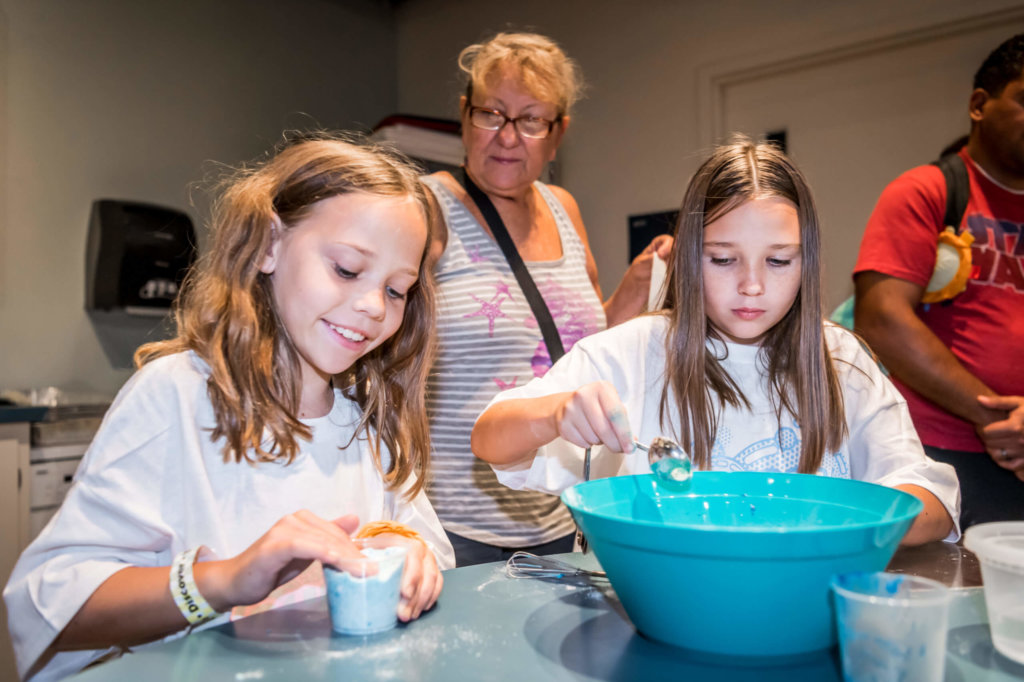
  5. Practice your progressive muscle relaxation in a warm bath using some Homemade Bath Fizzers.  
  6. Color psychologists study how different colors can impact your mood, creativity, and behavior. Surround yourself with colors that you associate with comfort or happy memories to promote stability and relaxation. Science suggests these might be blues or greens for the majority of people. You can do this with your clothes, your pens and pencils, your water bottle, and more!
Embroidered Deer and Embroidered Dog
Origami T. Rex Dinosaurs
Kids making bath fizzers at the Orlando Science Center

Interested in the science behind this article? Here are some of the sources we used to learn more about the science of self-care:

Winter Sensory STEM Experiments

These winter sensory STEM experiments are perfect if the cold never bothered you anyway!

From ice cream to ice chalk, celebrate the winter solstice with some (literally) cool sensory STEM experiments. Join us as we explore the chemistry behind some ice-citing concoctions, learn a trick to make your friends think you can freeze time, and more! 


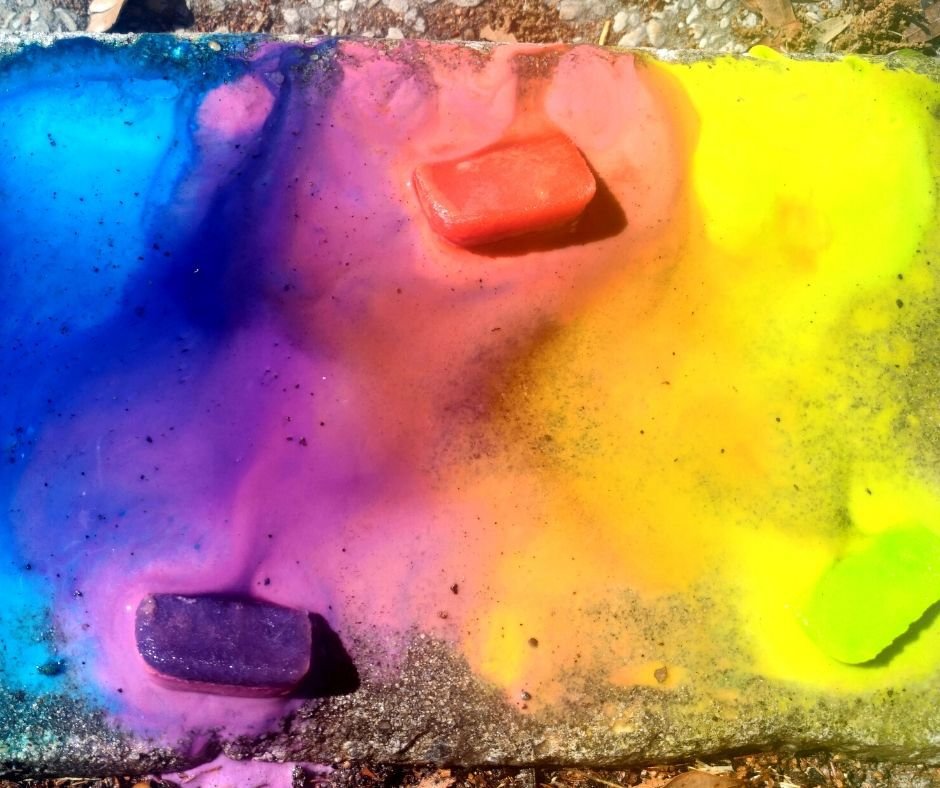
A frozen twist on a classic favorite, ice chalk is a fun way to take your sidewalk art game to the next level! 

Sidewalk chalk is cool but ice chalk is even cooler, literally! Start in the kitchen concocting your chalk paint-sicles, then, when they're ready, head outside and get to painting your pavement!

melted-ice-chalk-kids-sidewalk-activity

I scream, you scream, we all scream "SCIENCE" with this ice cream science project!

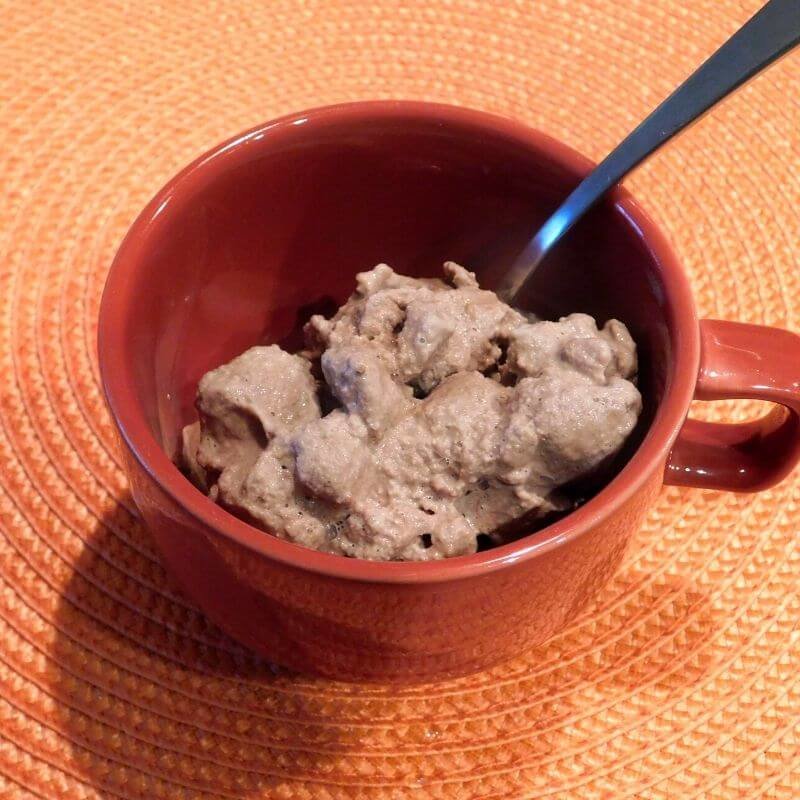
Feel the chill this winter as you learn the science of cold by making homemade ice cream! This vanilla or chocolate ice cream science project doesn’t require any fancy equipment, just plastic food storage bags, elbow grease, and chemistry!

Completed chocolate ice cream science project

What if we told you that you could freeze time with just a balloon, tape, and some water? 

We promise this isn’t CGI magic or a trick of the camera. What you are seeing is a particularly interesting fluid dynamic, which is a scientific way of saying the flow of a fluid (which is any liquid or gas), called laminar flow. 

Follow along with the video, or get the written steps below!

If it doesn't feel like winter, it can still sound like winter

When you think of winter, you probably think of cold temperatures, icicles, and snow. But many places around the world enjoy a tropical December - February. If you can't walk in a winter wonderland, you can at least make it sound like you are with this Foley art activity!

science of sound activity foot steps in the snow

For more engaging OSC at Home STEM activities, visit our blog! 

Cool Reindeer Facts You Didn’t Know

Eenie meenie miney doe, how many reindeer facts do you know?

You know Dasher and Dancer and Prancer and Vixen, Comet and Cupid and Donner and Blitzen. But do you recall, the biology of them all? You’ve probably heard this song before, but have you heard the science behind Santa’s fluffy helpers?


A reindeer by any other name...

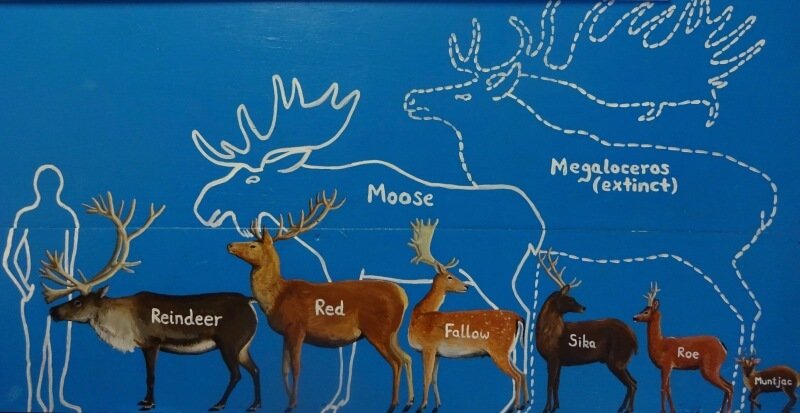
What exactly is a reindeer? These animals are part of the deer family, or Cervidae, which includes deer, elk, moose, and wapiti. Reindeer are also commonly known as caribou. This classification is primarily based on location, or habitat. Reindeer refers to the domesticated animal, while caribou refers to the wild animal.

an imgae comparing the size of reindeer, deer, elk, and moose

Female reindeer are slaying it!

Scientists have observed that male reindeer shed their antlers in early December after mating season, while female reindeer keep their antlers all year. This means that if the reindeer spotted pulling Santa’s sleigh on December 24 have antlers, they must be females, as males would have already shed their antlers.

The real red-nosed reindeer

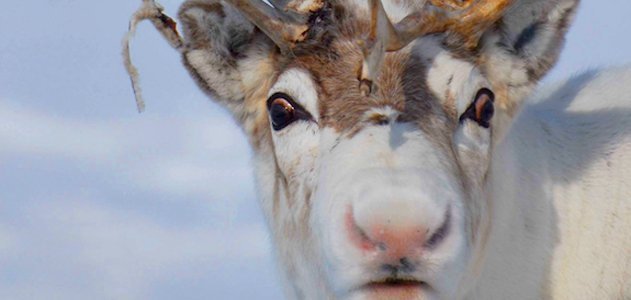
You may remember Rudolph the Red-Nosed Reindeer, and his shiny schnoz. Scientists say that having a rosy nose is not only possible but common in Santa’s furry friends. Reindeer have 25% more blood vessels in their nose than humans. This helps keep their noses warm, which allows them to warm up the frigid air before they breathe it in. Exposure to extreme cold, or exercise increases blood flow, and with so many extra blood vessels in their noses, they can turn a light rosy color.

a reindeer with a pink nose

Eye on the prize

Reindeer have also adapted to see ultraviolet light. While humans are no strangers to ultraviolet light, we are unable to see it. UV rays are commonly known to cause sunburn or snow blindness by reflecting brightly off of the white snow. Reindeer, however, have adapted the ability to see these wavelengths. This not only protects their eyes but allows them to better see food or other animals camouflaged in the snow.

The cold never bothered them anyway

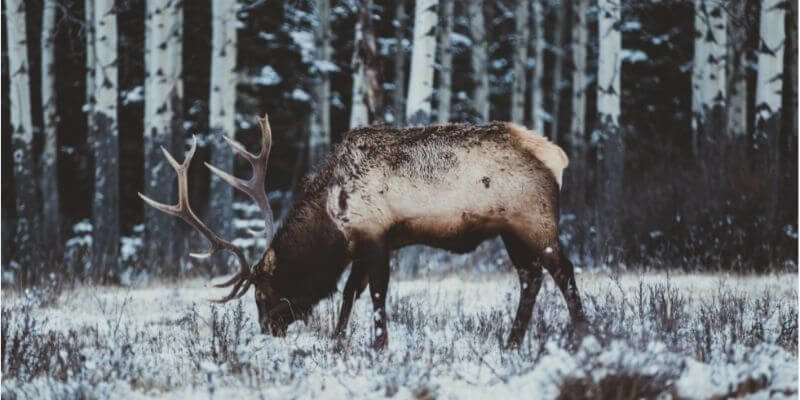
Why does Santa have a reindeer-drawn sleigh instead of a horse-drawn carriage? Reindeer are native to cold climates like Alaska, Canada, and Scandinavia and have adapted to the cold. A reindeer’s fur is made up of hollow hairs that trap in air and keep them well-insulated. They are also the only animal to have hair completely cover their noses. This helps warm up the cold air they breathe before it reaches their lungs.

a reindeer in a snowy forest

So next time you hear the pitter-patter of hooves on your roof, remember it’s no coincidence that Santa uses these gentle giants to pull his sleigh. Reindeer have adapted to weather their frosty environment and help deliver Christmas cheer all over the world!


Learn some more COOL science!