One Hand Washes The Other: Co-Evolution of Science and Technology

Which came first, science or technology?

In truth, they are symbiotic processes, each disciple feeding from and expounding upon the other. Science and technology have co-evolved, and one of the best examples of this was the invention of the laser.

In 1917, Einstein published a fundamental science paper detailing how the absorption and emission of light occurs. He also introduced a new concept called stimulated emission. This would be key to the development of lasers later on. The word laser is an acronym for Light Amplification by Stimulated Emission of Radiation. (One photon becomes two, the two become four, etc. with a resulting beam that would be very directional and of a single wavelength or frequency.)

Einstein’s scientific publication was ahead of the time. It was not until1954 that the MASER (M is for microwave) would be successfully demonstrated by Charles Townes, who also coined the acronym. Townes’ breakthrough was to inject a controlled stream of ammonia gas (CH3) in an excited state into a metal box. Critical to this success was new technology that he and others developed during WWII in radar research. At about the same time, a similar approach by Basov and Prokhorov in the USSR would also be successful. Basov, Prokhorov, and Townes shared the Nobel Prize in Physics in 1964 for the invention and applications of MASERs. 

The big technological breakthrough was the ruby laser, developed by Ted Meiman at Hughes Research Labs in 1962. Meiman’s laser was much less complicated than masers (the excitation source was a simple photographer’s strobe) and it produced amplified visible light, thus causing Townes to change the acronym to from maser to laser (l for light) - something we’re all familiar with today.
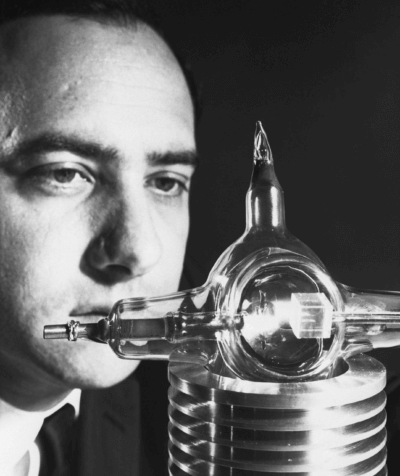
Press photo by...
1960 Press Photo Dr. Theodore H. Maiman

At the press conference announcing the laser, a reporter asked, “What is it good for?” After a pause Meiman said, “It is a solution looking for a problem.” The dam broke as this burst of highly intense light stimulated an explosion of new technology and new lasers! New laser materials, new materials for mirrors, lenses, and windows were developed. 

In 2013, a report of the National Academy of Science documented that lasers and photonics enabled 15% of the world’s GDP. Hyperbole? Not! Lasers provide almost all of the world’s telecommunications via fiber optics. 

Lasers are the basis for lithography, which in turn makes microchips for computers, cell phones, cars, appliances, etc. Lasers are the basis of new medical diagnostic instruments and treatments, and various manufacturing processes (precision laser machines produce more than a dozen components of iPhones.) The list of applications is exponentially increasing.

The feedback of new technology and innovations have resulted in over a dozen laser-enabled Nobel Prizes. That new science is producing new technologies and innovations and human progress accelerates. 

On Dec. 5, 2022, the Laurence Livermore National Labs demonstrated controlled nuclear fusion ignition with the world’s most powerful laser (500 trillion watts of peak power), which in turn promises new energy sources for our future. 

As the continued development of laser technology demonstrates, technology puts science to work and in turn inspires new scientific pursuits. Put another way: one hand washes the other, and both benefit! 
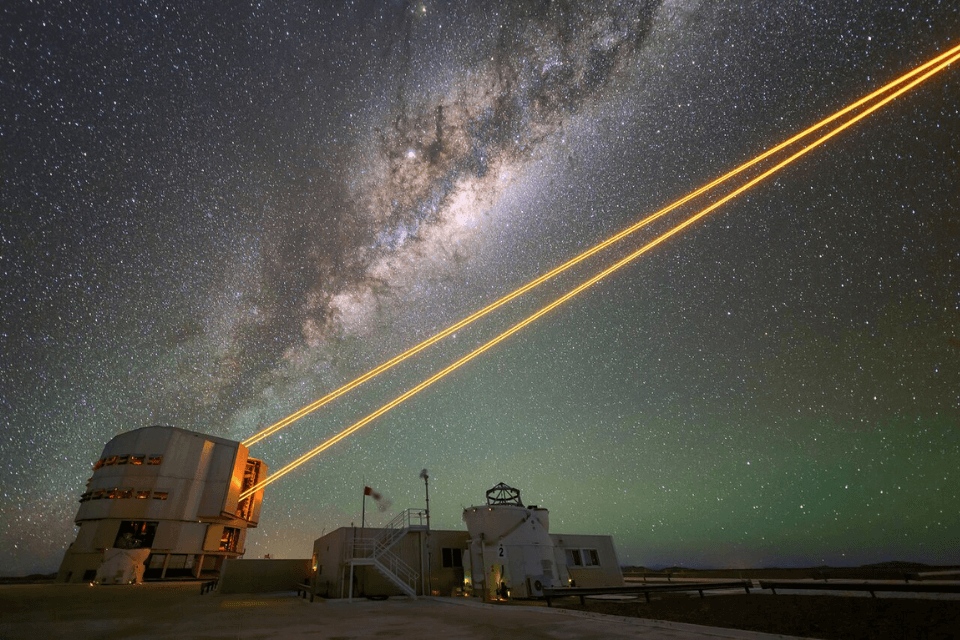
Very Large Telescope (VLT). Photo credit: ESO/A. Ghizzi Panizza (www.albertoghizzipanizza.com)

Florida Prepaid Open Enrollment

Florida Prepaid College Open Enrollment Begins with Lowest Prices in 10 Years 

As our partner the Florida Prepaid College Plan Board celebrates 35 years of helping Florida families save affordably for college, they have lowered Prepaid Plan monthly prices by up to 25 percent during the Prepaid Plan Open Enrollment period from February 1-April 30, 2024.  

The reductions will bring Prepaid Plan prices to their lowest level in 10 years, starting at just $34 per month for a 1-Year University Plan for a newborn.  The monthly cost of a four-year university plan for a newborn is down to $134 – that’s a monthly savings of about $50 compared to last year. 

Our Prepaid Plans are made to fit growing families: 

  • Risk-free: Your investment is protected by the State of Florida. 
  • Flexible: Use in-state or out, at public or private colleges and universities, trade, and technical schools.  
  • Worry-free: Cancel anytime for a full refund or transfer to another family member.  

To learn more and enroll today, visit https://bit.ly/48NvgcG

Opinion: STEM is the Key to Prosperity

JoAnn Newman and Rachel Kerestes

Florida is a STEM state. Our economy is driven by industries and occupations in science, technology, engineering and math fields. Now more than ever, policymakers must act to foster the state’s STEM economy by engaging young people and creating career opportunities for generations to come. 

In 2021 Florida was home to 4.1 million STEM professionals, an increase of 450,000 over five years. They represent 33% of the state’s workforce, generate $447 billion in economic activity and account for 36% of Florida’s gross domestic product. 

More than half (55%) of Florida’s STEM professionals do not hold a bachelor’s degree—earning their training through apprenticeships, community colleges, vocational training, the military and more.   

These People of Science include environmental engineers, electricians, information security analysts, sociologists, soil scientists, water quality technicians and accountants.   

STEM occupations offer lucrative and exciting paths in multiple disciplines. On average, STEM professionals earn more than non-STEM workers. According to the National Science Foundation STEM workers enjoyed median wage and salary earnings nearly $25,000 higher than non-STEM workers. Among STEM professionals with advanced degrees, median annual salaries of $100,000 or more are common.    

Despite the current demand for skilled STEM employees and the opportunities for dynamic and well-paid careers STEM provides, we are failing to educate, train and build the STEM workforce of the future in sufficient numbers. 

According to the Bureau of Labor Statistics, the U.S. will need an additional one million STEM professionals by next year to maintain its leadership position in science and technology. 

Given the importance of STEM to Florida’s economy, our leaders cannot sit idle. More must be done to engage students earlier and bring science to life for them, make older students and new graduates aware of the many exciting career options in science and technology—many of which do not require a bachelor’s degree, while advanced degrees offer additional opportunities —and train (or retrain) current workers for a new path. 

In our increasingly complex society, the value of science has never been greater. Science literacy not only leads to a better understanding of the world’s problems, but it promotes the development of skills to help solve them. Through study and experimentation, we acquire knowledge, which leads to understanding, innovation and ultimately prosperity. Florida’s youth can save the world and science can help them do it. 

STEM education helps grow Florida’s technological workforce. Science museums, for example, serve as hubs for STEM learning, easily facilitating opportunities between industry, education and the public. Collaborations between science museums, corporations and education are key to developing a comprehensive approach to promote STEM learning from cradle to career.  

The Orlando Science Center established STEM Day at the Capitol a decade ago, held this year on January 25, to highlight how STEM education engages our students, prepares them for many amazing career paths and inspires our next generation of innovators.   

Let’s work together as parents, educators, business leaders and policymakers to establish a deep STEM talent pool and create an environment in which Florida’s leadership in aerospace, agriculture, environmental science and other STEM-intensive industries will be unmistakable. If we can do that, Floridians will prosper. 

# # # 

JoAnn Newman is an Orlando resident and President and CEO of the Orlando Science Center.
Rachel Kerestes is a Fernandina Beach resident and Executive Director of Science is US. 

Become a Spark STEM Fest Exhibitor

Help inspire the next generation of scientists, engineers, and innovators!

Things to Consider

Spark STEM Fest exhibitors engage directly with the public, providing hands-on, interactive STEM-learning opportunities for all ages.


Spark STEM Fest exhibitors are expected to:

  • Share what you do and how you use STEM applications as part of your work.
  • Engage the public through either an activity or demonstration in an interactive manner.
  • Tailor both content and activities for maximum engagement and impact with our audience.

When planning your exhibit, keep the following in mind:

  • The exhibit should be designed to promote understanding of topics in STEM.
  • All materials and activities must be safe and appropriate for a family audience.
  • If applicable, include safety precautions, and age requirements in your proposal.
  • Think of activities that are engaging with open-ended discovery and provide opportunities for informal conversations between you and the visitor.

Hands-on activity:

  • Pick a simple task that teaches people of all ages about a specific topic and allows them to be active participants so they can see themselves as scientists, engineers, mathematicians, and doctors!
  • Choose a simple activity that 3-5 participants can do at one time.
  • The activity should last about 5 minutes to ensure that a steady stream of visitors can move in and out throughout the day.
  • Expect about 500 visitors to your booth each day – be sure you have enough supplies to last the day.

Tips for Maximizing Face-to-Face Interaction:

  • This is the public’s chance to meet and interact with STEM professionals. Smiling volunteers with high energy and enthusiasm can be even more effective than any activity.
  • 4 - 6 people staffing your activity is ideal and allows for breaks for volunteers.
  • Encourage conversations with visitors—ask questions that require visitors to think about or observe something. Let their responses and curiosity drive your interaction.

Need Help Creating Your Exhibit?

Download our guide below to gain tips and tricks for creating a captivating exhibit booth and ensuring your proposal aligns with the event’s goals and guidelines.

How to Create a Stellar STEM Display

Need some activity theme ideas?

Create a catchy title and description for your exhibit. Here’s why! A captivating title and description for your experience helps to encourage visitors of all ages to participate and helps break down barriers for those who may be intimidated by science and technology.

Here are some ideas for your exhibit themes/activities:

  • The Smart Energy Experience 
  • Feathers, Scales, & Tails Vet Med
  • Savings Endangered Species 
  • Bacteria: The Good, The Bad, and The Ugly
  • Explore the Magic of Chemistry 
  • The Science behind Music 
  • Weird Science Weirder Art 
  • Explore the Art and Science of
  • Architecture
  • Science of Construction 
  • CSI
  • 3-D printing prosthetics
  • The Science of Cycling!
  • Power from Potatoes? 
  • The Chemistry and Microbiology of good food 
  • What Critters Live in Our Streams 
  • From Farm to Table: The Science Behind Your Pizza
  • Science on the Farm
  • Science Education Kitchen
  • Sparking Curiosity about Energy
  • Experiment with Sports 
  • The Secret Science of Sports
  • Design It, Build It, Test It! 
  • Grossology: The Science of Icky, Sticky, Disgusting Things 
  • Military Gear – The Science of Safe Armor 
  • Serious Games
  • Games as Cultural Tools in Science Education
  • Video games – can they change our brains?
  • Sensors: See How Cars See 
  • Self-Driving Vehicles and Drones that Fly! 
  • Materials Science: Designing Materials for a Better World
  • Minecraft! The Science of Crafting
  • Exploring the Developing Brain
  • Language Science for Everyone
  • DEEP SPACE Robot Maneuvering,  
    Gravity Games! 

Still Have Questions? We’re here to help! Contact us at sparkstemfest@osc.org

Submit Your Proposal – Extended to December 22

What is the Selection Process?

Individuals representing all STEM fields and levels are welcome to submit proposals. Exhibitors will be chosen based on their potential interest to attendees and relevance to current trends and best practices. Please note that this event attracts families with children. Preference will be given to those topics that serve diverse audiences.

Each completed registration will be reviewed for approval. Applicants will receive notification of acceptance or regret as soon as possible or by January 15.

Help promote the event and your participation!

We count on each exhibitor’s support to help spread the word about Spark STEM Fest and showcase the exciting experiences guests can expect at your booth. Promoting your participation through your social media, blogs, websites, newsletters, or other communication channels helps us reach diverse audiences across the region—and builds anticipation for the event!

The 2026 Marketing Kit will be available in December, giving you plenty of time to start promoting your participation before the new year. It will include:

  • Customizable templates
  • Sample captions and hashtags
  • Event logos and graphics
  • Tips for maximizing engagement

For Inquiries, please contact jstanford@osc.org.

What is Spark STEM Fest?

Spark STEM Fest is a multi-day event open to people of all ages, designed to connect the public with experts and organizations from various STEM fields. The event provides a unique opportunity for attendees to get a personal and close-up look at cutting-edge science research and technology, as well as everyday applications of STEM concepts across a wide range of topics, careers, and interests.

What is the goal of Spark STEM Fest?

Our goal is to host an interactive celebration that sparks interest in science, technology, engineering, and math (STEM) through compelling, exciting, and educational hands-on experiences, exhibits, and programs. This includes access to professionals and exploration of fulfilling career opportunities. We foster an inclusive ecosystem by engaging with people of all backgrounds, especially students from underrepresented communities.


What are the exhibitor days and hours?

School Field Trip Day:

  • Friday: 10:00 am to 3:00 pm (space is limited)

Expo Days:

  • Saturday, Sunday, and Monday: 9:30 am to 5:00 pm (All Ages)
  • Saturday Evening: 7:45 pm to 11:30 pm (Guests 18+ Only)

Note for Saturday Exhibitors: There will be a scheduled break from 5:15 pm to 7:30 pm for those participating in the evening hours.


How is the event structured?

This 4-day event at the Orlando Science Center features multiple exhibitors, hands-on activities and dynamic demonstrations, led by STEM experts from our region to engage visitors of all ages. Individual scientists, engineers, and researchers can show off their research through intentional, meaningful interactions with the public.

School Field Trip Day

An unforgettable STEM experience exclusively for students (Grades 4-8)

Friday will kick off the event with School Field Trip Day, focusing exclusively on school students with engaging hands-on exhibits and demonstrations led by STEM professionals in a classroom environment. The aim is to boost interest in STEM education, share pathways to STEM careers, and inspire students to envision themselves in roles they may have never imagined.

Interested in presenting? Please visit our FAQs to learn more about classroom activities and how to submit a proposal.

Expo Days

Hands-On STEM Adventures for Curious Minds of All Ages

Saturday, Sunday and Monday (Presidents Day) will feature exhibitors on all four floors of the Science Center and in classrooms with engaging activities and fun science shows for guests of all ages.

Science Night Live!

An Evening of Exploration, Exclusively for Adults 18+

Saturday evening hours are reserved exclusively for adults to enjoy Spark STEM Fest without the kids during Science Night Live, featuring exhibitors, thought-provoking guest speakers, and more! After 5:00 pm, exhibitors must be at least 16 years old.


Why participate?

  • Increase your organization’s visibility and recognition throughout Central Florida.
  • Position your organization as an innovative community leader that supports public understanding of STEM.
  • Support local workforce development by showcasing exciting STEM career pathways and providing opportunities to connect with STEM industry professionals.
  • Benefit from meaningful employee engagement opportunities and network with other organizations.
  • Inspire the next generation of STEM leaders and equip them with the tools, skills, and confidence they need to pursue exciting and lucrative STEM careers.
  • Ensure equitable and accessible learning opportunities that promote diversity and representation in STEM.
  • Connect directly with the public in a fun, open, engaging environment. Enjoy access to an enthusiastic audience of potential employees, customers, and influencers.

Science on Screen: Oppenheimer

The Oppenheimer Dilemma:
Navigating Science, Ethics, and Power in the Shadows of the Atom Bomb

Extended Thoughts from Dr. M.J. Soileau, Scientist in Residence

This summer, Christopher Nolan's film Oppenheimer took the country by storm. If you haven't seen it yet, I highly recommend that you do. Not only is Nolan a powerful storyteller, but the film is factual and compelling - and a good reminder to us all of the danger posed by the pulverization of nuclear weapons in arsenals around the world. Focusing on the evergreen issue of the moral qualms of scientists developing weapons of war, Oppenheimer poses a poignant question: do scientists have a moral obligation to engage in policy discussions beyond the technical details of weapons?

Morality! A topic too big for me to properly address in so few words. However, I shall do my best. 

Many of the key scientists on the Manhattan Project (and the related efforts in England) were European immigrants who had fled Fascist powers in Europe, e.g. Germany and Italy. These immigrants were vocal proponents of the compelling argument for the development of America's atom bomb (or A-bomb). 

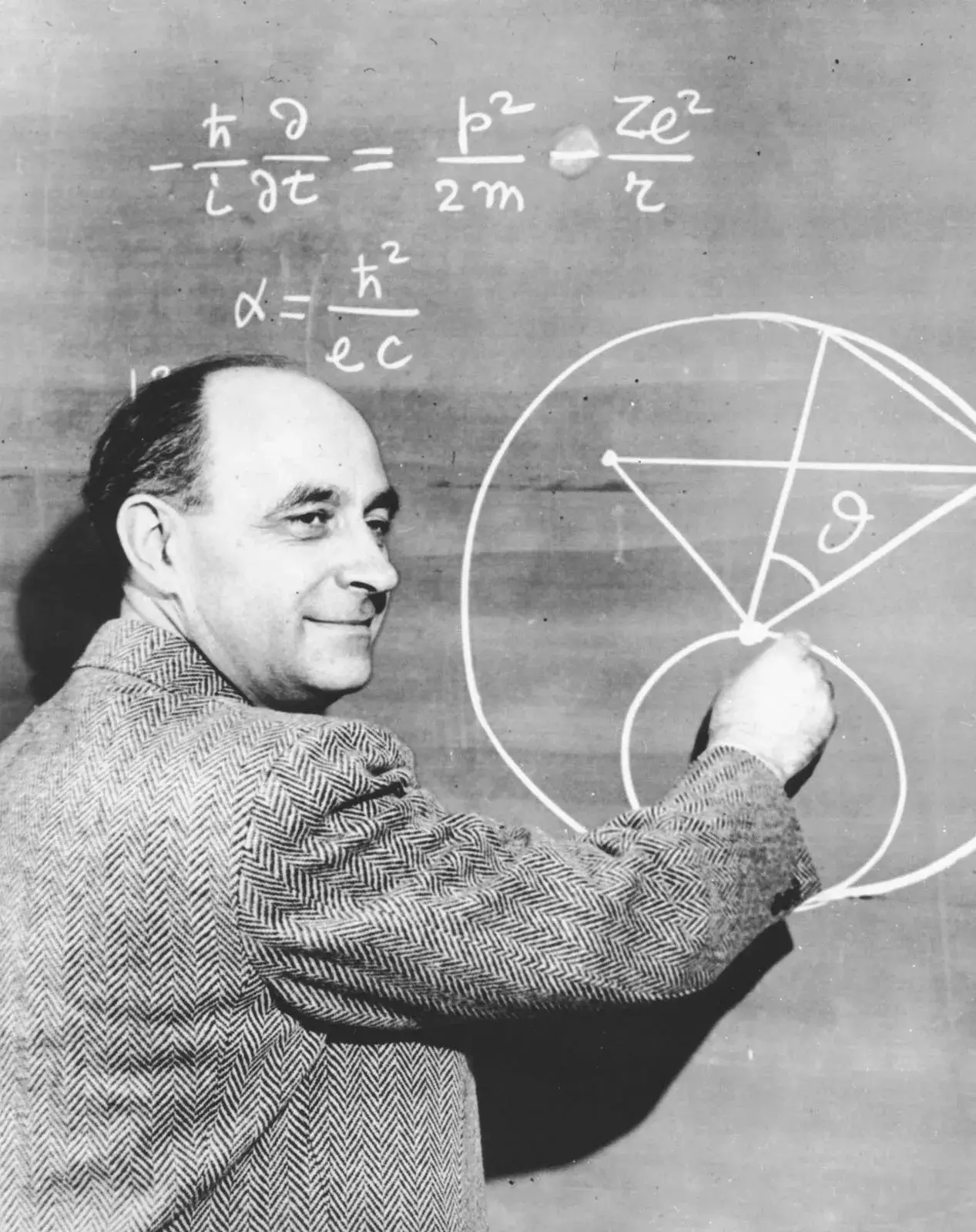
Enrico Fermi was one such scientist. He received his Nobel Prize in 1938 – the same year he fled Fascist Italy for the United States to join the Uranium Project at the University of Chicago. He joined other émigrés on this project, including Leo Szilard and Eugene Wigner, and the team developed the first sustainable nuclear reaction. That effort was initially meant to look at atomic fission as a source of energy. Fermi tried and failed to interest the US military in this possible energy source. He and his colleagues were aware of the possibility of a uranium bomb, but they doubted that such a bomb could be built.  

Nazi Germany did not have such doubts. In 1938, German scientists split the atom. Then the German government embargoed uranium and moved the nuclear effort behind a wall of secrecy. These actions sounded the alarm with refugee physicists working with uranium. They correctly concluded that the Nazis were working on an A-bomb! Having experienced Nazi tyranny firsthand, they knew that Hitler would use such a weapon to ensure Nazi dominance of the world. 

Enrico Fermi completes a physics equation on a chalkboard.
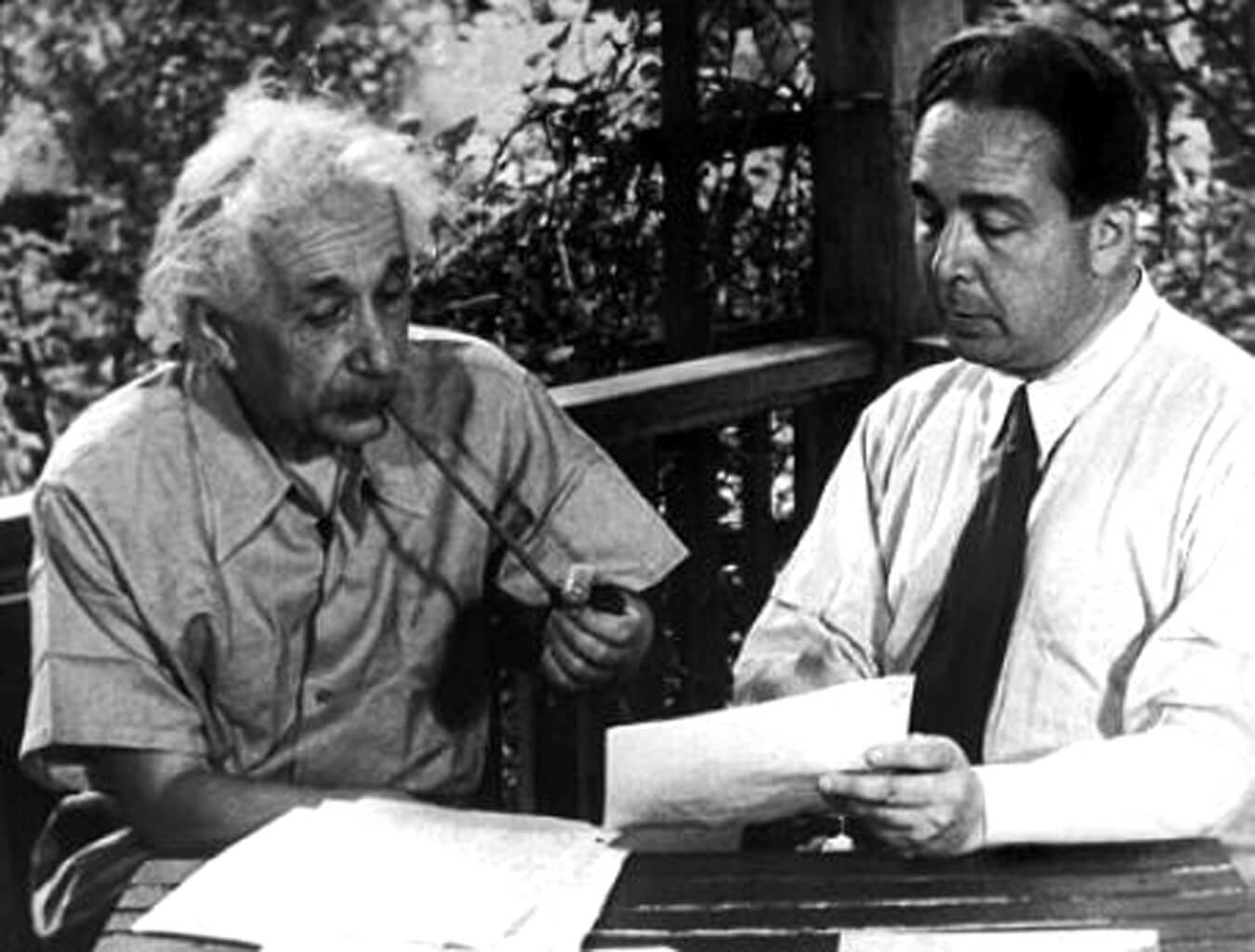
Albert Einstein and Leo Szilard draft a letter to President Roosevelt.

Hungarian émigré physicists Leo Szilard and Eugene Winger regarded it a moral imperative to alert US officials of the possibility of a German A-bomb (though it wasn’t yet known by that name). They sought the help of the world’s most famous scientist, Albert Einstein, to write a letter to President Roosevelt urging quick and rigorous action towards creating a weapon that would stand up to a German A-bomb. Einstein, an avid pacifist, had met the President. In fact, he’d been an overnight guest in the White House.  

Together, Szilard, Wigner and Einstein drafted a letter that was hand-delivered to the President on October 11, 1939. This letter persuaded President Roosevelt to take decisive action towards creating the Manhattan Project. This was major policy advocacy by scientists, and it had a huge impact on the outcome of the war. Roosevelt set up a high-level committee (which included Ernest Lawrence and Vannevar Bush) to explore the feasibility of the bomb. Lawrence and Bush presented findings to the President on October 9, 1941 that an A-bomb could be built. Roosevelt gave the tentative go-ahead on January 19, 1942. 

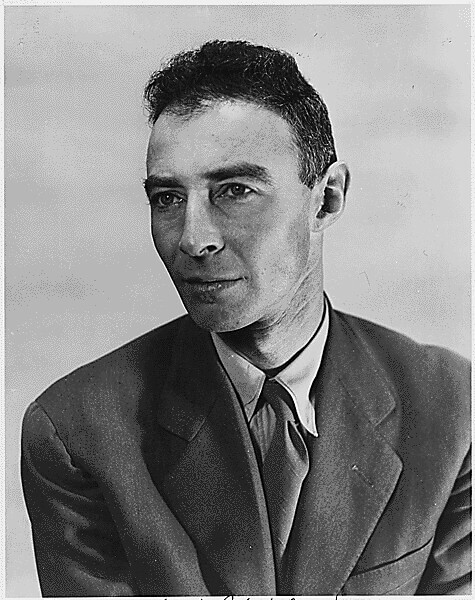
General Groves, appointed to lead the effort in June 1942, hired J. Robert Oppenheimer to lead the bomb's development. Among Oppenheimer's first actions was to recruit an international team of "science celebrities" for the project. This included 36 Nobel Prize winners (some of whom received the prize after the war). 

Without question, Oppenheimer was the leader of the Manhattan Project, which developed the A-bombs that the United States would drop on Japan. Without question, this action was the ultimate defeat of the Axis powers, bringing an end to World War II (WWII). Without question, Oppenheimer had a deep understanding of the destructive power of A-bombs and the horrific consequences of a hydrogen bomb (or H-bomb) arms race. 

Nolan's film ends with the portrayal of Oppenheimer's struggle with his conscience. In my view, his struggle was not about guilt for having led the development of the A-bomb but for what might come next.

At the war's end, Oppenheimer was a superhero to the American people. He and many others who developed the weapon were particularly suited to give input regarding the developing arms race and the H-bomb superweapons, and he took a stance, definitively arguing against further development of superweapons. 

A portrait of J. Robert Oppenheimer

Many citizens - including many scientists - believed that this kind of advocacy should not be the role of the scientist. Oppenheimer's policy opponents viewed him as such a threat that they found it necessary to destroy him personally to discredit his opposition to the development of the H-bomb and his advocacy for arms control.

Years after the end of WWII, declassified testimony indicated that the FBI had files listing Oppenheimer, Leo Szilard, Enrico Fermi, and other scientists (particularly "foreign-born" scientists) as uncertain allies. But without such men, the Manhattan Project would not have succeeded. 

We must understand that there was a moral imperative among the Allies to defeat the Axis powers in WWII. All aspects of society were mobilized for this cause, including the scientific community. Nolan's film hinted at this but did not fully develop the concept of the massive mobilization of scientific and engineering talent and industrial resources for the effort.

I encourage everyone to see the film and study the historical context surrounding the decisions made to help contemplate the world's next steps in nuclear armament. I pose the question to you: Should scientists advocate for policy regarding the science they develop?

What happens to rain after a storm?

What happens to rain after a storm? 

Make a model that shows how water flows over different land shapes! 

A topographic map shows different land features, like mountains, ravines, and plains, using curved lines or colors to show altitude. It’s an easy way to show a 3D view of something on a flat surface. Topo maps are commonly used by hikers, surveyors, government workers, and engineers, among other people.  

Our model won’t be flat so it isn’t exactly like a topo map, but it will show the same type of information! 

Ready to make your own? Follow the written steps below! 


Materials you will need: 

  • Half sheet of paper 
  • Washable marker 
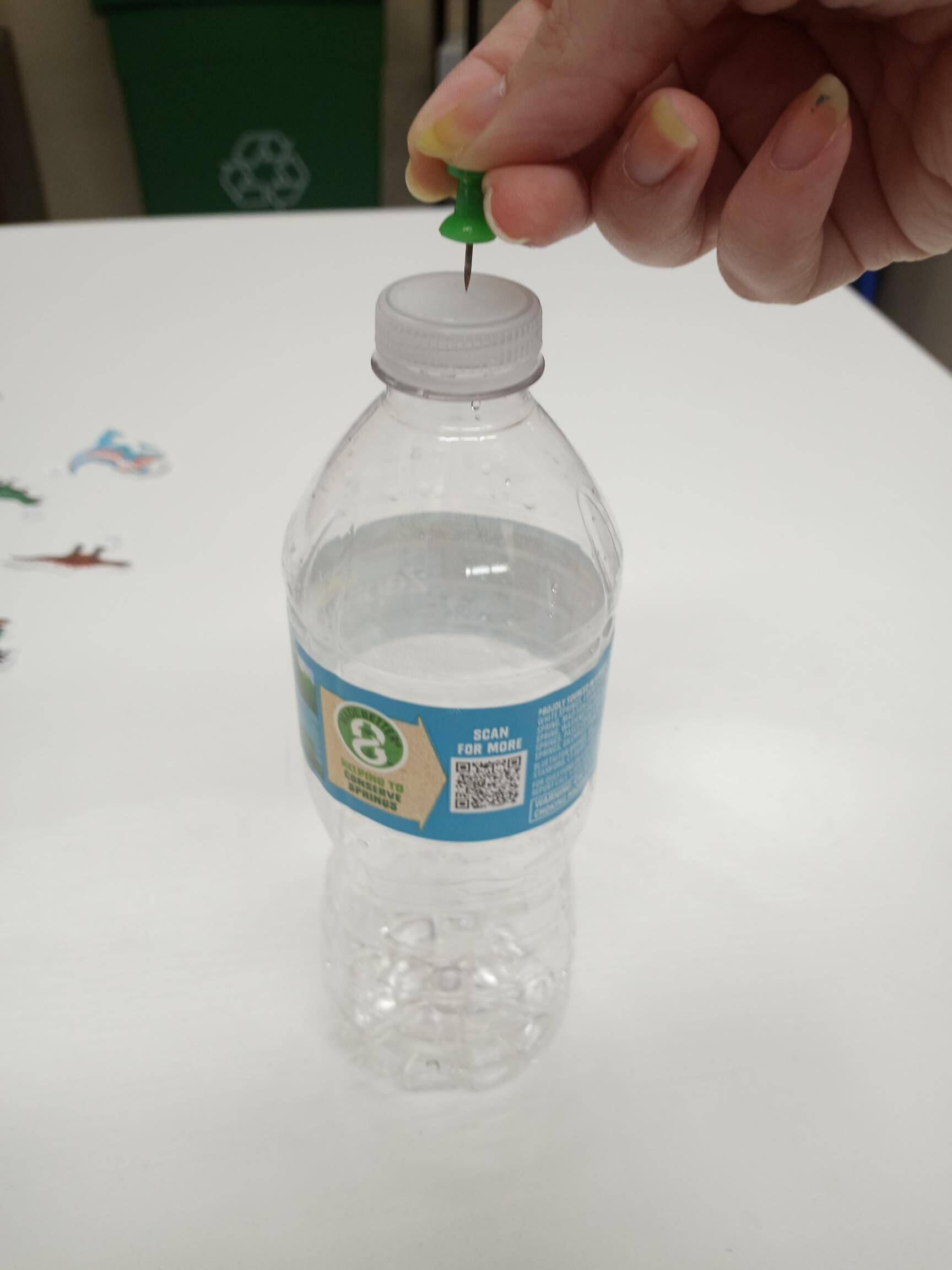
  • Dropper bottle (your adult can also make one by using a thumb tack to poke a whole in a water bottle cap) 
  • Tray or towel to catch any water spills 


Directions: 

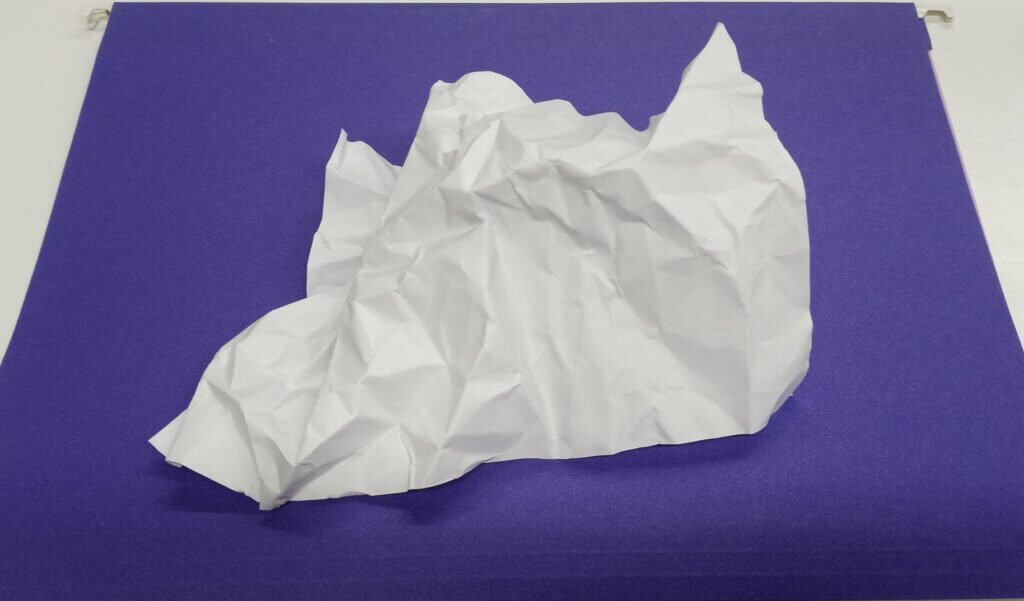
Step 1: Crumple up a piece of paper and gently open it most of the way. It should still show ridges (high points) and valleys (low points.)

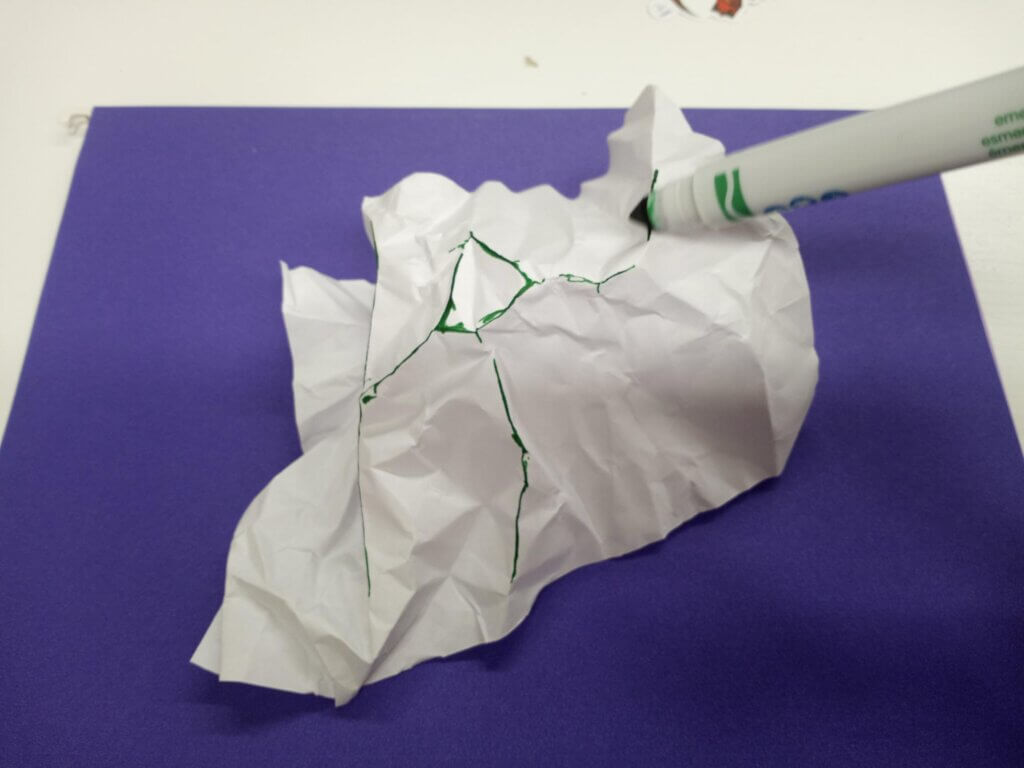
Step 2: Choose one of the ridges and color the whole ridgeline with a washable marker. Use lots of ink! (It’s easier if you use the flat side of the marker.)


Step 3: Place the paper on the towel or tray

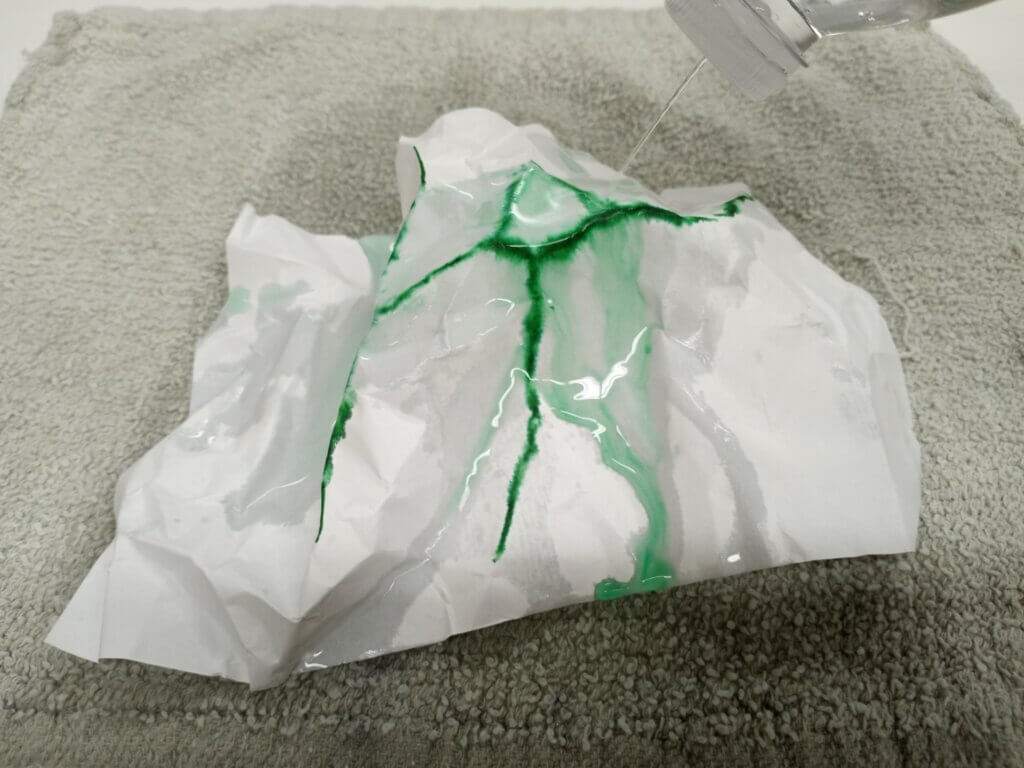
Step 4: Use the dropper to pour water onto the peak, simulating a rainstorm.

Step 5: Repeat this experiment with more ridges on your crumpled paper.

The colored water is following the path of the watershed! 


The Science of Paper Mountains 

    • Watersheds are parts of land, like mountains, that drain rain water and snow melt into rivers and lakes. This water can carry particles from the land into big bodies of water. 
    • Marker ink moves with the water similarly to surface particles that are carried through a watershed. 
    • Surface waste like trash on streets, exposed soil from landslides or construction, or pollution from mines or farms, is picked up by rainwater and carried to the closest body of water. ​ 
    • What happens upstream always influences the water quality and processes downstream. 
    • Does your mountain have a dry side? A rain shadow is a dry area of a mountain that is caused by rain falling before the wind can carry it to the other side of the mountain. 


Expand on This Activity: 

Ask Your Scientist the Following Questions: 

  • Which direction is the water flowing? 
  • Does height make a difference? 
  • Which parts of the paper stayed dry? 

Keep Experimenting: 

  • If you have one at home, try putting a Monopoly house or similar small object on different parts of the mountain. See how its location affects the house during heavy rain. 
  • Test different heights for your mountain. When you keep the paper more crinkled you have higher peaks, does the water flow differently than if you flatten the paper more? 


Explore a topo map here: 

New Zealand Topographic Map - NZ Topo Map 

The Science of AI Art

A picture is worth LESS than a thousand words, and we can prove it! 

Our brand-new OSC Flight Lab workshop, Painting with Pixels, will teach you how to get the most out of image generators that use Artificial Intelligence! 

The Science of AI Generated Art 

What is AI? 

According to IBM, AI, or Artificial Intelligence, “leverages computers and machines to mimic the problem solving and decision-making capabilities of the human mind.”This definition provides a good understanding of the purpose of AI, but it doesn’t really provide a good perspective on just how ubiquitous AI has become in modern society. You likely use AI in one form or another every single day 

  • Nearly every aspect of your smartphones uses AI to give you the best possible user experience, from improvements to your photo quality and filters on your selfie camera, to autogenerated text-message responses.  
  • Navigation systems like Google Maps and Apple maps use AI to optimize routes based on real-time traffic data.  
  • Online shopping and video streaming platforms use AI to make recommendations based on your browsing and purchase history.  
  • Even your modern smart-home appliances use AI to learn user behavior and make automatic adjustments. 
  • And more! 

As it turns out, every AI that has ever existed falls into only one category, called Narrow AI (aka Weak AI). Narrow AI systems are designed to excel at one particular task or set of tasks. 

How does AI generate Art? 

The AI starts with an image that is just pure noise – literal random pixels of random colors. When a prompt gets submitted to the program, it is first sent through an encoder – essentially a translator to make sure the input you give the AI is in a format it can understand. Then, using this translated prompt, it does something called diffusion, a process in which the pixels of the random noise are manipulated to create recognizable shapes over time. 

There has never been an artist on Earth that has made good art without doing a lot of bad practice art first, and the same applies to AI. Every AI needs to go through training to be able to perform the task it’s built for! This concept is the basis of Machine Learning. We train AI that is designed to generate art by progressively feeding the AI noisier and noisier images of different types of objects with the goal of having the AI successfully denoise those images into something that is recognizable as the original image. The images that it successfully creates get fed back into the data it’s trained on, the images that it fails on get thrown out, and this process is repeated thousands of times until the AI is sufficiently trained. 

Diffusion Animated GIF


You can make AI art of your own at home! 

Things you’ll need: 

  • A computer or smartphone with internet access 
  • Adult supervision 

Directions: 

Step 1: Open an internet browser, navigate to the Bing Image Creator, and log in. 

Step 2:Next, think about the image you want to create and come up with a prompt using the Perfect Prompt Formula found below. 

Step 3:Type your prompt into the Bing Image Creator and submit.  

Step 4:Wait while the image generates and enjoy! 

The Perfect Prompt Formula: 

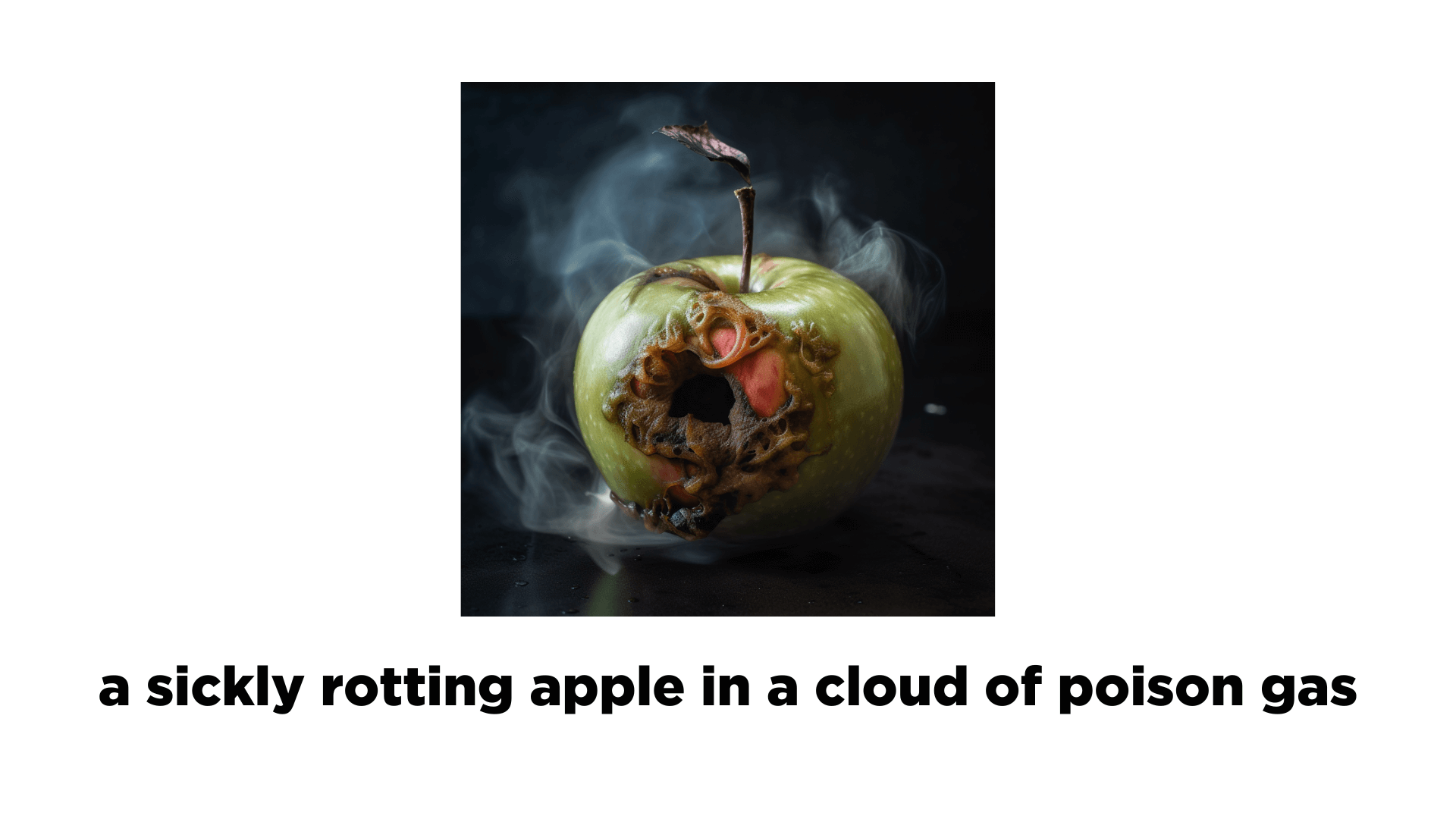
Coming up with a creative prompt for your image generator can be hard, but using the following four ideas in your prompt can help you take advantage of the AI’s capabilities and make better art! 

The best prompts on average have about 40 words and follow this structure: 

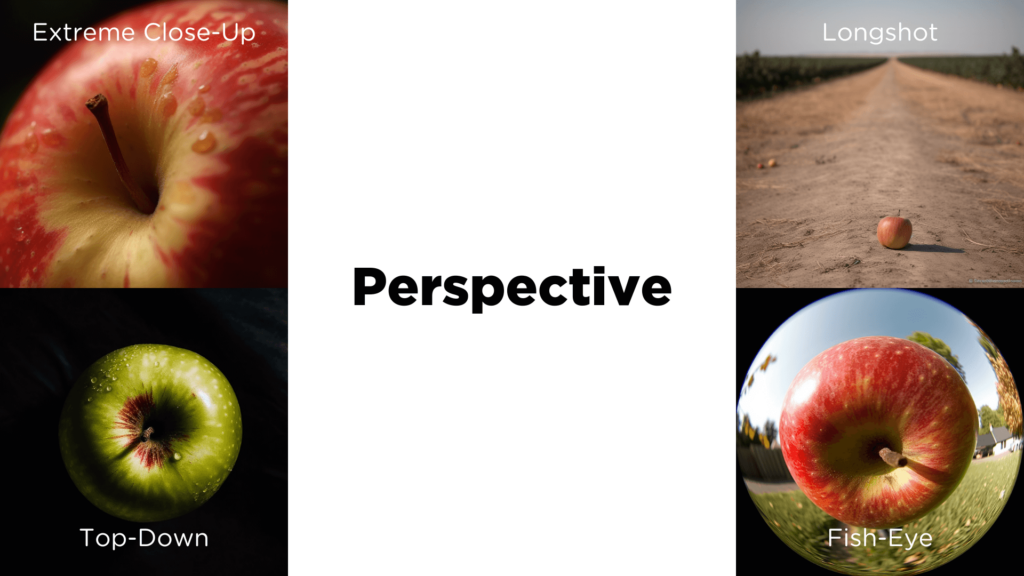
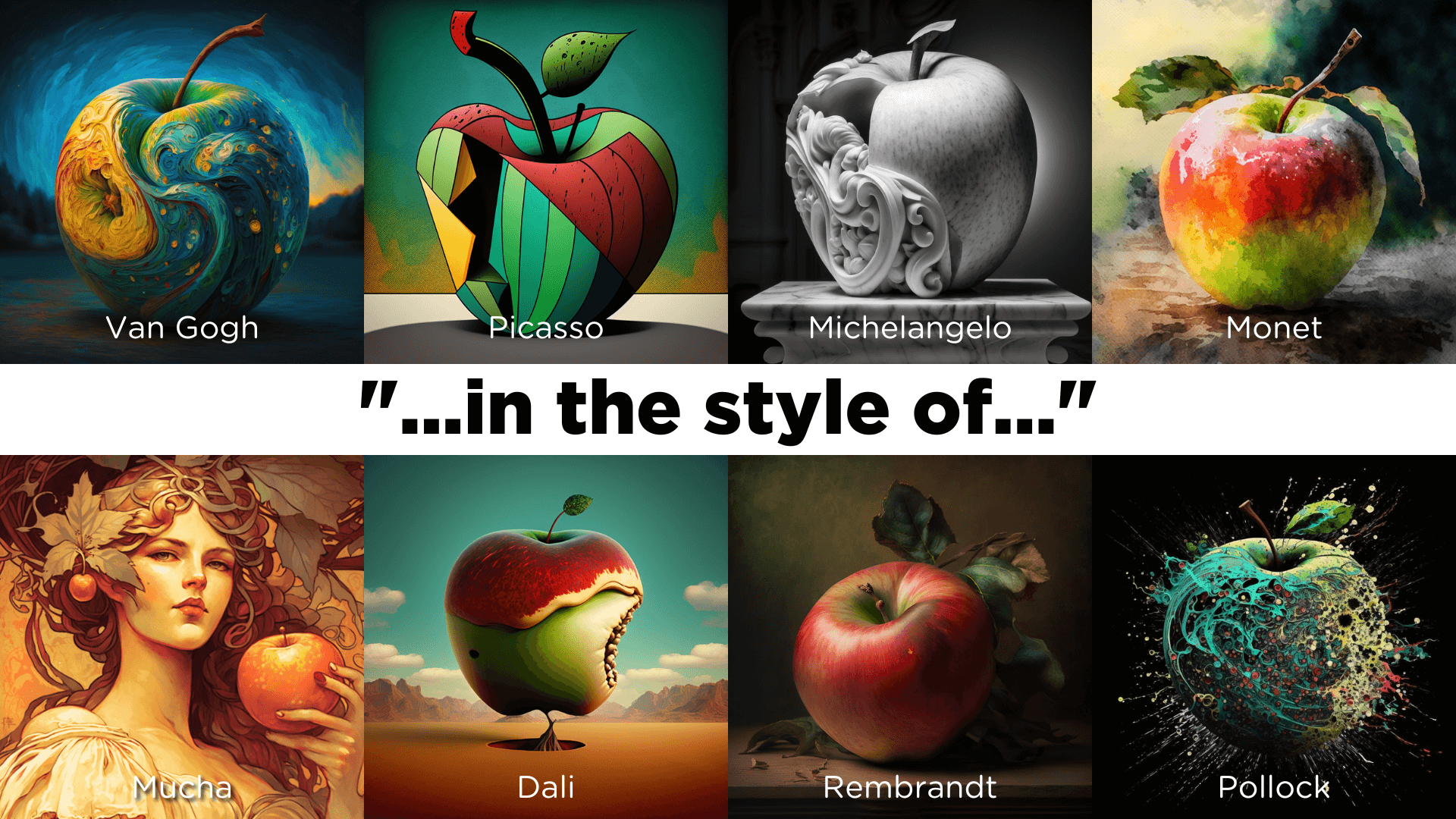
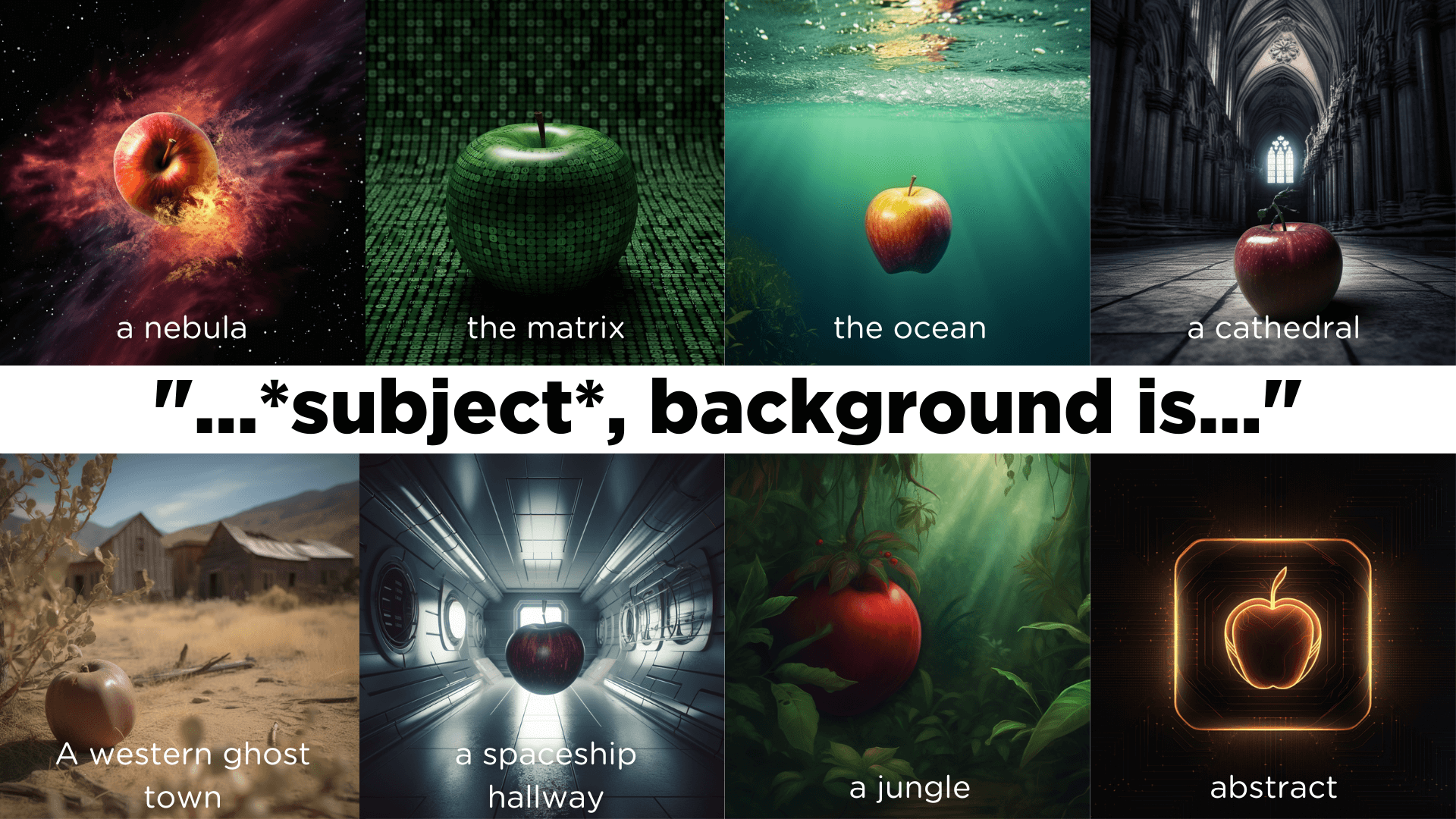
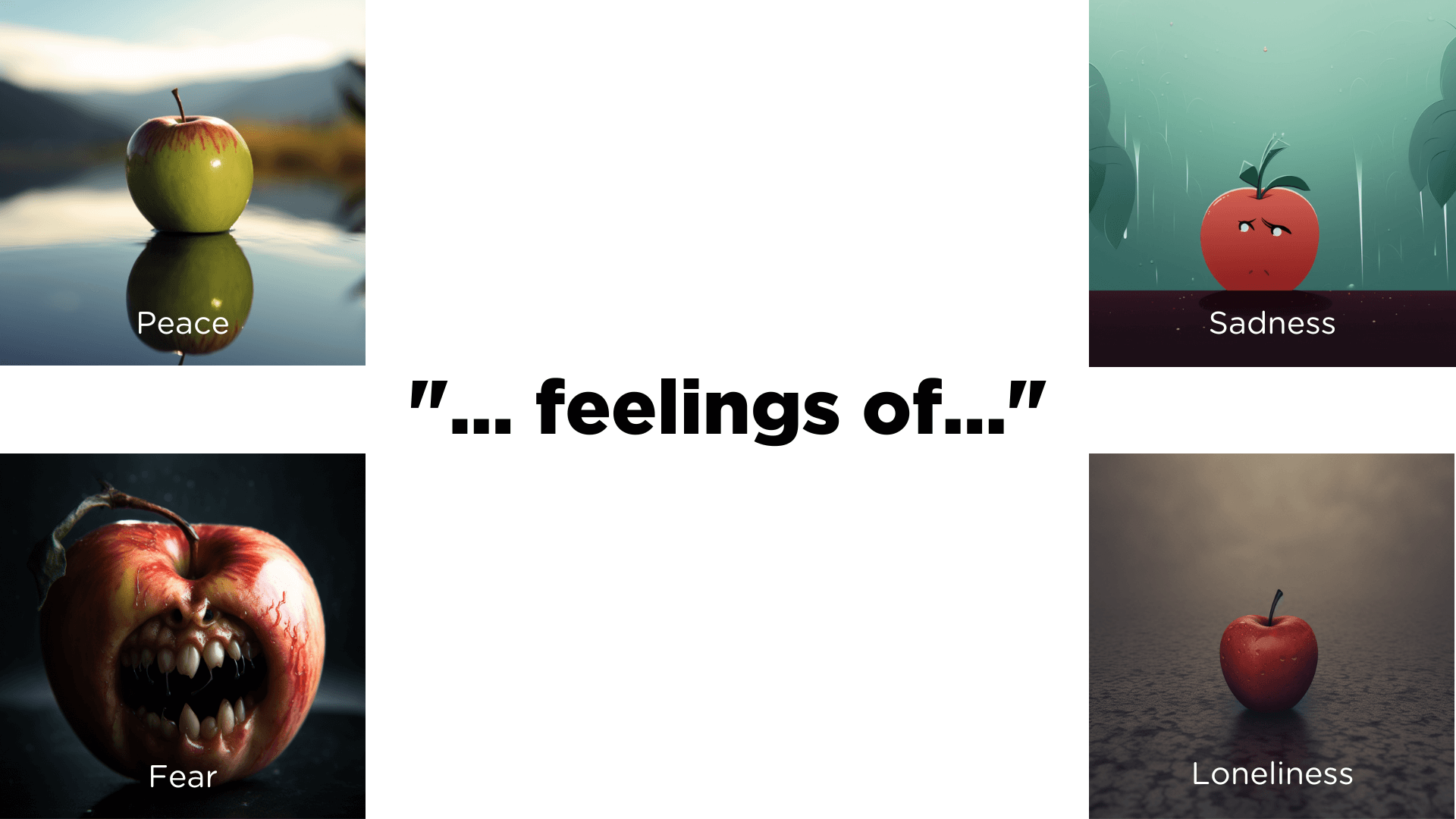
“A __[Perspective]__ view of a _ [Description of Subject]__ in the style of __ [Stylization]__, background is __ [Description of Background]__, feelings of __ [Emotion]__.” 

We always want our art to evoke some sort of emotion in the viewer. If you look at a piece of art and feel neutral, that is likely an ineffective piece of art. You can subtly inject colors, shapes, themes, and emotion into your art by putting the keywords "feelings of” in your prompt.Sticking to the standard emotions (i.e., sad, happy, angry) often leads makes the AI just giving everything faces, which may or may not be what you want, so feel free to get abstract with this. 

graphical user interface, application, website

Popsicle Catapult

Use a simple machine to turn potential energy into kinetic energy. 

A simple machine is a device that allows people to do more work with less energy. It specifically applies to making things move and works by using physics to its advantage. 

When an object is moving, it has kinetic energy. ​​For example, as a ball rolls down a hill, its kinetic energy increases. Potential energy is energy that results from your position. ​If you start from the bottom of the mountain and climb up, the potential energy at the bottom of the mountain will be zero, while it will be a lot at the top of the mountain. ​As you climb the mountain, you gain potential energy. 

A catapult combines these two concepts to launch heavy objects long distances. The catapult you’ll be making today is much smaller than a real one but works exactly the same way. 

Ready to make your own? Follow the written steps below! 


Materials you will need: 

  • Popsicle sticks 
  • Rubber bands 
  • A bottle cap 
  • Glue (hot glue works best) 
  • Pompom balls 


Directions: 

Step 1: Glue the bottle cap onto one end of one of the popsicle sticks, leaving a bit of space above the cap. Let the glue dry.

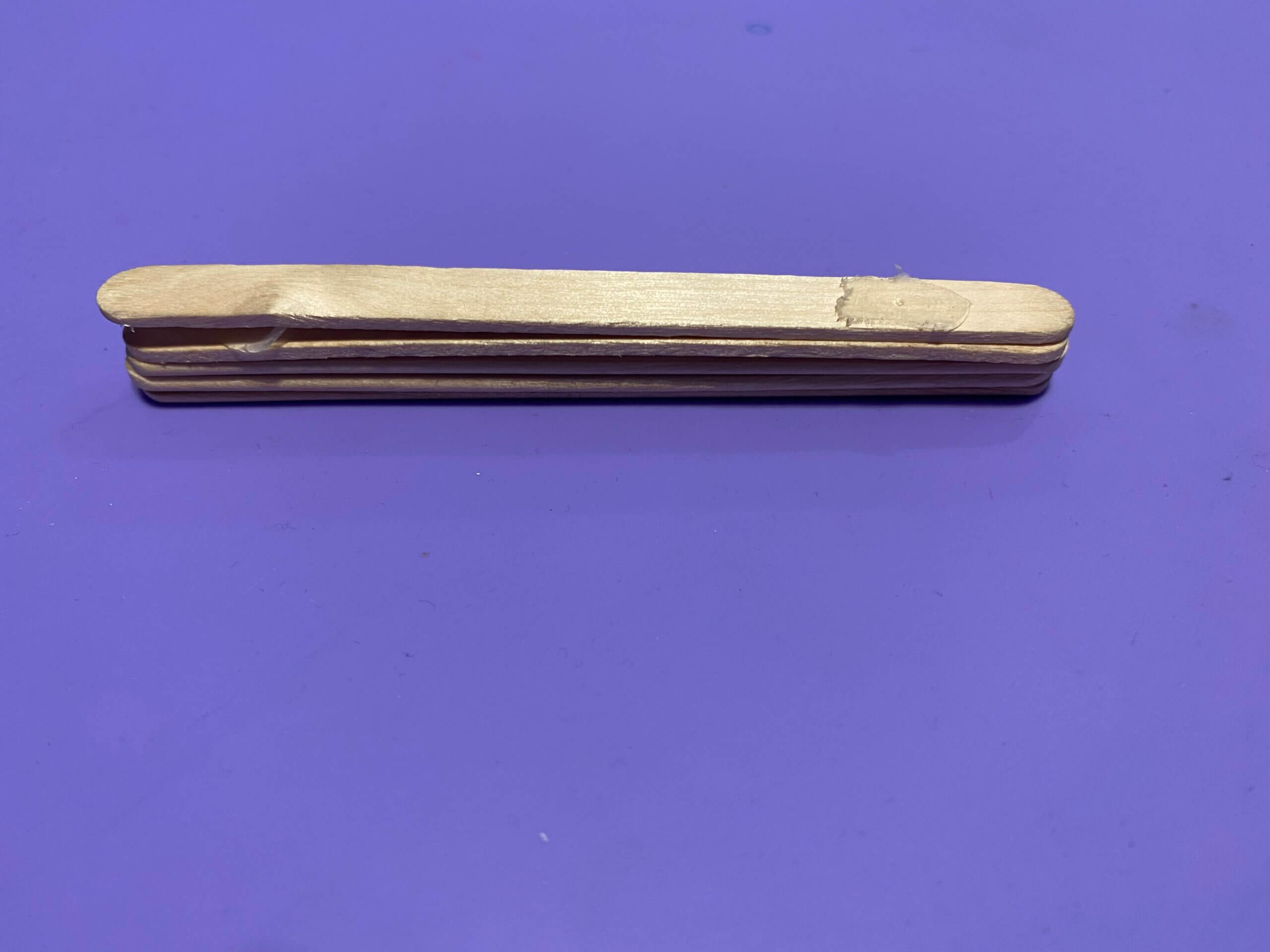
Step 2: Stack 5 popsicle sticks on top of each other. ​

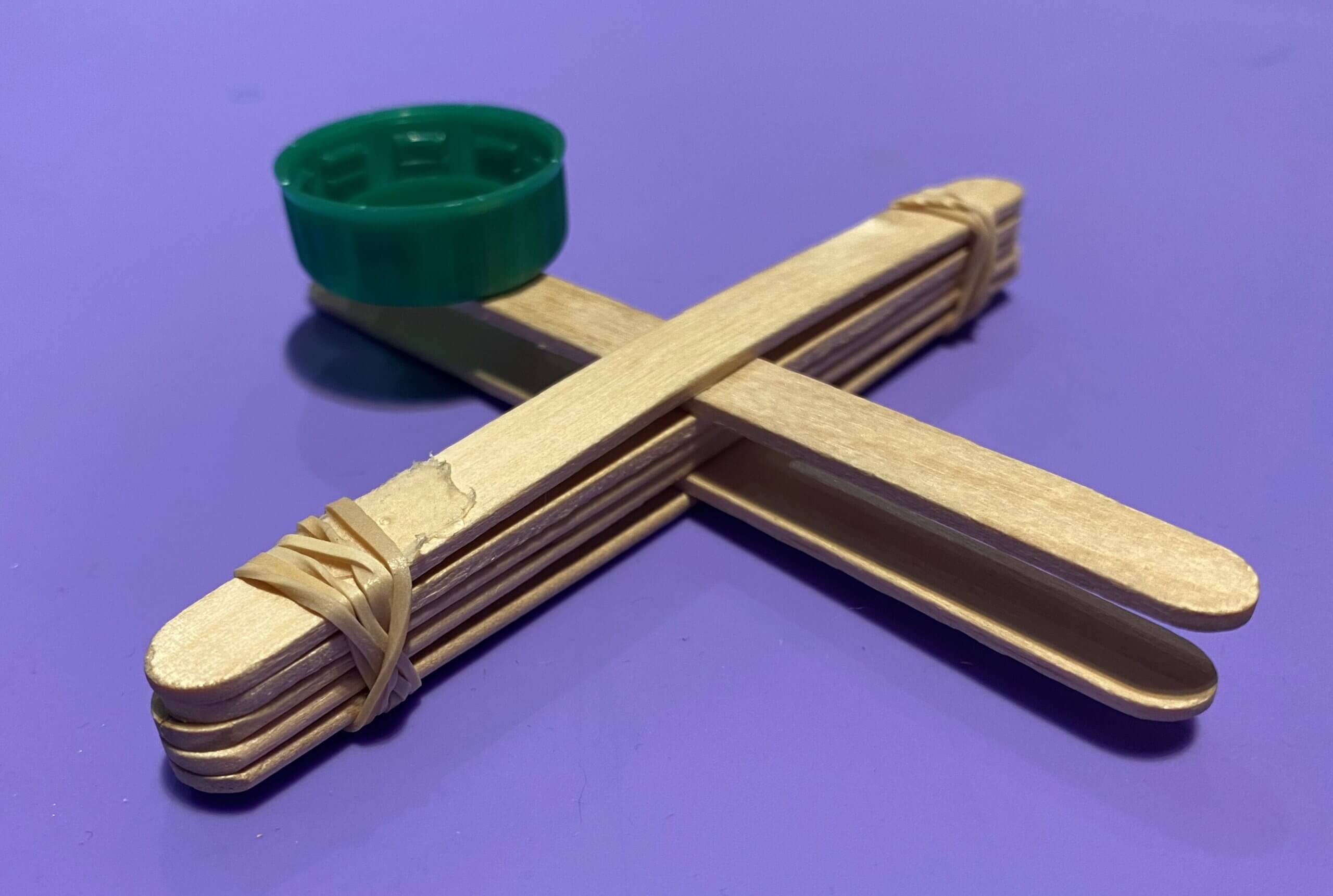
Step 3: Put the popsicle stick with the bottle cap on it perpendicularly – i.e., so it makes a cross – between first and second stick and another one between last and second to last. Leave ¾ of the stick on the other side of the stack.​


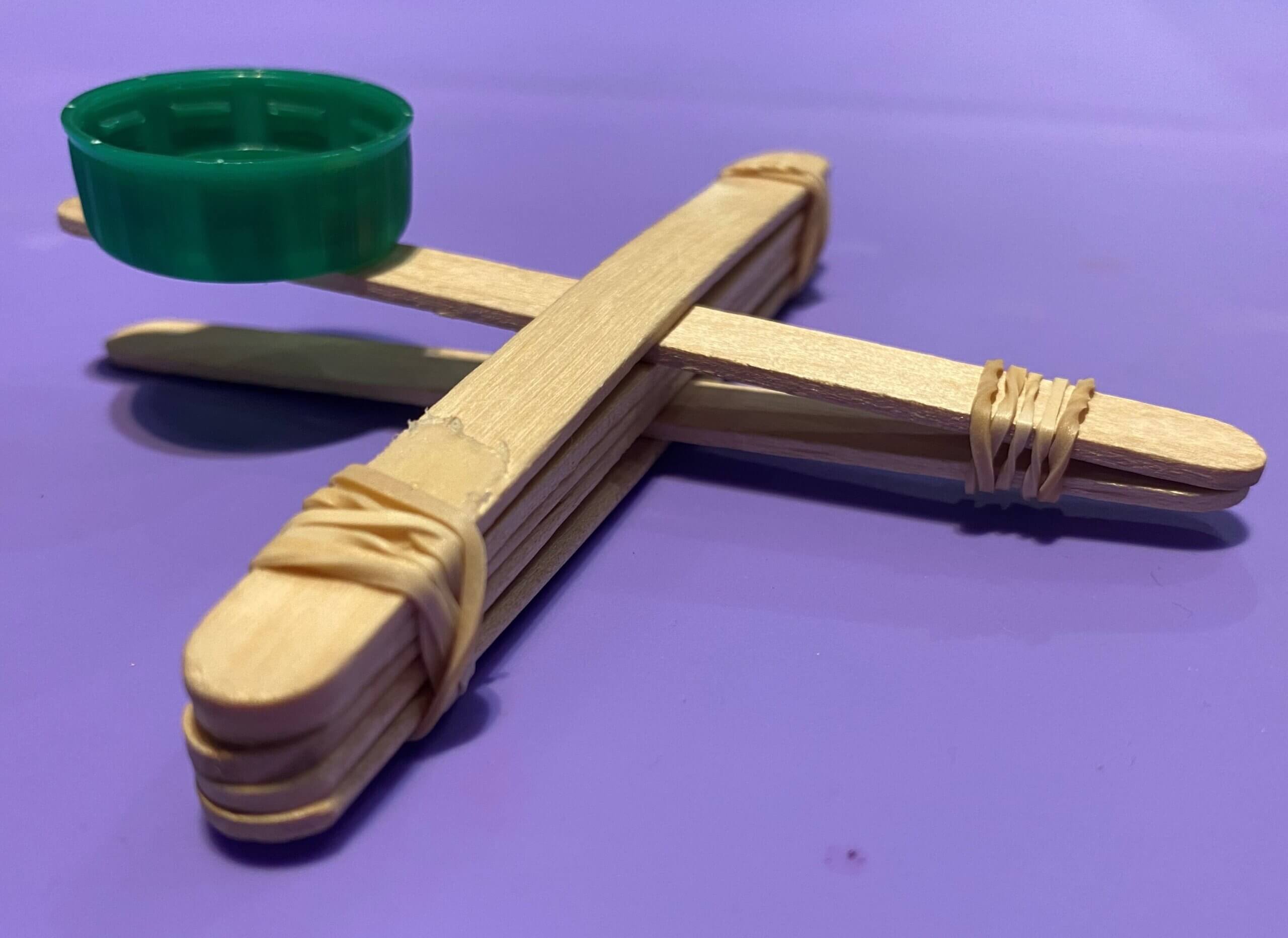
Step 4: Tie rubber bands on both sides of the stack of sticks to hold it together.

Step 5: Tie the two perpendicular sticks together with a rubber band.

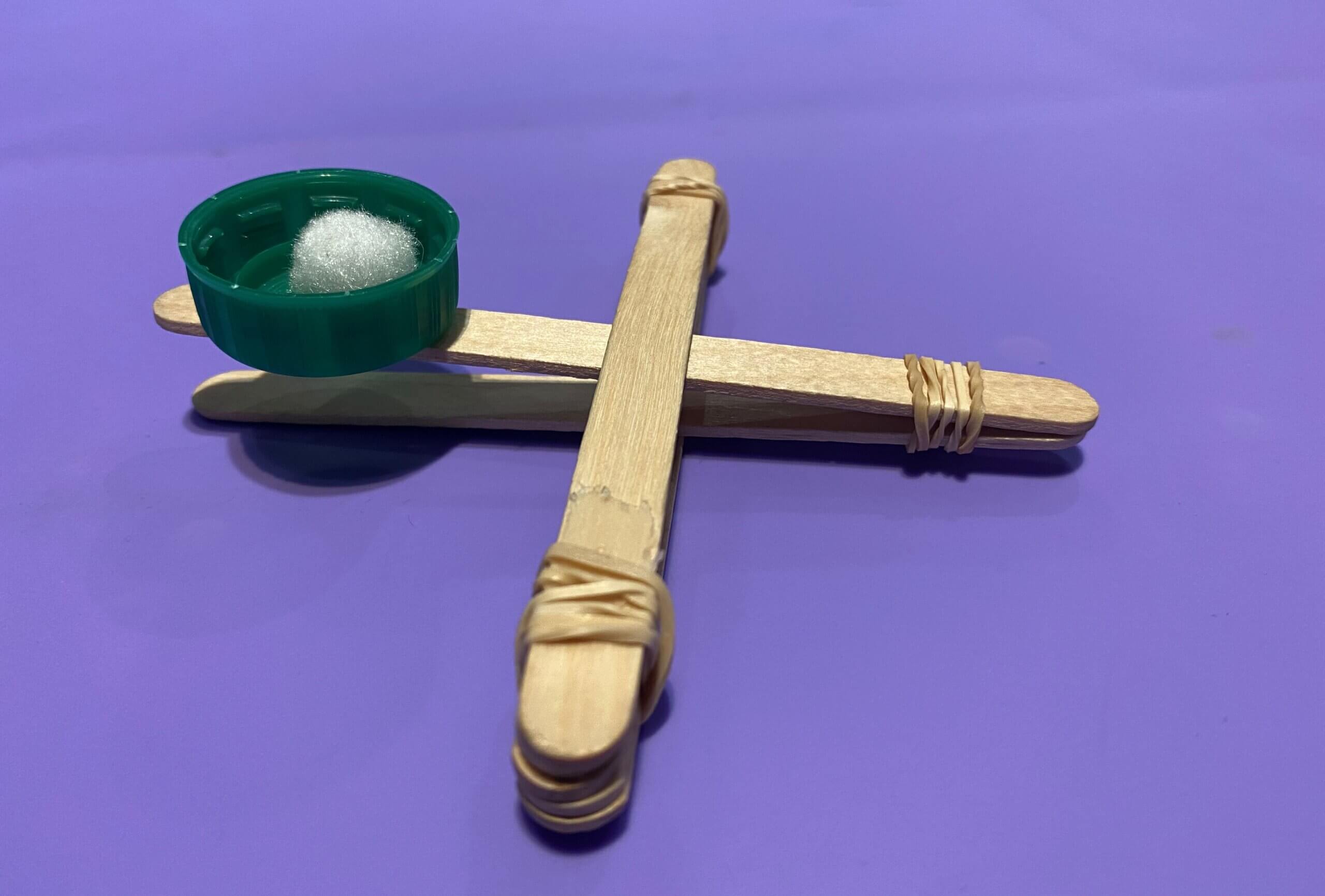
Step 6: Put the pompom ball into the bottle cap.​

Step 7: Push down on the part of the stick behind the bottle cap and releaseWatch the pompom ball fly!


The Science of Popsicle Stick Catapult 

  • When you push the stick with the ball down, you are putting potential energy into the ball. ​ 
  • When you release the stick, the potential energy in the ball turns into kinetic energy. ​ 
  • The ball doesn’t go forever because it eventually loses kinetic energy due to the force of gravity. 

Baking Soda Eruption

What’s causing this chemical reaction? 

Try this experiment at home and learn what causes a chemical reaction! A chemical reaction is when one or more substances react to form an entirely new substance with different properties.  

There are 5 signs that a chemical reaction has occurred. These signs are easy to remember…just think about F.A.R.T.S. To identify whether a chemical reaction has occurred, at least one of these 5 changes: 

  • Fizzes: Did the reaction produce bubbles or gas?  
  • Aroma: Did the reaction produce a smell?  
  • Re-color: Did the reaction produce a new color? 
  • Temperature: Did the reaction produce a temperature change or release light?  
  • New Substance: Did the reaction produce a new substance like water or a solid? 

Ready to make your own? Follow the written steps below! 

Materials you will need:

  • Vinegar 
  • Baking soda 
  • Any container (an empty plastic water bottle or small bowl works best) 
  • A tray or something to catch the mess 

Directions:

Step 1:

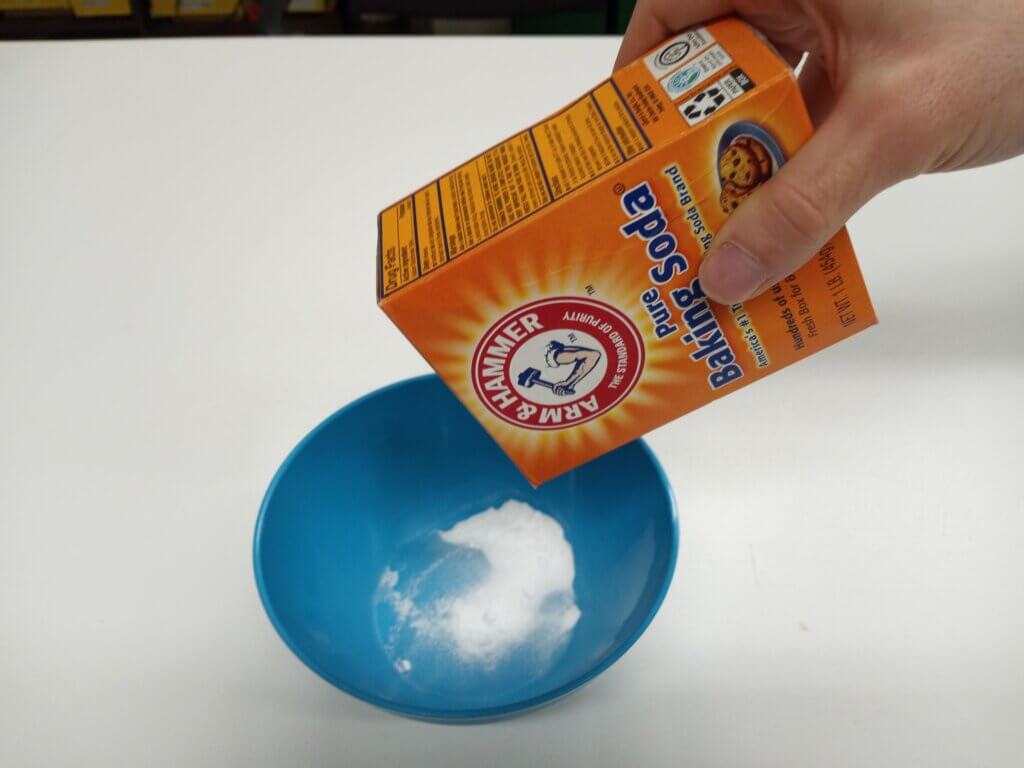
Pour some baking soda into the container (you don't need a lot)

Step 2:

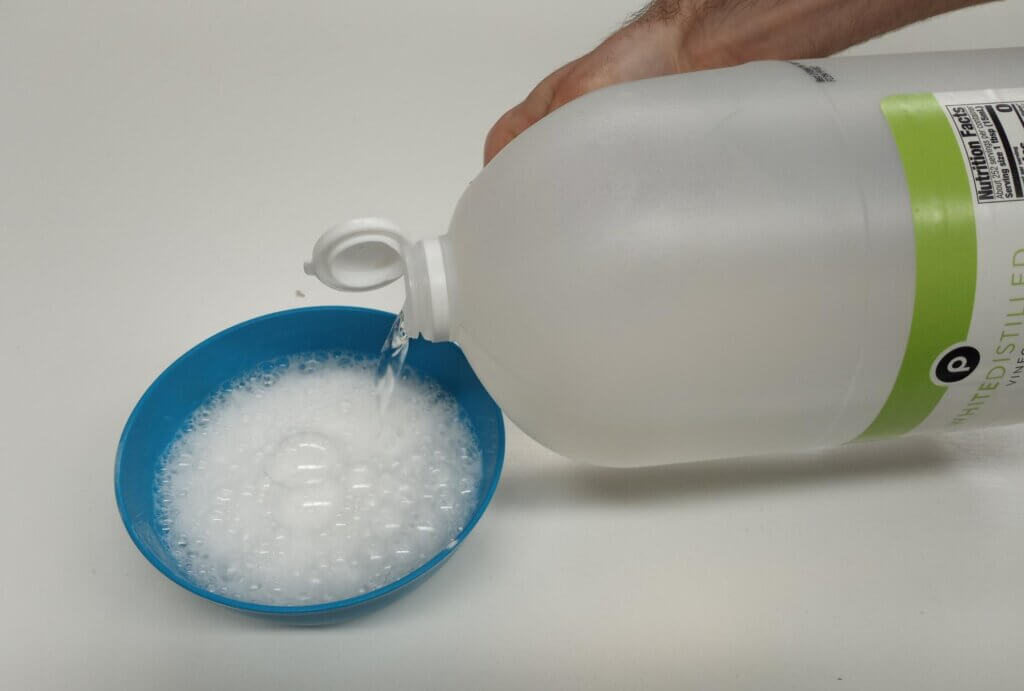
Carefully pour some vinegar onto the baking soda and watch it fizz. You can pour more vinegar to make it erupt again until all the baking soda has dissolved. 


Step 3:

Clean up, and if you want, try again.

The Science of Baking Soda and Vinegar

  • Mixing vinegar and baking soda causes an acid-base reaction that releases carbon dioxide. 
  • The chemical equation looks like this: NaHCO3(s) + CH3COOH(l) → CO2(g) + H2O(l) + Na+(aq) + CH3COO(aq) 
  • This is an example of an acid-base neutralization reaction, where the reaction forms water and a salt as products. 

Expand on This Activity:

  • Ask Your Scientist the Following Questions: 
    • Which of the changes from F.A.R.T.S. did you notice in the reaction? 
    • What else produces carbon dioxide (CO2)? 
  • Keep Experimenting: 
    • If you have food coloring, you can add a few drops to your baking soda before you pour the vinegar to get a colorful eruption. 
    • You often see this reaction used to demonstrate a volcano erupting. Can you make a volcano out of things you have at home? You could use clay, papier mache, you can even make one outside out of dirt (just watch out for ants!)