There's science in every scene!
Have you ever seen a movie or TV show and wondered how it’s made? Every film you watch relies on hundreds of people using science and creativity to bring ideas to life! While we celebrate Fantasy Month at Orlando Science Center, let’s explore the science behind one of the most effect-ive VFX techniques in film: forced perspective.
You can read about it here, or skip to the bottom to try it for yourself!
What are Visual Effects?
Visual effects (VFX) in movies fall into three main categories:
- Optical Effects – Visual illusions created with camera techniques. These effects don’t depend on what is being filmed, but rather how it is filmed. Examples include the dolly zoom, forced perspective, multiple exposures, and slow motion with high-speed cameras.
- Practical Effects – Physical, real-world effects built on set with props, makeup, animatronics, miniatures, or pyrotechnics.
- CGI (Computer-Generated Imagery) – Digital effects created after filming. Modern CGI can do everything from subtle adjustments like color grading to entire photorealistic environments, physics simulations, and animated creatures.
What is Forced Perspective?
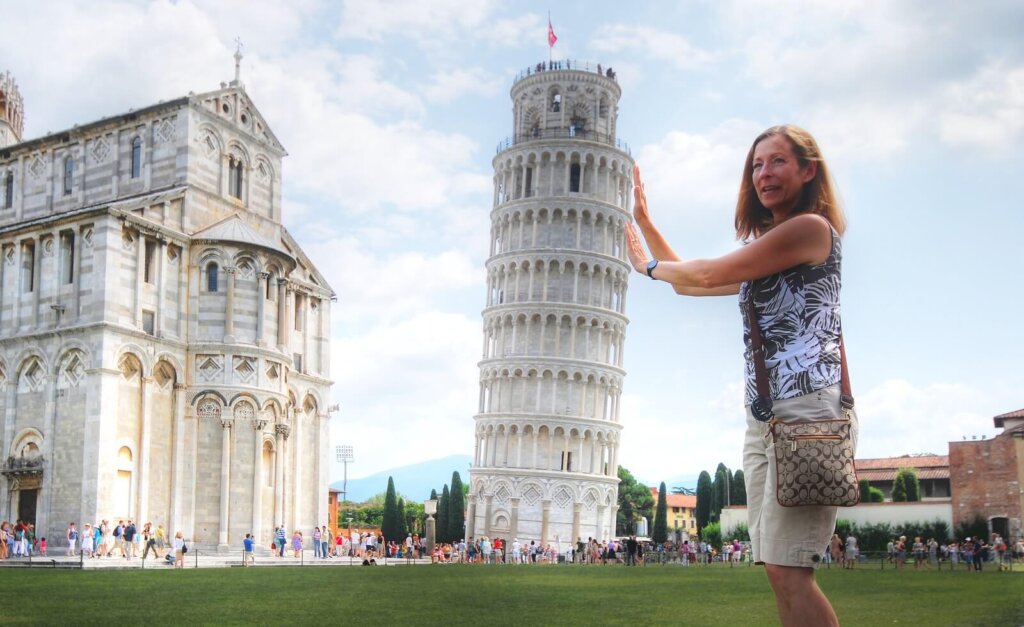
You’ve probably seen photos of people “holding up” the Leaning Tower of Pisa, pinching the tip of the Eiffel Tower, or standing shoulder to shoulder with the Statue of Liberty. These are playful examples of forced perspective, where distance and camera position make large objects look small, or small objects look large.
Normally, our brains keep track of size with context clues from the environment. But with clever staging, filmmakers can trick the eye and create convincing illusions. Forced perspective is one of the most common optical effects in movies, especially fantasy films. Let’s look at a famous example!
Making Elijah Wood Hobbit-Sized
In The Lord of the Rings, protagonist Frodo Baggins (Elijah Wood) is a Hobbit. Hobbits are much smaller than humans, elves, and the other creatures Frodo encounters. Filmmakers used several techniques to shrink Frodo on screen, but forced perspective stands out.
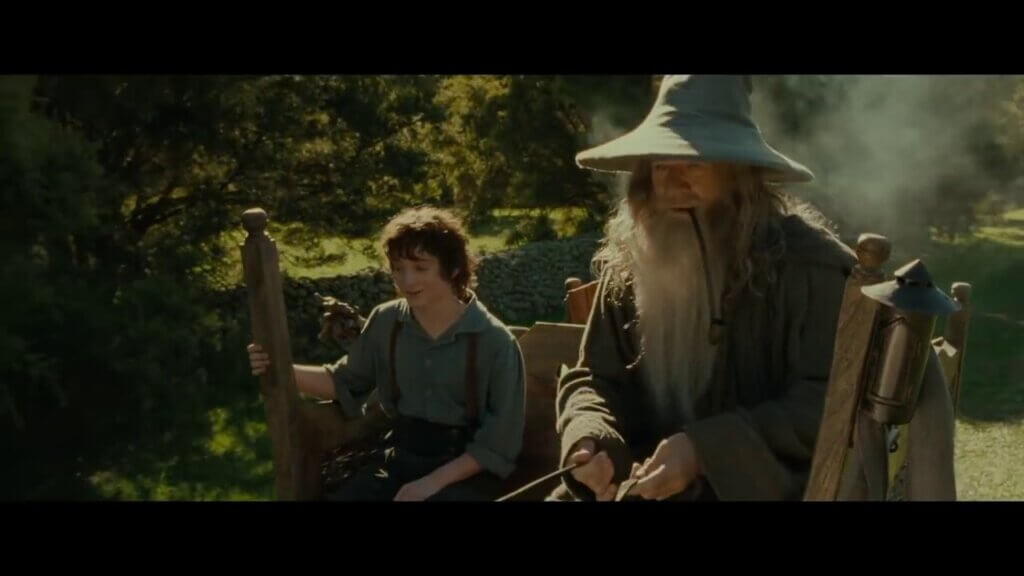
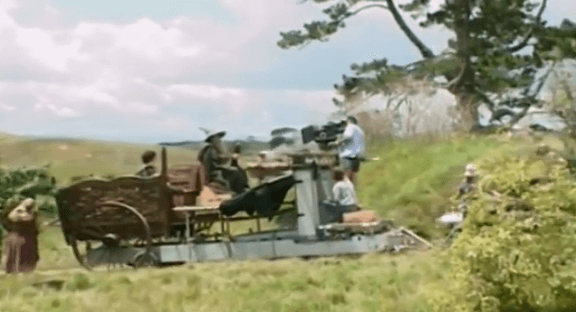
Take the carriage scene with Frodo and Gandalf (Ian McKellen). From the audience’s view, Gandalf looks much larger than Frodo. Behind the scenes, the trick comes from both the camera angle and the set design. The carriage was built in two halves: Gandalf’s side at normal scale, and Frodo’s side pushed farther back and built at an oversized scale. This combination makes Frodo appear Hobbit-sized when filmed from just the right perspective.
Try It Yourself at Home!
With a little creativity, you can try forced perspective using everyday items. Grab a camera, experiment with angles and distance, and see how you can play with scale. It’s a fun way to flex your imagination while learning some photography basics!
Find full instructions and examples at the link below.