Dig Deeper Into Latin American and Caribbean History
During Hispanic Heritage Month, we're diving into archeology and showcasing artifacts from Latin American and Caribbean cultures of the past and present! If you aren't able to catch the Dig Deeper experience at Orlando Science Center this month, we've got you covered! Check out these amazing artifacts below!
Cemi
c. 1200 CE – c. 1500 CE,
Taino Culture
Caribbean
A cemi (or zemi) is a sculptural object that houses ancestral spirits of the same name. These figures are from the Taino people of the Caribbean. They could be made of wood or stone and come in a few common shapes. One of the most iconic shapes are the three-pointed cemis like ours, but they can also be depicted as amulets and as figures with bowls for rituals. Find out more at OSC: An educational replica was hand sculpted by a staff member here at OSC! It was made by Alyssa F. and took 4 hours to make.Sun Stone
c. 1500 CE
Aztec Culture
Mesoamerica
The sun stone is a large stonework representation of the creation of the world, and contains visual storytelling and calendar elements. The center represents the sun god. The glyphs around it represent the era. The arrows represent directions. One of the rings represents the date in base 20 and the outermost ring depicts the fire serpents that represent time. The Aztec calendar is called the Tonalpohualli, and is a 260 day calendar stemming from an Olmec calendar used throughout Mesoamerica. It is still in use in parts of Mexico and Guatemala today. Dig Deeper: What do you picture when you think of a calendar? Different countries think of time in different directions, so do their months go left to right? Up and down? Something else?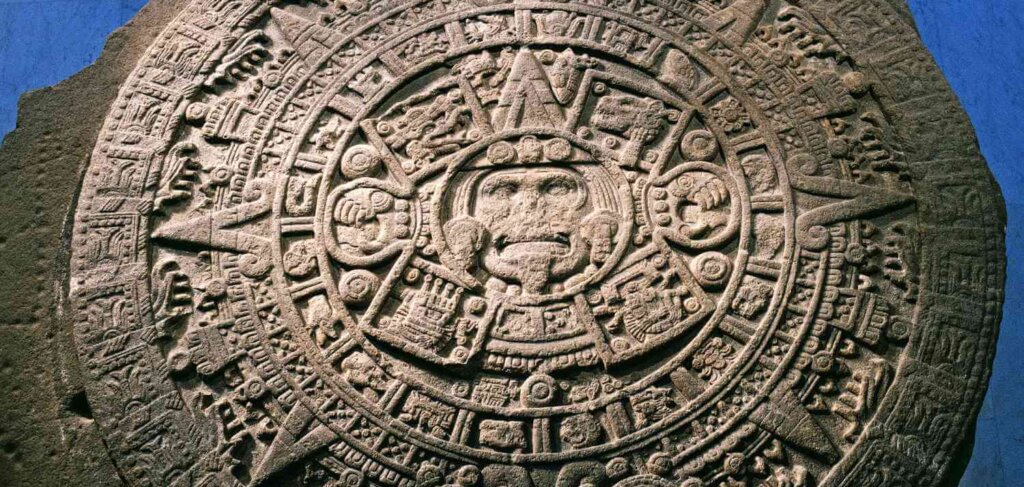
Nuchu
c. 16th Century – Present Day,
Indigenous Kuna Culture
Columbia, Panama
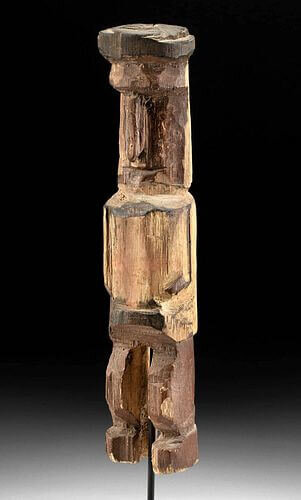
A nuchu (plural nuchugana) is a figure carved from wood and given to a sick person to draw out the bad spirits causing the illness. They are found in the indigenous Kuna culture of Panama and Colombia and would be placed by the bedside to draw out those spirits. If they crack it is thought that the spirits would escape so they would then be disposed of.
Because of the personalized nature of these objects, it can only be given away or sold once it has cracked and lost its usefulness. It was treated similar to prescription medicines today, where the recommendation is not to share your prescriptions because they are formulated specifically for you!
Find out more at OSC: An educational replica was hand carved by a staff member here at OSC! It was made by Alyssa F. and took 12 hours to make.
Khipu
c. 2600 BCE – c. 1900 CE
Most commonly used in the Inca Empire 15th-16th century
Central Andes
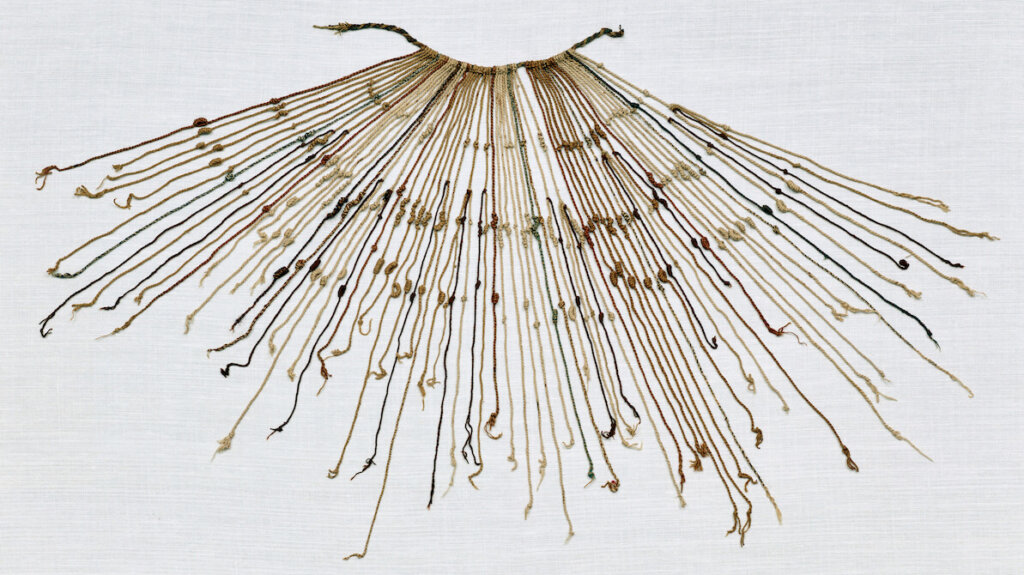
A khipu (plural khipukuna) is a tool for recording information that works by tying knots on strings in specific ways to denote numerical data and other information.
The direction, placement, and amount of knots can convey numerical data in base 10, while the color, material, ply, and direction of the strings can convey phonographic or logographic information in binaries.
Find out more at OSC: An educational replica khipu was hand spun and tied by a staff member here at OSC! It was made by Alyssa F. and took 5 hours to make.