Cosmic Insights
Space exploration does a lot more for humanity than you might think. It pushes technological advancement to its limits, fosters global collaboration, and fuels economic growth. Plus, looking outward can help us see our own planet more clearly.
Space can be overwhelming to think about it, and when we have so much to attend to here on Earth - infrastructure, education, international relations, to name but a few - it can be difficult to grasp why we're spending time, energy and resources to do something we've done before. Why go to space at all when there are so many other causes that require attention?
This is what Science Matters is all about! By helping folks apply the process of science to complex topics, we're helping to develop critical thinking and science literacy skills. Let's break down space exploration and its impact on humanity. Together, we'll learn more about how going to space advances ground-breaking discoveries, creates a sense of belonging among humanity, and inspires future generations of scientists, engineers, artists and thinkers.
Questions to Consider
By the end of this page, you should be able to answer the following questions:
Why go to space?
How does space exploration benefit those of us who have never been to space and might never go?
Why are we interested in learning about space?
Space Exploration Unites the World
Chances are, you've never been to space and don't have plans to go anytime soon. But whether you're a child, parent, educator or STEM professional, space exploration fuels innovation that directly impacts the way you live.
If you use a GPS navigation system to provide directions while you drive, wear sunglasses with UV protection, or use disposable diapers for your child, you're using systems and technology invented by NASA in pursuit of space exploration. And these are just a few examples; for more, check out NASA Spinoff - there's more space in your life than you might think!
In addition to encouraging a spirit of innovation, space exploration taps into a very human need to understand our existence. Why are we here? How did the universe come about? Does life exist outside Earth? How can we make our lives better?
Why Do We Go to Space?
Space exploration was first driven by fear and control, but it's evolved into something more. Check out this video from Be Smart about how the motivations behind space exploration have evolved over time.
Is Space Exploration Worth the Money?
Should we really be spending money on space when there are problems to deal with down here on Earth? Dig into several reasons why space exploration is worth the money with The Planetary Society.
A Brief History of Space Exploration
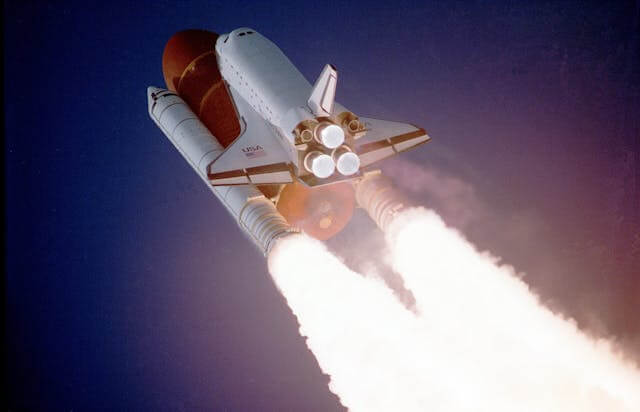
Space exploration began with the Cold War in the 1950s. Technological development and scientific exploration quickly accelerated during this time because of the "Space Race," a competition between the United States and the Soviet Union to achieve superior spaceflight capabilities.
The Space Race led to the creation of the National Aeronautics and Space Administration (NASA), which began operations in October of 1958. NASA made Apollo 11 possible, a 1969 mission that sent the first astronauts to the Moon and made Neil Armstrong the first human to stand on another celestial body. The astronauts also collected samples of rocks and lunar dust, which are still used today by scientists!
The Apollo missions continued through December of 1972, when Apollo 17 astronauts Eugene Cernan and Harrison Schmitt were the last to walk on the lunar surface - until now. The Artemis program, twin to the Apollo missions and thus named for the Greek god's twin, will put humans on the Moon for the first time in over 50 years! But more on that later.
These days, space agencies like NASA and the European Space Agency (ESA) aren’t the only ones pursuing space exploration. In the early 2000s, NASA and comparable organizations shifted from owning and operating spacecraft to purchasing transportation services from private companies.
SpaceX and Blue Origin, big names in the commercial space industry today, have both been around for over 20 years. SpaceX was the first private company to deliver cargo to the International Space Station (ISS) nearly 15 years ago in 2012. They also ended nearly a decade of reliance on Russian spacecraft in 2020 when they first delivered US astronauts to the ISS. SpaceX, Blue Origin, the United Launch Alliance (ULA) and others are now supporting a wide variety of work, including launching satellites, developing private space stations, transporting cargo and astronauts to the ISS, advancing satellite internet services, and much more.
While these companies must adhere to national and international law, there is no doubt that with the continued progression of this “space economy,” additional regulation will need to be considered, especially as private space stations are expected to replace the ISS after its anticipated retirement in 2030.
The Evolution of Astronomy
Astronomy is credited as the oldest scientific discipline, and it's been evolving for thousands of years. Early civilizations used astronomy to create calendars, map the sky, and hypothesize models of our solar system. Pioneers of astronomy revolutionized our understanding of the world, bringing forth discoveries like gravity, planetary motion, the spherical model of Earth, and spectroscopy.
With time, astronomy slowly evolved our understanding of the universe. Scientists discovered the Big Bang theory and that our universe is expanding. Shifting technology introduced radio and space telescopes, which helped scientists expand their observations beyond visible light. The Hubble, James Webb, and Nancy Grace Roman Space Telescopes are just a few of the many space telescopes operated by NASA.
Curiosity about Mars has also increased. NASA has sent five robotic rovers to explore Mars: Sojourner, Spirit, Opportunity, Curiosity and Perseverance. NASA also landed the Ingenuity helicopter on Mars. In honor of humanity's advancements in flight, Ingenuity brought a swatch of fabric from the Wright Flyer - one of our more sentimental moments. You can see another swatch of fabric right here at the Science Center!
With both curiosity and technology advancing, exploration has now shifted towards exoplanets, dark matter, dark energy and gravitational waves. As we ask more questions about our universe, astronomy will continue to evolve and shape our understanding of our world.
Meet the Mars Rovers! Let's Explore Mars!
In this kid-friendly video from SciShow Kids, discover how scientists can learn things about Mars by sending rovers! This video can be educational for all ages.
Exoplanets 101 | National Geographic
Learn about types of exoplanets, how scientists find them, and how many worlds might exist in the Milky Way Galaxy in this video from National Geographic.
Astronomy and Space Exploration Today
The US has come a long way since the early days of our space program. We've built telescopes and satellites that live in space and contribute to research done on the ground, we've sent rovers to explore Mars, and now we're going back to the Moon. It's time to talk about Artemis and other space missions!
Artemis
On July 20, 1969, Neil Armstrong uttered words that would echo through history: "That's one small step for man, one giant leap for mankind." Now, we're turning our eyes skyward once more. NASA's Artemis program is a multi-mission program that will return humans to the Moon, carry astronauts deeper into space than ever before, and build a foundation for the first crewed missions to Mars - hopefully, our next giant leap.
Artemis is broken down into five missions. The first two tested the SLS rocket's and Orion spacecraft's capabilities for deep space missions, as well as their ability to carry astronauts safely out into and back from space. Both missions were successful and widely publicized. Copy, Moon joy!
By mid-2027, NASA plans to launch Artemis III, which will test rendezvous and docking capabilities between Orion and private commercial spacecraft needed to land astronauts on the Moon. Artemis IV will accomplish the first lunar landing in over 50 years, and subsequent Artemis missions (V and beyond) will continue annual lunar surface missions with the goal of building a Moon base for extended human habitation. Come see the Moonbase full dome experience in The Dome by Dr. Phillips Charities to see what that might look like!
How We Are Going to the Moon
In this kid-friendly video from NASA, learn more about how the Artemis missions will pave the way for humanity to sustainably work and live on another world for the first time!
Artemis II Mission Highlights, From Blastoff to Splashdown
The Artemis II mission brought astronauts deeper into space than ever before. Like all manned space missions, it started with fire and ended with water. Explore the mission from start to finish in this TIME video.
What Else is NASA Working On?
NASA employs nearly 18,000 civil servants and works with many more U.S. contractors, academics, and international and commercial partners to explore, discover, and expand knowledge for the benefit of humanity. With that many people working together, the agency can explore far beyond just the Moon. Here are some of the other projects that are furthering our understanding of outer space and the celestial bodies that occupy it.
Europa Clipper
Why Does NASA Want to Explore Jupiter's Ocean Moon?
Everywhere there's water on Earth, there's life. Does that hold true elsewhere in our solar system? This video from NASA's Jet Propulsion Laboratory explains the science behind the Europa Clipper mission, which seeks to discover if this icy moon orbiting Jupiter might be able to sustain life. The Europa Clipper touring exhibition came to Orlando Science Center in October of 2024.
IMAP
Mapping the Boundaries of Our Home in Space with NASA's IMAP Mission
The heliosphere is crucial to protecting our solar system from galactic radiation, but we know very little about it. NASA's Interstellar Mapping and Acceleration Probe (IMAP) mission seeks to change that! Orlando Science Center was proud to host Dr. David J. McComas in September 2025, when NASA took over Dr. Dare's Lab to explore the elements of the IMAP mission with guests!
OSIRIS-REx
Why Did NASA Choose Asteroid Bennu?
OSIRIS-REx was the first U.S. mission to retrieve a sample from an asteroid and deliver it to Earth. When the mission launched in 2016, Orlando Science Center was pleased to present Dr. Humberto Campins at Science Night Live to discuss his involvement with the program and the importance of the mission. The spacecraft has since been renamed OSIRIS-APES and sent on a new mission to explore asteroid Apophis in 2029.
Walking the Walk at Orlando Science Center
Ready to dive into space exploration? You don't have to leave Earth to do it - you don't even have to leave Orlando! Just head to Orlando Science Center and explore our permenent exhibit, Our Planet, Our Solar System.
Explore the moons and planets of our solar system in three dimensions at Science on a Sphere. Discover the principles of gravity as it applies in space at the Gravity Well. Try your hand at flying a spacecraft during our Space Flight programs in the Flight Lab, drive a rover across the surface of Mars, or build your own Moon base using LEGO. Plus, head down to The Dome for immersive planetarium shows that allow you to travel to the edges of the known universe and back.
Keep an eye on our calendar for CoLAB days, when we welcome community partners to our halls, many of which explore space through art or science. We also often have pop-up experiments to help visitors of all ages explore space science with a science interperter! For an example, check out our friend Ali explaining how NASA explores the depths of space in this video with WUCF, our local PBS station!
The Value of Space Exploration
The economic impact of the space program is enormous, especially here in Florida. According to Orlando Sentinel space reporter Richard Tribou, the Artemis missions have supported more than 13,000 jobs in Florida and contributed $3 billion in annual spending to our economy. The launch of Artemis II was projected to generate $160 million in economic impact for Central Florida alone, thanks to launch tourism.
But space exploration is also valuable in relationship building. To advance the technology and resources that help us solve the mysteries of our universe, we must collaborate across our differences. We've seen over time that nothing brings the world together quite like the inspiring adventure that is space travel.
For example, the International Space Station (ISS) involves an international partnership of space agencies that brings together international flight crews, multiple launch vehicles, operations, training, engineering, development facilities, communications networks, and the international scientific research community. The ISS is the largest space station ever constructed and continues to be assembled in orbit.
International Space Station: Humanity's Lab in Space
In this video, narrated by Adam Savage of Mythbusters fame, learn how the International Space Station is a powerhouse of cutting-edge science and how it helps unlock scientific discoveries!
25 Years of Learning in Space
From Learn With NASA, this video celebrats 25 years of continuous human presence aboard the ISS by sharing astronauts' unique experiences in microgravity!
When we look at the stars, it's easier to remember that we're all human, despite our differences. That works in reverse, too. Astronauts who've been to space report experiencing what's known as the overview effect: a profound shift in perspective, in which "home" suddenly comes to mean the entire planet, rather than a country, state or city.
Astronaut Nicole Stott, who has worked closely with Orlando Science Center in recent years, recalled wanting to see her home state of Florida during her first mission to the ISS. "Finally, we were flying over Florida. I wanted to go to the window and see it and then realized somewhere down the line that I wasn't looking at Florida that same way anymore," she said. "I still wanted to see Florida, but Florida had just become this special part of home, which is Earth. We're all earthlings."
But maybe we could be more than that. This dream of sending humans back to the Moon is just the beginning. Every day our resources, technology, and tools advance, moving us towards big questions and even bigger answers. One small step for man might be another giant leap towards understanding our fragile blue orb and our place in the universe.
Want to Learn More?
If your curiosity has been piqued and you want to learn more about space exploration or get involved in astronomical research, here are some resources for you!